
President Irfaan Ali on Tuesday reiterated his administration’s commitment to increasing the income tax threshold to $200,000 before the end of its current term in office, saying the measure forms part of ongoing efforts to improve workers’ disposable income.
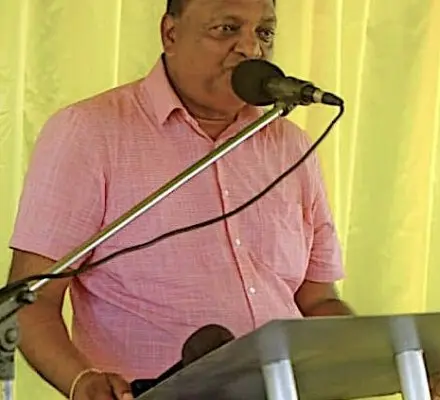
According to the Department of Public Information, Ali speaking at the observance of the 78th anniversary of the Enmore Martyrs, said the government intends to continue raising the threshold beyond its current level of $140,000.
“The new base now is a new threshold, and we said that before the end of this term, that new base will be $200,000 upon which our workers would stand, $200,000 tax-free,” the President told the gathering.
The current tax-free threshold was increased from $130,000 to $140,000 in the 2026 national budget, representing the latest in a series of adjustments made since the PPP/C returned to office in 2020. At that time, the threshold stood at $65,000.
Successive budget measures raised the threshold to $75,000 in 2022, $85,000 in 2023, $100,000 in 2024 and $130,000 in 2025, before this year’s increase to $140,000.
According to government figures presented during the 2026 budget, the latest adjustment removed approximately 5,000 workers from the income tax net and placed more than $2 billion in additional disposable income into the hands of taxpayers.
Ali said the increases demonstrate what he described as the government’s commitment to improving the financial position of workers.
“It is the People’s Progressive Party that has successfully increased the base upon which every worker in this country stands,” he said.
The President also pointed to increases in public sector wages and old-age pensions as part of the administration’s record since taking office.
“Five years ago, the struggle was for a higher threshold. We delivered. The struggle was for higher salaries. We delivered. The struggle was for a better pension. We delivered,” he said.
Ali maintained that the government’s objective is not merely to raise incomes to a particular benchmark, but to create opportunities for upward mobility across generations.
“Our level for the workers is not a hundred thousand. Our level is to move them from one status to the next status, so that their children can enjoy a different level upon which they start their base,” he said.








Discussion