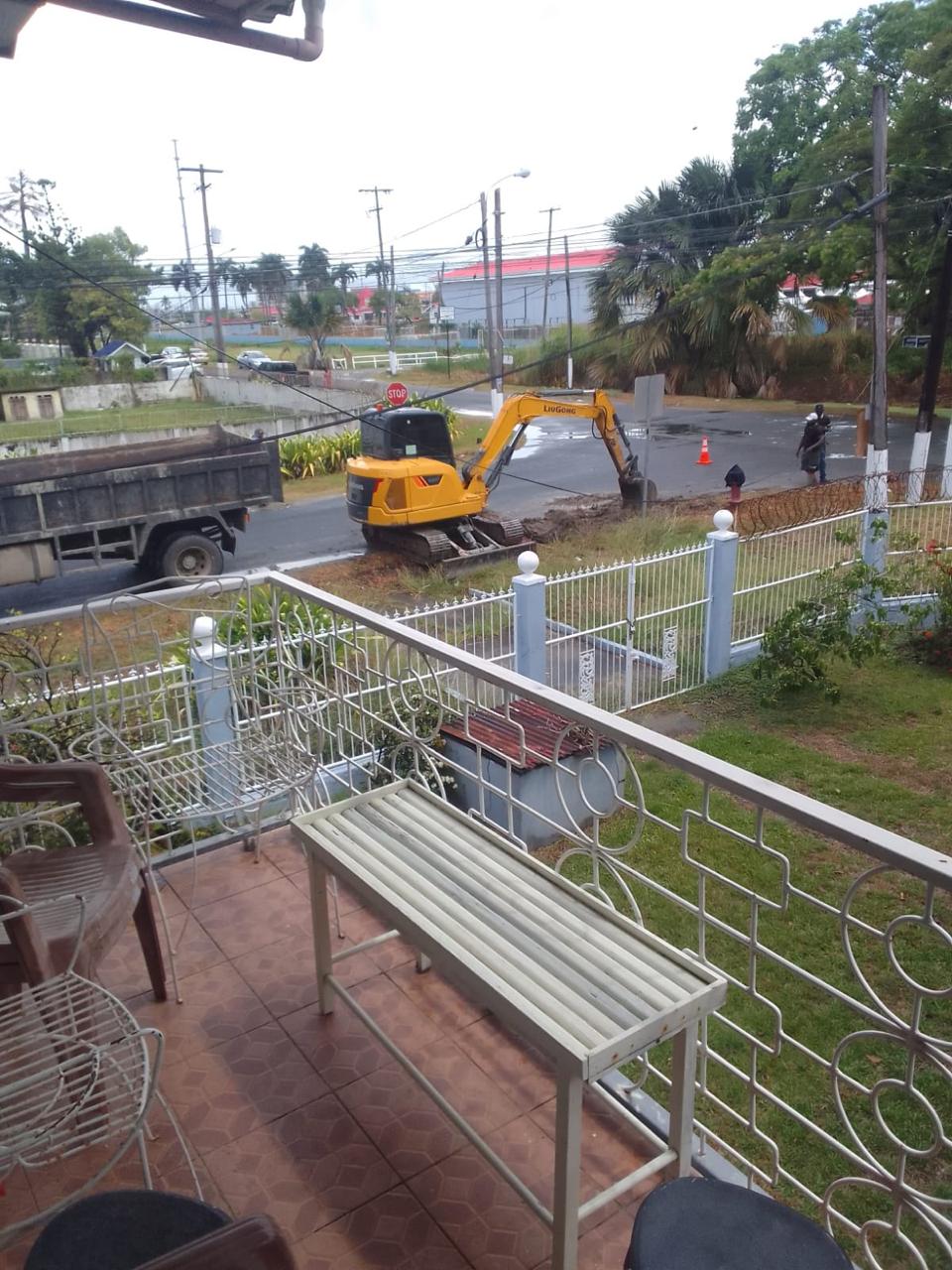
Residents of Lamaha Gardens in Georgetown are still awaiting consultation with the authorities over proposed parapet works which they were able to stop.
Resident Michelle Rockcliffe told Kiskadee Watch yesterday that residents had not yet received a date for the promised consultation and remained prepared to engage the authorities on the proposed works. “Thankfully they have stayed away,” she said.
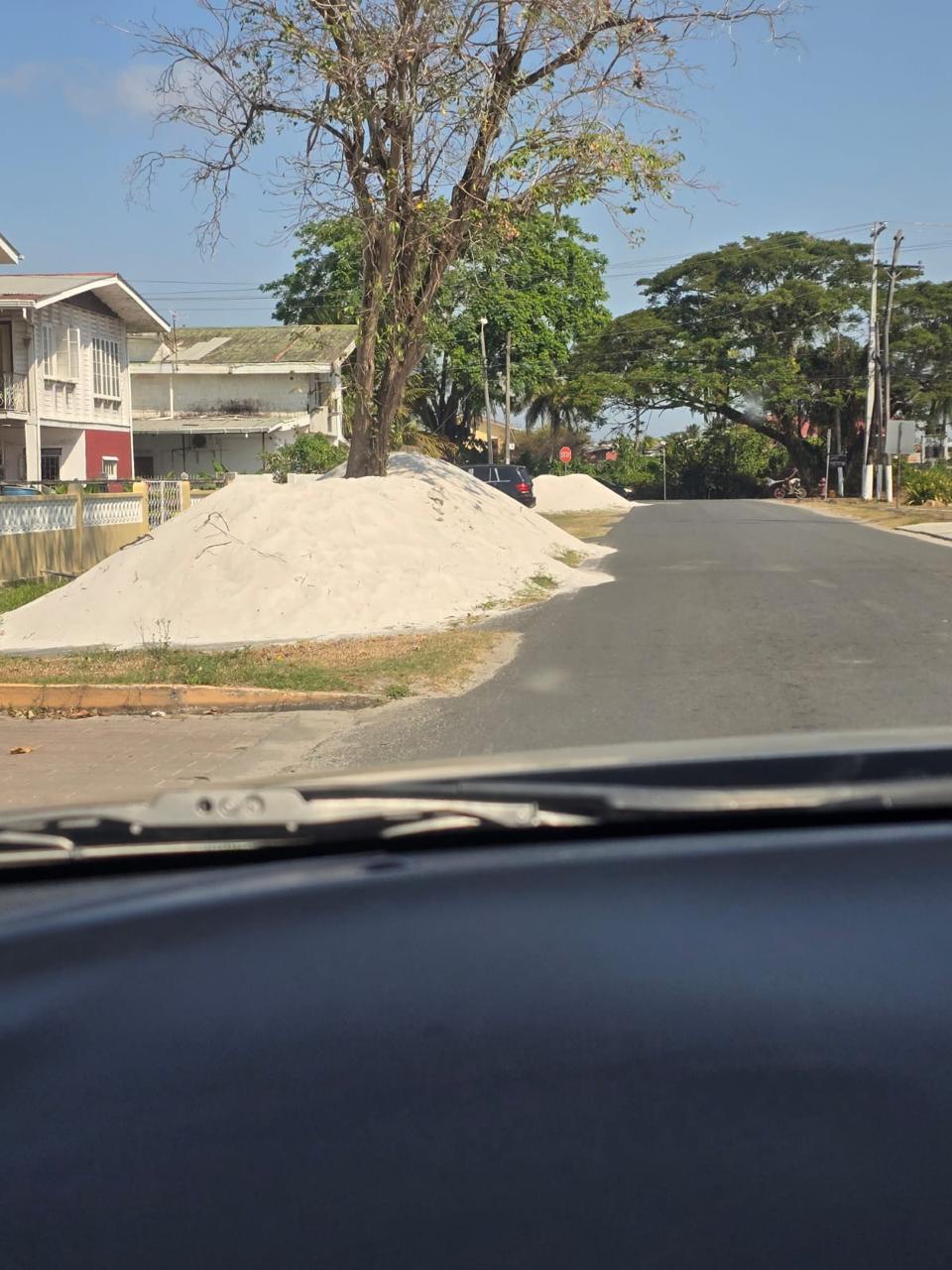
Piles of sand however remain along David and Duncan streets, and residents are hoping that they will be removed soon.
According to Rockcliffe, sections of the gutters are caving in and should be addressed rather than proceeding with works that residents believe could adversely affect the community. “They need to rethink what they are doing to Queenstown,” she said. Residents in Queenstown on Thursday objected to similar works that are ongoing in that ward.
Lamaha Gardens residents had intervened on the morning contractors arrived to begin excavating the parapets; excavation had begun but was subsequently stopped following the intervention. “We have to speak up. I am very thankful that we stood our ground. It shows that the people can get their way when they speak up,” Rockcliffe said.
The dispute centres on a proposed road shoulder rehabilitation programme under which grassed parapets are to be excavated and replaced with compacted crusher-run stone or other suitable aggregate.
In an October 18 petition to Public Works Minister Juan Edghill, Lamaha Gardens residents called for the proposed works along Duncan Street, between the Eastern Highway and Bel Air Road, to be suspended pending consultation and an independent technical review.
Residents complained that removing the grassed areas could reduce the ground’s ability to absorb rainfall, increase surface runoff and worsen flooding in the neighbourhood. They also raised concerns about the loss of trees, drainage capacity, road safety and the absence of detailed information about the project.
The Ministry of Public Works has defended the programme, noting that earthen verges become muddy and uneven during rainy weather and that the growing number of vehicles has increased pressure on available parking and road space.
The ministry has also said that reshaping the verges and keeping drainage outlets clear would help reduce water pooling.
Meanwhile, Rockcliffe said that residents were not opposed to improvements but wanted the authorities to properly consult them and address existing infrastructure concerns before proceeding.
She also criticised officials and other individuals coming into residential communities and imposing decisions without adequately engaging the people who live there. “People are just coming around to throw their weight around,” she said.












Discussion