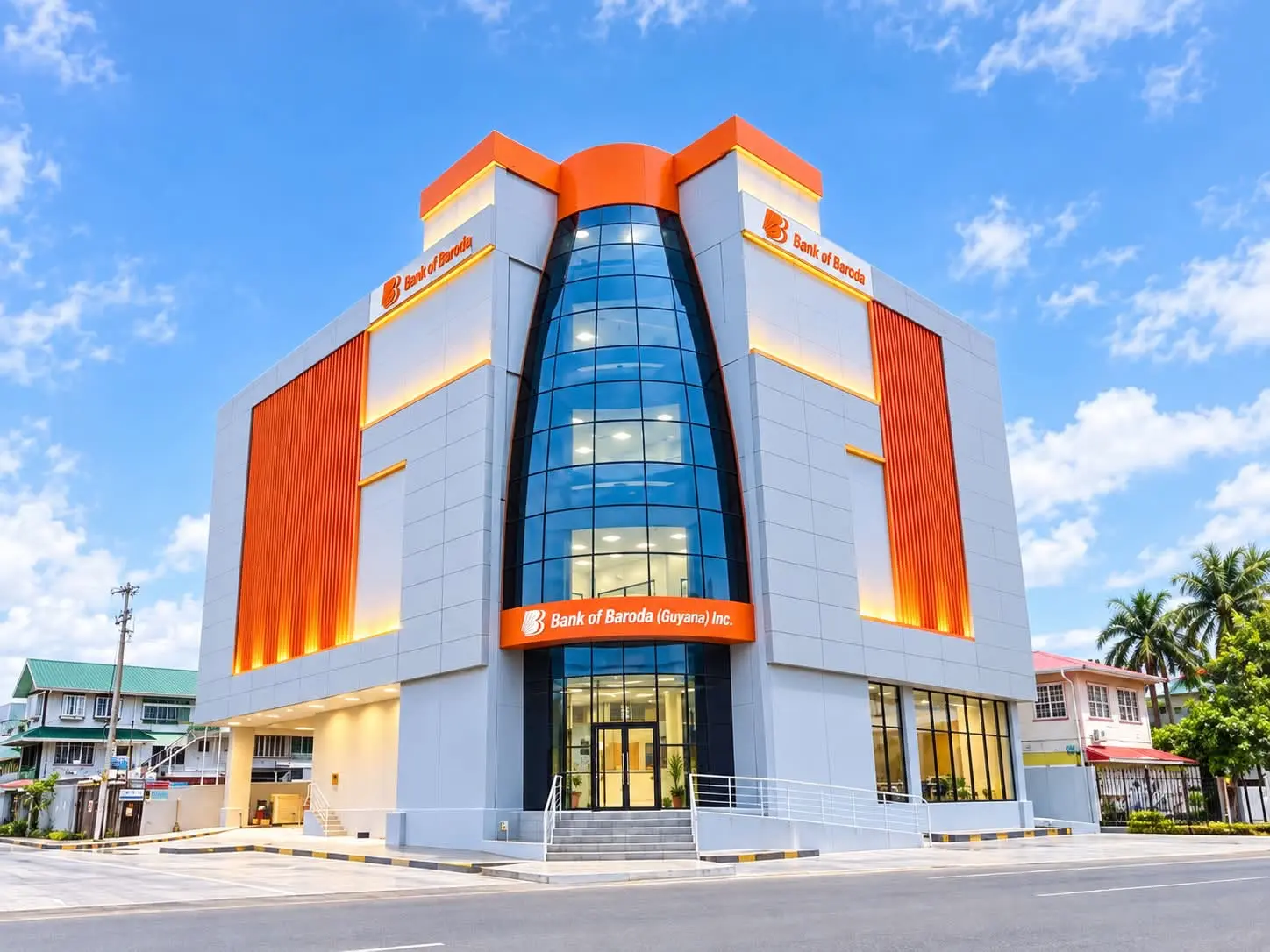
The Bank of Baroda has recorded significant growth in its operations in Guyana, with its total business increasing from $28.7 billion in the 2022–2023 financial year to more than $51.2 billion in 2025–2026, while net profit has reached $774 million.
The figures were disclosed yesterday by the bank’s Managing Director and Chief Executive Officer, Dr Debadatta Chand, during the official inauguration of its new headquarters at Lot 85 Carmichael and Quamina streets, North Cummingsburg, Georgetown.
Chand shared that the bank, which formerly operated at Lot 10 Avenue of the Republic and Regent Street, recorded growth of nearly 29 per cent in its latest financial year, while deposits increased by more than 31 per cent and advances grew by over 22 per cent. He also reported a significant improvement in the quality of the bank’s loan portfolio, with non-performing assets declining from $314 million to just $38 million.
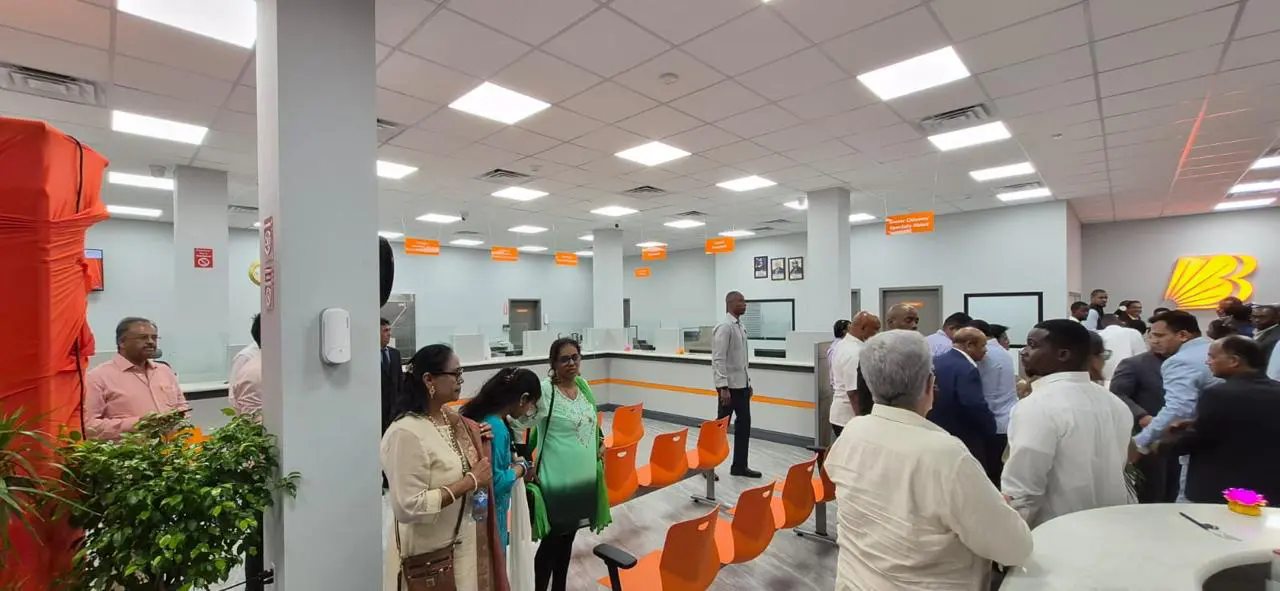
Chand acknowledged that the institution had experienced challenges in the past, including a period when business volumes were relatively modest and the future of its operations required careful consideration. However, he said continued support from customers and other supporters encouraged the bank to move forward with renewed determination.
The India-headquartered bank is now looking to expand its financial services in Guyana, particularly in digital banking, agriculture, renewable energy and financing for small and medium-sized enterprises.
Chand said the institution intends to strengthen its mobile and internet banking platforms, card services, trade financing, remittances and other payment solutions to meet the changing needs of customers. He also disclosed that efforts are underway to facilitate the introduction of payment capabilities based on India’s Unified Payments Interface (UPI) in Guyana, following an understanding between the two countries.
Guyana has already introduced its FAST PAY real-time payment system, and Chand said Bank of Baroda would be interested in contributing to the UPI initiative in collaboration with the National Payments Corporation of India, relevant authorities and other stakeholders. However, he noted that the initiative would be subject to the necessary regulatory and technical arrangements.
Chand said greater attention would also be given to small and medium-sized businesses, including local companies participating in the oil and gas supply chain. The bank, he said, wants to ensure its financial services reach not only large businesses but also smaller entrepreneurs, farmers, traders and ordinary Guyanese.
The CEO also expressed interest in supporting transactions connected to the recently announced US$500 million Indian credit facility for development projects in Guyana.
Exiting
President Irfaan Ali, in delivering the feature address, noted that the Bank of Baroda was among two major financial institutions considering exiting the Guyanese market when he assumed office in 2020, revealing that he personally intervened to persuade the bank to remain.
Scotiabank was also considering divesting its interests in Guyana at the time, causing him to hold meetings with representatives of both institutions at the level of the Presidency, while asking the Minister of Finance to engage them.
He recalled that his first working assignment was to get Scotiabank to remain and persuade Bank of Baroda not to withdraw, describing the institutions’ continued presence and renewed investment as evidence of confidence in Guyana’s economy.
Ali noted that access to capital remains one of the major obstacles confronting small entrepreneurs and urged commercial banks to become more actively involved in financing these businesses. He further called on financial institutions to move beyond traditional consumer lending and focus more on productive investments that generate employment, strengthen domestic supply and create wealth.
The President also urged commercial banks to consider financing climate resilience, particularly in agriculture, as farmers face the effects of extreme weather conditions. He pointed to the differences in agricultural yields between farmers using traditional methods and those adopting smart agricultural techniques, including hydroponics, during El Niño conditions.
Meanwhile, he reported that private-sector credit grew by approximately 19 per cent last year, while domestic credit expanded by 15.5 per cent during the first six months of 2026. He said private-sector credit increased by 11.5 per cent during that period, real estate mortgages expanded by 21.2 per cent, and lending to businesses in the services sector grew by 8.1 per cent.
He also reported that the banking system’s capital adequacy ratio stood at approximately 17 per cent at the end of 2025, liquid assets accounted for approximately 46 per cent of total assets, and non-performing loans declined to approximately 1.3 per cent of total loans.
Bank of Baroda first received its licence to operate in Guyana in January 1966, just months before the country’s independence. Its Guyana operations were converted into a wholly owned subsidiary in 1999, and the bank expanded with the opening of its Mon Repos branch in 2012.
The inauguration of the new headquarters comes as Bank of Baroda marks 60 years of operations in Guyana.










Discussion