—says reduction would not affect cash flow
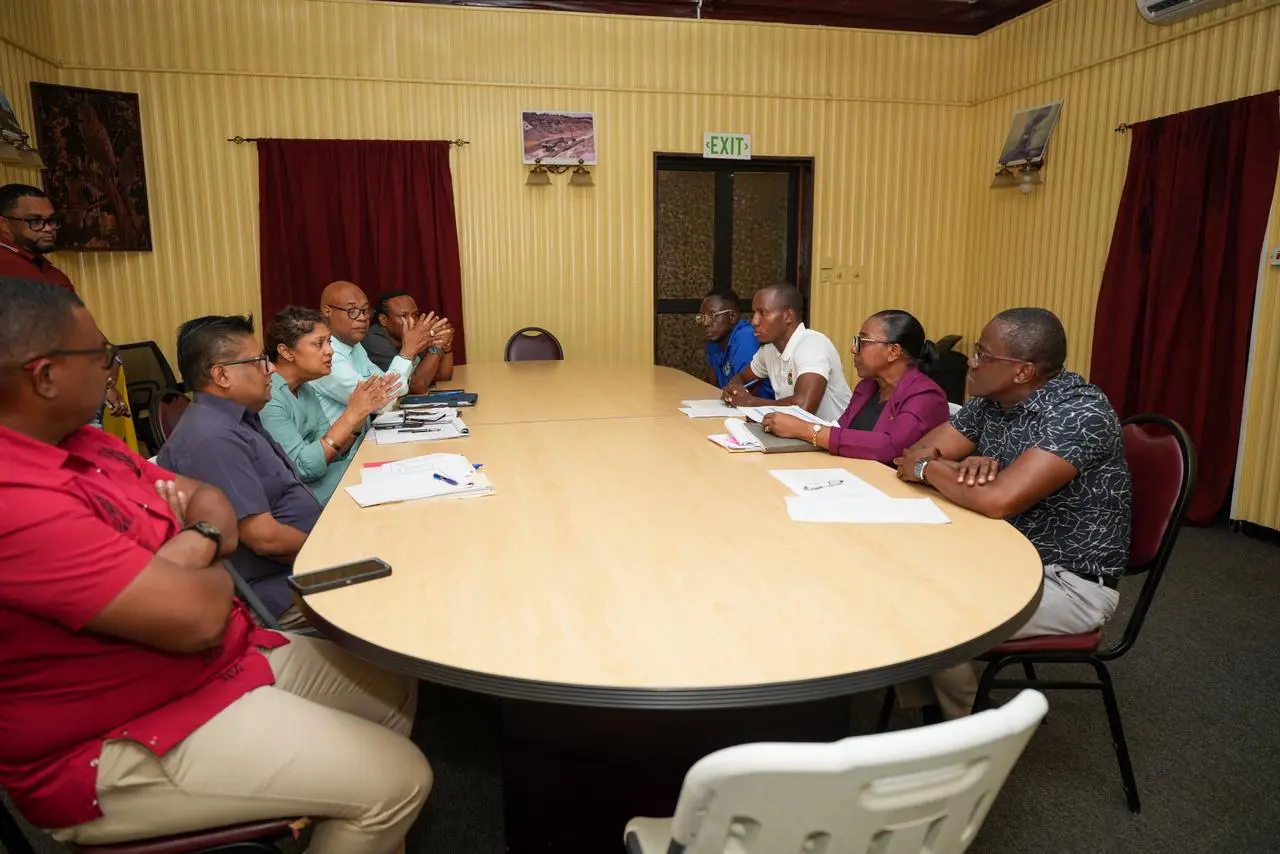
The Linden Mayor and Town Council (LM&TC) has proposed reducing its toll charges by 50% as the municipality and central government continue discussions over the future of revenue collected at the Mackenzie-Wismar Bridge and Kara Kara.
A joint statement issued following a meeting between the two sides said the proposed reduction would not adversely affect the council’s cash flow or impose additional burdens on the private sector.
The government has undertaken to review the proposal while working with the council to establish a complete account of its revenue and expenditure.
The meeting included Local Government and Regional Development Minister Priya Manickchand, Finance Minister Dr Ashni Singh, Public Works Minister Juan Edghill and other government representatives.
The council was represented by Linden Mayor Dominique Blair, Deputy Mayor Alister Wester, Town Clerk Lennox Gasper and Treasurer Audrey Nelson.
According to the statement, the government had received “strong representation” from Linden residents and private sector operators about the effect of the tolls on the cost of conducting business in the town.
The meeting also established that the council’s audited financial statements were significantly in arrears and that this must be corrected.
“There will be an examination to arrive at a clear understanding of revenue and expenditure as the LTC was not in a position to pronounce on verifiable finances,” the statement said.
It did not identify the years for which audited accounts remain outstanding, disclose the council’s current earnings from the tolls or indicate when the government would decide on the proposal.
Efforts yesterday to obtain a comment from Manickchand on the proposal, the government’s reasons for opposing the collections and the legal basis for revoking the Kara Kara toll by-laws proved futile.
The latest meeting followed talks between President Irfaan Ali, Blair and councillors over the proposed removal of the two revenue streams. The first meeting ended without a final agreement after the government requested further information on the municipality’s finances.
Blair subsequently said the council had used the engagement to explain its concerns and seek clarity on the implications of removing the revenue.
The municipality has underlined the difference between the toll collected at the Mackenzie-Wismar Bridge, which it says is governed by the Wismar-Mackenzie Bridge Act, and the Kara Kara toll, which operated under municipal by-laws gazetted in 2016.
The dispute intensified on September 1 when Manickchand instructed the Town Clerk to immediately stop collecting tolls along the Kara Kara Public Road.
In her letter, the minister said her ministry had not authorised the imposition or collection of tolls at Kara Kara or elsewhere in Linden. She added that no by-law or order authorising the collection had been issued and published by a minister responsible for local government.
On the same day, however, Order No 172 of 2026, signed by Manickchand, was published in the Official Gazette. It expressly revoked the Linden Town Council (Toll) By-laws 2016, which had been published in the Gazette on August 20, 2016.
The council rejected the minister’s initial position as legally questionable and warned that removing the revenue could further weaken its finances and affect the delivery of municipal services.
‘Right to govern’
APNU Member of Parliament and former Linden Mayor Sharma Solomon yesterday argued that the dispute was no longer only about the toll but the municipality’s “right to exist and govern Linden”.
Solomon said the minister’s shift from maintaining that no legal instrument existed to revoking the 2016 by-laws raised questions about whether she possessed the authority to act unilaterally.
He contended that while the law gives the minister a role in approving or rejecting proposed by-laws, it does not expressly confer an unrestricted power to revoke one already approved and gazetted.
Solomon argued that, under the Interpretation and General Clauses Act, the amendment, suspension or revocation of subsidiary legislation should be initiated by the same authority and carried out in the same manner in which it was made.
He therefore described Manickchand’s action as ‘ultra vires’, or beyond the powers granted to her by Parliament.
Solomon said the toll decision could remove more than $100 million annually from the council’s revenue and affect its ability to provide services and meet its obligations to staff. He did not provide a breakdown of this figure.
“Where was the consultation with the council? Where was the engagement with the elected representatives of the people? Where was the discussion about how Linden would replace this revenue?” he asked.
Solomon cited Articles 72 and 76 of the Constitution, which recognise local democratic organs and provide for their functions, including their capacity to raise revenue. He also invoked Article 13, which addresses citizens’ participation in decision-making.
“What are we really seeing? The Centre makes the decision. The Centre controls the resources. The Centre removes the revenue,” he said.
He called on the government to state the precise statutory authority under which Manickchand revoked the by-laws, identify any legal instrument which had rendered them unlawful before the revocation and explain what consultation was conducted.
Former Communities Minister Ronald Bulkan raised similar concerns in a letter published in Kiskadee Watch.
Bulkan said Manickchand could not maintain that no by-laws or order had ever been issued while simultaneously signing an order revoking the 2016 instrument.
He also questioned her reliance on sections 304 and 305 of the Municipal and District Councils Act, arguing that neither provision granted her the authority she purported to exercise.
Bulkan, who approved the Kara Kara toll by-laws while serving as communities minister, pointed to legislative amendments intended to strengthen municipal autonomy and limit ministerial interference.
The 2026 revocation order addresses the Kara Kara toll by-laws but does not refer to the separate toll at the Mackenzie-Wismar Bridge.
The joint statement did not say whether the tolls would now be collected at the proposed 50% rate while the government considers the council’s offer, or whether Manickchand’s revocation order remains fully in force.








Discussion