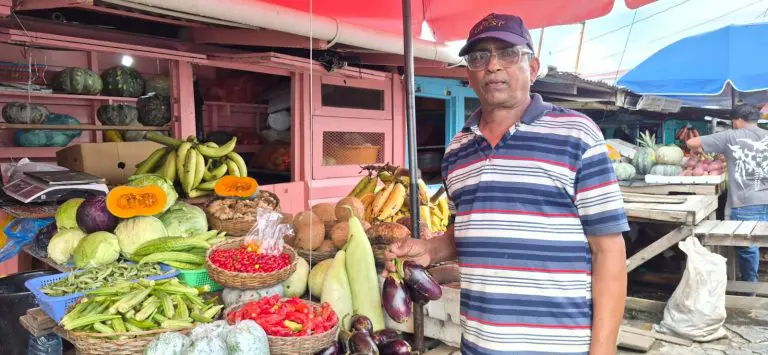
Food prices increased by 6.7% during the first half of the year and accounted for most of the rise in the cost of living, according to the 2026 Mid-Year Report released on Monday by the Ministry of Finance.
Overall consumer prices rose by 4.4% between December and the end of June, with food contributing 3.4 percentage points to the increase.
Vegetables and vegetable products alone accounted for 2.5 percentage points—more than half of the overall movement in consumer prices.
The report presents a separate 12-month inflation rate of 4% at the end of June, slightly below the 4.2% recorded in June last year.
At his press conference on Monday, President Irfaan Ali highlighted the lower 12-month figure rather than the 4.4% increase in prices since December.
He cited an approximately 86% increase in refined fuel and diesel prices since the beginning of the year and described the containment of inflation as “really, really effective management of our economy.”
The Mid-Year Report, however, acknowledges that food prices remain a significant source of pressure. It attributes increases to imported inflation, higher demand, retail mark-ups and unfavourable weather.
Prolonged and above-normal rainfall damaged crops, reduced yields and restricted access to farms during the second quarter.
The other-crops subsector contracted by 6.4% during the first half. Output of spices fell by 17.7%, beans and cereals by 5.7% and vegetables by 4.2%.
This was partially offset by increases in root crops, fruits and coconuts.
The report warns that the expected El Niño conditions could subject crops to heat stress just as farmers recover from the earlier flooding.
The rise in prices comes despite substantial government expenditure on agriculture and repeated claims that increased production would improve food security and affordability.
Government spent $40.8 billion of the $113.2 billion allocated to agriculture during the first half.
Measures cited to cushion households included the $100,000 cash grant, the Because We Care and transportation grants, support to farmers, the retention of zero excise tax on fuel and subsidies intended to keep electricity and water tariffs stable.
However, the report does not measure how far those interventions offset the increases faced by individual households.
Kiskadee Watch reported in August that the Georgetown Consumer Price Index showed vegetables and vegetable products rising by approximately 19% between January and May. It also noted that the Ministry of Agriculture’s daily market-price information had not been updated online since June 2025, making it more difficult to track retail prices and the margins between farmers and consumers
Ali previously blamed part of the cost-of-living burden on higher supermarket mark-ups, increased dining out and changes in consumer habits. He floated the establishment of permanent farmers’ markets to connect producers directly with consumers but announced no immediate system for regulating or publishing retail margins.
The year-end inflation forecast has now been increased to 4.3%, compared with the 2.5% projected in the January budget.













Discussion