
“Maybe tonight I could see you, on the tallest hill. Only you and me in the middle, the night clear from noise. Just the stars as witness.”
It is March 2020 and I am on top of the world. I get to teach a class of adults, in New York City, who want to learn English. Elsa Hernandez is from Ecuador and is in my ESL class. Her English is getting better. She is able to write the above poem, in Latin flair, which she will present in a few minutes. Then we will have a cake. In the middle of the lesson, there is a knock on the door. The officer from Department of Education enters the class.
“I am sorry,” he said. “Everyone, please get your things. You are leaving.”
“Why?” I ask.
“We are not sure; there is a virus going around. Sorry, no poem, no cake,” he replies.
Two days later, members of the Indo-Caribbean community met in Rockaway Boulevard to raise funds for the Phagwah Parade, which along with the Diwali Motorcade, is one of the show pieces of the Indo-Caribbean community. Both events are cancelled as is a literary program, “The Queens Book Fair.” By the end of the week a clearer picture emerges. The COVID-19 virus had begun to create a profile, and havoc, in the United States.
Dr. Anthony Fauci, from the National Institute of Allergy and Infectious Diseases, and Chief Medical Advisor to the President, appears regularly on national television. He says COVID is spread through droplets. This means that coughs or sneezes could transmit it. The symptoms include cough, fever, and fatigue, and in some cases, diarrhea. In the first few days of the announcements, the severity of infections had begun to hit home. There was anxiety, uncertainty, and fear. By the end of March 2020, there were 30,000 confirmed cases in New York City. Schools were closed. The business community was advised to apply social distance, and restaurants could only operate on a ‘take out’ basis. The airline industry too came to a halt. Liberty Avenue was like a ghost town.
Schools were opened in September but attendance had dropped. I taught in an inner-city school in New York. Some students were eager to learn. But when a teacher, or student, complained of wheezing, fever or headaches, the Department closed the school for ten days. Teachers were advised to use google classrooms to continue instruction from home. These classrooms proved to be ineffective for many students. Some found it difficult to sign on, or lost interest when they could not follow the lessons. Teachers too had a hard time to differentiate instruction that could accommodate struggling students. It soon became clear that while google classroom may be a good teaching tool in normal settings, it was a poor substitute for one-on-one school instruction.
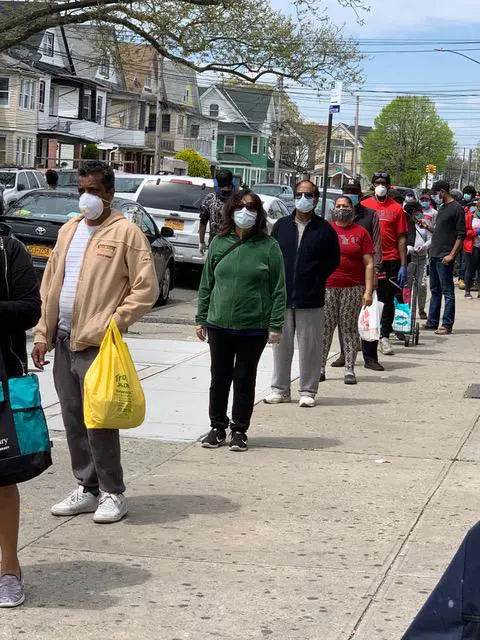
The closure of many schools continued into December 2020, and beyond. Chancellor Richard Carranza visited our school. He reinforced the wearing of masks in schools at all times, the need for social distance, and the use of sanitizers. But social distance was difficult to implement because of classroom size, and the wearing of masks in the lower grades posed challenges. New York State recognized the drawbacks and waivers were granted for various tests. The Department of Adult and Continuing Education, for instance, issued new guidelines that postponed testing for one year. School’s Chancellor Carranza resigned in February 2021. He cited the loss of 11 friends, and family members, as a result of COVID, as a reason, among others.
A release by the Association for Neighborhood and Housing Development (ANHD) in April 2020 stated, “New York City is facing an unprecedented crisis as it becomes the epicenter of the global COVID-19 pandemic. Hospitals are beyond maximum capacity, workers have run out of the personal protective equipment they need to stay safe, and forty-percent of New Yorkers can’t afford to pay the rent this month as businesses across the city shutter.” The release discussed frontline communities that were affected by COVID and concluded that Western Queens, “has the highest rate of positive COVID-19 tests in the City.” It pointed out that Elmhurst Hospital had 13 coronavirus-related deaths in a single day in April. The two hardest hit zip codes at that time, “were 11368 and 11373 with 62 percent and 79 percent of non-white populations respectively.”
In the Bronx, Highbridge and Morrisania sections had one of the highest rates of COVID diagnosis. It was clear that there was a relationship between COVID and inequity and poverty. It was argued that, “neighborhoods with higher positive cases-for example, Inwood and Washington Heights-also have a higher percentage of service workers, greater rent burden, and more people of color. For frontline workers who are putting their lives on the line, the ability to pay rent still looms over their heads.”
How does the Indo-Caribbean community fit into this picture? There is no definitive study on Indo-Caribbeans and the impact of the virus. The Phagwah Parade and Diwali Motorcade were cancelled and children were affected by school closures and hybrid instruction. By the summer of 2020, there were statistics for some communities. Councilman Daniel Dromm stated that for Elmhurst, Jackson Heights, and Corona, the death rate for Hispanics was 22 per 100,000; 20 for Blacks; 10 for Whites, and 8 for Asians. A breakdown of the figures by the Department of Health and Mental Hygiene showed that frontline workers were from minority populations. They were the bus drivers, construction workers, deli owners, restaurant employees, and other workers that did not have the luxury of staying home.
The figures for Queens showed that there were 616 infection cases per 100,000 persons and half that number for Manhattan, which gave credibility to the concept of a ‘tale of two cities.’ For Indo-Caribbeans, it was a bad time to die. The number of infections and deaths kept increasing and no one seemed capable of stopping them. The information about wearing masks, keeping social distance and staying at home was not reaching the people. An Indo-Caribbean mother complains of breathing problems. A compromised immune system leads to the hospital. Security guards in protective gear take the patient at the door. It is now a world of masks and ventilators and intubation. The feeling is that once they put that tube in the lungs it spells the end.
There is a phone call and a nurse is on Skype. She explains that mom is not coming home. Mom mumbles a few words and weakly manages a wave. You want to give her a proper send-off with a priest and relatives present. You can’t. The coffin is sealed. You don’t know where they are taking her but they promise to send the ashes. This was the new normal in April 2020. And to make matters worse, there was conflicting information from officialdom. President Donald Trump appears on television and says that once it gets warmer the virus would disappear. Dr. Fauci says the opposite is likely. The curve is not flattened and New York should brace itself for the worse.
A statistical profile of the rate of infections could be found in the faith-based houses of worship. Pastor Ejaz Hamid of the Faith Assembly Church in Richmond Hill states that in the month of April 2020 there were 22 infections in a congregation of about 300 persons. He had conducted a number of zoom funerals. The funeral homes would only allow two persons from the family on the premises. The deceased would be taken to an undisclosed location and the ashes would be given to the family at a later date. “This affected the grieving process, the reading of our scriptures, and the offer of comfort to the families,” said Pastor Hamid.
At the Shri Trimurti Bhavan in Ozone Park, there were at least 10 mortalities and over 20 infections during March and April 2020. The regulations meant that Hindu burials could not be carried out in conformity with the scriptural injunctions. For example, the final journey of the deceased involves five stops to the hearse. These stops connect with the five elements that give life. But during COVID, these steps were bypassed by funeral directors in a rush to get to the burial or cremation sites. High numbers have also been recorded in the Muslim community, and rituals were also affected. At the Masjid-al-Abidin, Imam Shaykh Safraz Bacchus said that during COVID the Masjid was unable to bathe and shroud the deceased, as was the custom. Instead, ‘tayamum’, a symbolic form of purification had to be performed.
In June 2020, the Indian Diaspora Council, led by Ashook Ramsaran, called a zoom meeting to discuss the high incidence of COVID-19 in the Indo-Caribbean community. The meeting was chaired by Shanaz Hussain who runs a number of dialysis centers in the New York area. Clinical Neuropsychologist Dr. Sharla Khargi said that the virus, “took away temperament, emotions and the way information is processed.” Professor Paul Mohabir, from Stanford University, said that since Indo-Caribbeans did not fit existing categories, there is no data that tracks the impact on the community. Annetta Seecharran, Executive Director of Chhaya, said that COVID led to housing insecurity and around 35 percent of persons were unable to pay their rent. Dr. Vishnu Bisram called for more facilities for seniors. This writer recommended that a study be done to assess the impact on the Indo-Caribbean community.
In the following months, infections and deaths increased among Indo-Caribbeans. The Director of Nursing at Jamaica Hospital reported that the maternity ward had to be converted into a COVID treatment area, and that refrigerated trucks were parked outside the hospital to store the bodies. By the end of 2020, the Indo-Caribbean community had become arguably ‘the epicenter of the epicenter’ as far as infections and mortality were concerned. A January 2021 report on WPIX Channel 11 television stated that the Indo-Caribbean community in zip code 11419 had reached record levels at 16.31 percent. How did this happen?
There are five main reasons as to why there was a spike in the numbers. The first is that the information did not filter down in the Indo-Caribbean community. It took a long time for the wearing of masks, social distance, and the use of sanitizers to be understood. The second reason is poverty or socio-economic status. Dr. Fauci, Dr. Sanjay Gupta, and others, kept insisting that people should stay home. Many Indo-Caribbeans, documented and undocumented, could not afford this luxury. They had to work to pay the rent and put food on the table. The increase in food pantries gave some ease but they were not enough. The third reason is population density. In many cases, people were literally living on top of each other, and without the protections. A fourth reason is that some persons believed that COVID was a political hoax and refused masks, sanitizers, or to keep social distance. Finally, there was limited access to health services.
Help for the Indo-Caribbean, and other communities, came from the Mayor’s office. Rohan Narine worked as the South Asian Liaison in Mayor Bill De Blasio’s administration. In March 2020, he was tasked with the responsibility of supplying masks to the community. The distribution point was at Queens Borough Hall. This took place for one year during which Rohan delivered over a million masks. He was also responsible for handing out sanitizers, face shields, gloves and hazmat suits under the Personal Protection Equipment program. A vaccine became available in 2021. Rohan contacted Naidoo Veerapen from the Bhavanee Maa Mandir in Brooklyn. A period of intensive sensitization followed, and more than 180 vaccines were distributed to seniors in a single day. This arguably saved many lives. Rohan’s outreach in various communities earned him the title “million mask man” and he was honored at the Shri Trimurti Bhavan for his services during COVID.
The scars of COVID-19 are still felt six years later. “The setback in education will last a generation,” says an Indo-Caribbean school Principal in Queens, New York.







Discussion