-proposes safeguards for historic districts, underwater sites
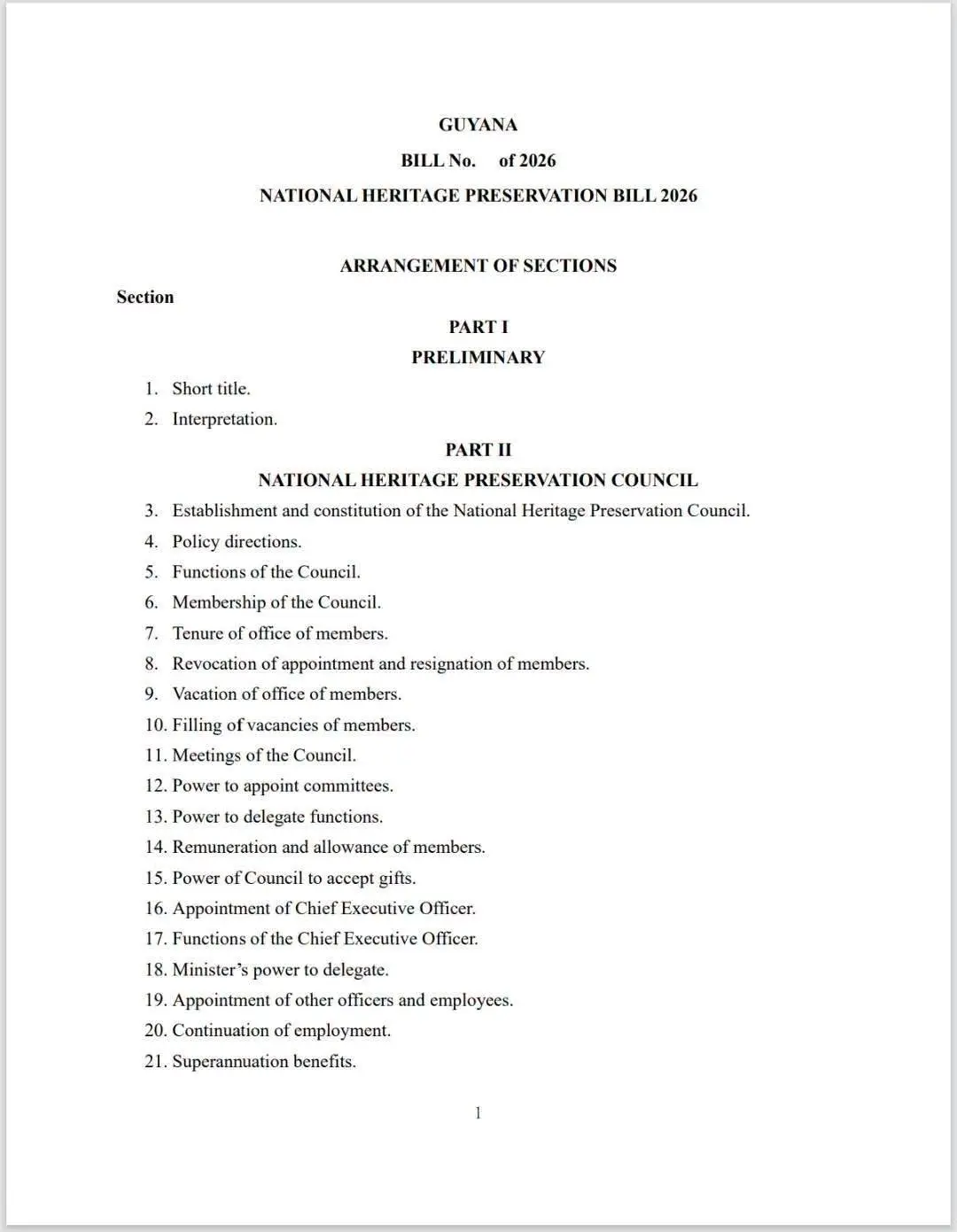
Owners of designated heritage properties would have to obtain approval before selling them and give a proposed National Heritage Preservation Council the first option to buy, under the bill read for the first time in the National Assembly on Wednesday.
The bill would also require permits for specified works in protected areas and set out when the State could compulsorily acquire property.
Minister of Culture, Youth and Sport Charles Ramson Jr., who presented Bill No. 16 of 2026, said in a Facebook post on Thursday that it would replace the National Trust Act of 1972. He said the proposal would extend heritage protection beyond monuments to sites, historic districts, objects, underwater heritage and treasure troves.
“The Bill represents a renewed commitment to protecting the places, objects and legacies that tell the story of Guyana, honour our past and connect future generations to our national identity,” Ramson said.
Private property and compensation
According to the explanatory memorandum, listing a property as having heritage significance, formally designating it for protection and declaring it national heritage are separate steps. A privately owned site or district would remain in private hands after designation, subject to preservation duties and a notation in the land or deeds records. Before designation, the owner or occupier would have to be notified. Owners and others likely to be affected could object, and the council would appoint an arbiter to hear their objections.
Under Clause 64, an owner intending to sell would have to give the council the “first option to purchase.” Clause 69 would allow compulsory acquisition in specified circumstances, including where property is neglected or endangered or its protection cannot reasonably be secured by other means. The minister would need a report from the council and would have to be satisfied that acquisition was necessary “in the public interest and for the benefit of future generations.”
The Chief Valuation Officer would assess compensation at market value as of the date the acquisition order was published. Payment would be due within 12 months, and either party could take an acquisition dispute to the High Court. The council could also enter property for inspection or specified preservation work after giving at least seven days’ written notice. In certain cases, it could recover reasonable repair costs from the owner or occupier.
What would qualify as heritage
The explanatory memorandum says the bill covers Guyana’s cultural heritage, including traditions, practices and knowledge, as well as natural heritage such as landscapes, habitats and geological formations. The definition of national heritage includes Amerindian cultural heritage and monuments already declared under the National Trust Act. Members of the public could nominate items for inclusion in the Heritage Register, which would be published annually in the Gazette and on the council’s website.
People who discover objects they have reason to believe are of heritage significance would have to report them to the council immediately and hand them over where possible. An object found on public land and determined to have heritage significance would belong to the State. An object found on private land would belong to the landowner. Separate provisions govern treasure troves, including a duty to report the find and its location immediately and deliver it to the council where practicable. A treasure trove determined to have heritage significance would become State property.
Discoveries of possible underwater cultural heritage would have to be reported as soon as practicable. The minister could declare protected zones around underwater sites or objects, and salvage, excavation or survey work in Guyana’s waters aimed at finding such heritage would require council approval. The bill also provides for licences to export heritage items, import foreign heritage items and excavate land or the seabed for heritage objects.
Permits, penalties and oversight
According to the explanatory memorandum, Clause 71 would require a council planning permit for specified construction, expansion, major renovation or demolition at protected sites or districts. Specified unauthorised works, or works that damage a site or diminish its heritage value, could attract a $5 million fine and six months’ imprisonment on summary conviction. Preservation schemes could also restrict tree felling, quarrying and excavation, while buffer zones could protect conservation areas from activities nearby.
Under Clause 72, the minister could issue a Heritage Preservation Order on the council’s advice if qualifying private heritage property is dilapidated or in imminent danger of demolition, destruction or damage. The order would remain in force for 90 days and could be extended. Failure to comply could attract a $1 million fine and six months’ imprisonment.
The council would have the power to detain or seize heritage items, and its decisions could be appealed in writing to the minister. Prosecutions would have to be instituted by, or with the written consent of, the Director of Public Prosecutions. The bill provides for a Heritage Fund and requires the Auditor General to audit the council’s accounts annually. Existing orders, exemptions and registers under the National Trust Act would be preserved, and court proceedings already begun would continue under that Act.













Discussion