-DPP challenging parts of affidavit
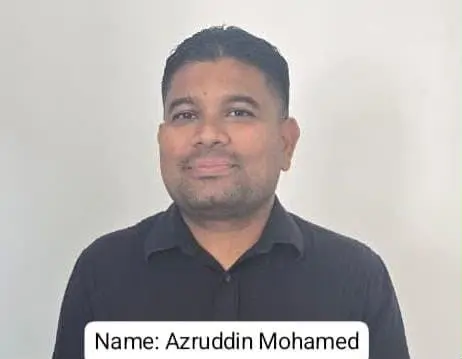
Opposition Leader Azruddin Mohamed’s mother has launched a fresh legal bid to secure his immediate release from the Lusignan Prison, asking the High Court to grant him interim bail rather than have him remain behind bars until the substantive hearing of his bail challenge.
The latest application, filed on November 8 by Bonita Mohamed through attorneys Roysdale Forde SC, Siand Dhurjon and Damien Da Silva, seeks an urgent hearing before Justice Priscilla Chandra-Hanif on Thursday, November 12, when the Court is also expected to hear applications by the Attorney General and the DPP challenging affidavit evidence submitted in support of the Opposition Leader’s release.
The new legal move comes as Mohamed remains on remand following Magistrate Abigail Gibbs’ October 30 decision to refuse him bail on a cybercrime charge connected to the alleged unauthorised obtaining and disclosure of police surveillance footage.
In the latest filing, his attorneys argue that the continued delay in determining his bail challenge is causing prejudice that cannot be remedied, particularly since he has not been convicted of any offence.
The application seeks an order admitting Mohamed to bail pending the determination of the Fixed Date Application filed on November 2, which challenges the Magistrate’s decision.
Alternatively, his attorneys are asking the Court to determine the bail issue separately on November 13, or bring forward the substantive hearing to November 19, instead of November 23.
The defence is proposing several conditions should the Court grant interim bail, including the continued surrender of Mohamed’s travel documents, a prohibition on leaving Guyana, residence at his Houston, East Bank Demerara home, and regular reporting to a police station.
He would also be prohibited from contacting his co-accused, Police Constable Ryan Greene, or prosecution witnesses except through his attorneys.
Additionally, the proposed conditions would prevent him from accessing, attempting to access or encouraging anyone to access Guyana Police Force computer systems or data, including the Command Centre.
The application further proposes that Mohamed be prohibited from interfering with the investigation and remain subject to the bail conditions imposed in separate criminal proceedings on October 16, including restrictions concerning Senior Superintendent Prem Narine and his family.
His attorneys have also asked that any curfew imposed by the Court accommodate Mohamed’s attendance at sittings of the National Assembly and parliamentary committees.
The latest application argues that the urgency of the matter has increased because the substantive bail hearing is currently fixed for November 23, with judgment likely to follow on November 24, the same date to which Mohamed was remanded by the Magistrate’s Court.
According to the filing, Attorney General Anil Nandlall SC subsequently requested that the substantive hearing be moved to a date after November 26 because of scheduling conflicts with the ongoing extradition proceedings involving Mohamed and his father, Nazar Mohamed.
The defence has opposed that request, maintaining that any further postponement would prolong Mohamed’s detention without a determination of whether the refusal of bail was lawful.
His attorneys have offered to shorten their own filing deadlines to accommodate an earlier hearing between November 19 and 22.
They argue that each additional day in custody represents a loss of liberty that cannot be restored if the High Court ultimately determines that the Magistrate’s refusal of bail was unlawful.
The application also raises questions about the legal basis for the decision to remand Mohamed.
Independently
His attorneys contend that the seriousness of the cybercrime charge, cited as a reason for refusing bail, does not independently constitute a statutory ground for denying bail under the Bail Act 2022.
They further challenge the finding that Mohamed was likely to commit another offence, arguing that this conclusion relied on unproven allegations arising from separate criminal proceedings.
According to the defence, Mohamed has complied with existing bail conditions in the extradition matter and in other criminal proceedings, and no court has found that he breached those conditions.
The application also contends that the prosecution did not establish that Mohamed was a flight risk.
His attorneys point to his family responsibilities, fixed residence, lack of previous convictions and constitutional duties as Leader of the Opposition as factors favouring his release.
Another significant issue raised in the application concerns the cybercrime charge itself.
The defence argues that the charge was amended during the Magistrate’s Court proceedings from Section 9(1)(c) to Section 9(1)(b) of the Cybercrime Act 2018, but that the particulars were not correspondingly amended.
According to the application, the particulars describe Mohamed as a recipient of information rather than the person who unlawfully disclosed it, raising questions about whether the charge, as amended, properly alleges an offence against him.
His attorneys further contend that the particulars place Mohamed at the Guyana Police Force Command Centre on October 13, when he was in police custody.
They also rely on an affidavit sworn by Cadet Officer Stephan Hinds on October 28, which, according to the defence, places the alleged downloading of footage between October 23 and 24 and the alleged subsequent dealing with Mohamed at his residence.
The defence maintains that these inconsistencies raise serious questions about the prosecution’s case and should have been considered when bail was determined.
Separate
Meanwhile, the DPP has filed a separate Notice of Application seeking to strike out specific portions of the 112-paragraph affidavit personally sworn by Mohamed on November 4.
The application, supported by an affidavit from Deputy Director of Public Prosecutions Diana O’Brien, challenges paragraphs 16, 45, 53, 59 and 61, along with the first sentence of paragraph 76.
The DPP argues that the identified portions contain inadmissible hearsay or legal submissions rather than evidence within Mohamed’s personal knowledge.
Among the challenged statements are references to complaints allegedly received by Mohamed, public commentary on social media and information he claims to have received concerning the alleged destruction of surveillance footage.
The DPP also objects to statements in which Mohamed interprets provisions of the Cybercrime Act and refers to legal submissions advanced by his attorneys.
According to the prosecution, those matters are inappropriate for inclusion as sworn factual evidence.
However, the DPP’s application expressly acknowledges that most of Mohamed’s affidavit concerns matters within his personal knowledge and states that no objection is being taken to those portions.
The challenge is therefore confined to the specified paragraphs and sentence, rather than seeking to strike out his entire affidavit.
This application is separate from the earlier challenge brought by Attorney General Nandlall against the affidavit sworn by Bonita Mohamed.
During the November 4 High Court proceedings, Nandlall described Bonita Mohamed’s affidavit as legally defective, arguing that it contained extensive hearsay and allegations concerning matters outside her personal knowledge.
He maintained that Bonita Mohamed could not personally attest to the conditions under which her son was being held at Lusignan Prison or other events she had not witnessed.
Following those objections, Justice Chandra-Hanif granted Azruddin Mohamed permission to personally provide an affidavit addressing the matters raised in the proceedings.
That affidavit was filed on November 4 and included allegations concerning his detention conditions, the circumstances surrounding his arrest and the refusal of bail.
The DPP’s latest application now seeks to exclude selected portions of that document.
The defence’s new interim bail application maintains that its request for Mohamed’s release does not depend on any paragraph which the Attorney General or DPP is seeking to strike out.
It argues that the Court can determine whether interim bail is appropriate independently of the outstanding disputes over the admissibility of the affidavit evidence.
The application also seeks additional protections for Mohamed should the Court decline to release him immediately.
His attorneys are requesting directions allowing him to consult privately with his legal representatives, associate with other remand prisoners, have the light in his cell switched off at night and be protected from treatment amounting to psychological abuse.
Those requests follow allegations made by Mohamed in his sworn affidavit that he is being confined in a poorly ventilated cell, subjected to continuous bright artificial lighting and permitted only limited time outside his cell.
The Guyana Prison Service had previously rejected allegations that he is being subjected to inhumane treatment.
The new application further asks that, if the State relies on statements issued by the Prison Service on November 1 and 2, records supporting those statements be produced.
These would include records of Mohamed’s daily detention arrangements, visits, telephone calls and medical attention since October 30.
During the previous hearing, Justice Chandra-Hanif expressed concern over allegations concerning prolonged artificial lighting and said that Mohamed should not be detained under oppressive circumstances.
Attorney General Nandlall also presented a photograph which he said depicted Mohamed’s cell, while the Judge requested comparable photographic evidence from the defence.
The latest application also draws attention to Mohamed’s parliamentary responsibilities, noting that the National Assembly is scheduled to sit on November 11.
His attorneys argue that his continued detention prevents him from performing constitutional functions attached to the office of Leader of the Opposition.
Mohamed and Police Constable Ryan Greene were charged on October 30 in connection with the alleged unauthorised obtaining and disclosure of surveillance footage relating to the October 12 shooting incident outside the Kitty residence of Head of Special Branch, Senior Superintendent Prem Narine.
Both were remanded to prison until November 24.
The footage had previously been displayed by Mohamed during a press conference, where he maintained that the recordings supported his account of the shooting incident.
Mohamed also faces separate charges arising from that incident, including unlawful possession of a firearm, unlawful possession of ammunition and attempting to obstruct the course of justice. He was previously granted bail in those proceedings.
He and his father are also before Chief Magistrate Judy Latchman in separate extradition proceedings arising from a request by the United States.
The latest High Court application notes that attempts to revoke Mohamed’s bail in the extradition proceedings were unsuccessful.
For now, Mohamed remains at Lusignan Prison as the legal dispute over his continued detention intensifies.
Justice Chandra-Hanif is scheduled to hear the competing applications on Thursday, November 12, at 10 a.m., with a ruling on the earlier applications to strike out affidavit evidence scheduled for Friday, November 13, at 11 a.m.









Discussion