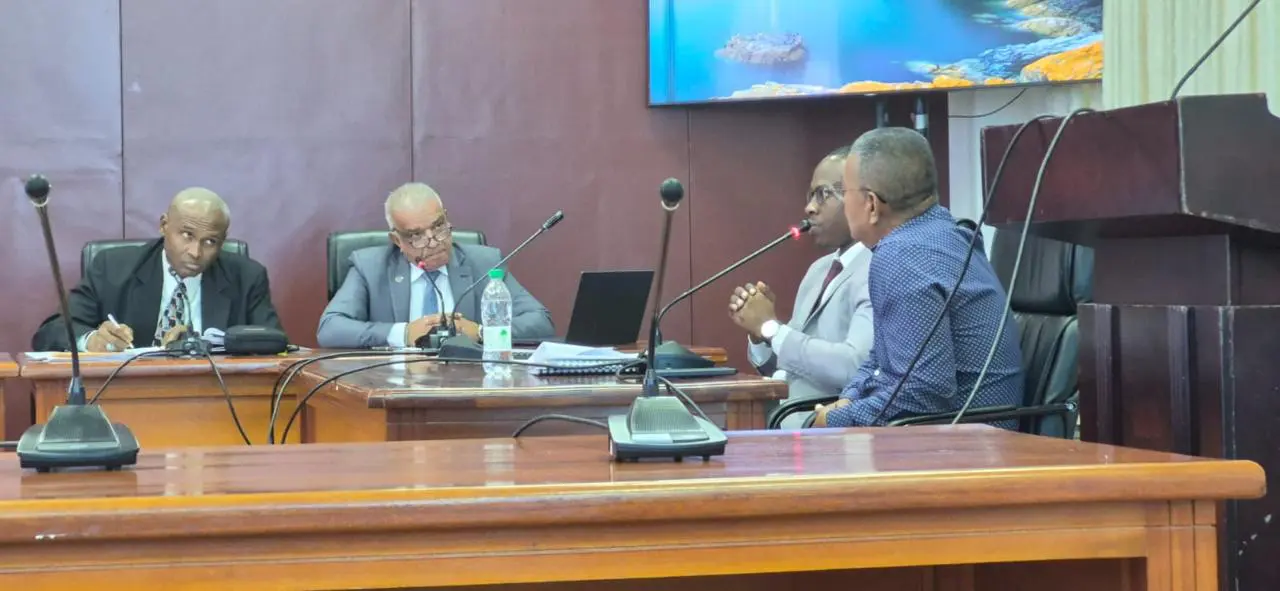
A preliminary review of the MV Barima’s deck logbooks showed that the vessel was overloaded on every voyage between 2019 and 2021, Commissioner Dr Andrzej Jasionowski pointed out during the Commission of Inquiry (COI) yesterday, moving former Director of Maritime Safety at the Maritime Administration Department (MARAD), Captain John Flores, to say he was surprised by the finding.
During questioning, Jasionowski told Flores that the preliminary examination of the logbooks showed the vessel had been operating in an overloaded state on all voyages during the period.
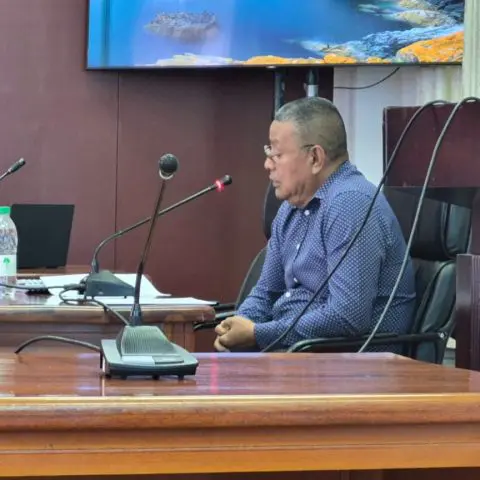
Flores said the information came as a surprise to him, explaining that he had never received a report from any of the vessel’s captains about overloading.
“Generally, I would receive random calls from captains if there was an issue directly in those days, and it was never reported to me,” he told the inquiry currently ongoing at the Arthur Chung Conference Centre at Liliendaal.
Jasionowski then questioned whether the absence of proper vessel documentation had prevented authorities from determining whether the MV Barima was carrying loads beyond its permitted capacity.
Flores agreed that without the vessel’s technical documents, including the relevant load-line certification, he could not determine whether the recorded cargo and passenger figures amounted to overloading.
The Commissioner referred to information in Flores’ evidence which included 268 tonnes of cargo, 179 passengers and an estimated 3.5 tonnes for vehicles. Using those figures, Jasionowski arrived at an estimated load of approximately 285 tonnes, while noting that fuel and ballast had not been included.
Flores clarified that the figures had been obtained from the Transport and Harbours Department’s marine superintendent for planning purposes during the rescue operation. He said the cargo figure had meant little to him at the time, as his primary concern was determining how many people needed to be rescued.
Jasionowski then presented a hypothetical scenario in which the vessel’s permitted deadweight was 125 tonnes and asked whether carrying approximately 285 tonnes would amount to overloading.
Flores agreed that, if those were the figures, the vessel would have been overloaded. However, he said that he did not know the MV Barima’s actual loading limit and could not make a determination without the vessel’s documentation.
Flores explained that inspectors could observe a vessel’s load-line mark, but would not necessarily know whether it had been positioned correctly without the relevant documentation. He also said that inspections conducted while a vessel was being loaded should include checks to determine whether it was loading above or below the load line.
Asked how frequently random inspections were conducted, Flores said he believed inspectors sometimes selected vessels for checks about once a year. However, he could not recall whether the MV Barima had been subjected to such checks.
Flores further acknowledged that he had never personally conducted inspections on the vessel and could not say whether the recorded loading conditions had been assessed against an established limit.
He agreed that the absence of stability and other technical documentation made it difficult for inspectors to accurately determine a vessel’s limits.
Meanwhile, further questions from Commissioner, Captain Hamada Fouda highlighted the limitations of the inspections conducted by MARAD officers.
Fouda questioned whether the inspectors were qualified to conduct statutory surveys, particularly when examining matters such as load lines and vessel certification. Flores clarified that the officers were not conducting statutory surveys but were carrying out inspections to check whether vessels had the required certificates on board.
He explained that random inspections followed the same checklist used during routine inspections, with officers examining items such as life jackets, life rafts and other safety equipment. Flores said he believed aspects of the International Convention for the Safety of Life at Sea (SOLAS) had been incorporated into the inspection requirements, although he was not familiar with how the original inspection form had been developed.
Rear Admiral (Ret’d) Hayden Pritchard also questioned Flores about MARAD’s capacity to carry out its maritime responsibilities, with Flores acknowledging challenges relating to staffing, training and the acquisition of appropriate equipment. He noted that the agency’s Maritime Rescue Coordination Centre (MRCC) had not yet been formally commissioned and was performing limited functions while efforts continued to develop its capabilities.









Discussion