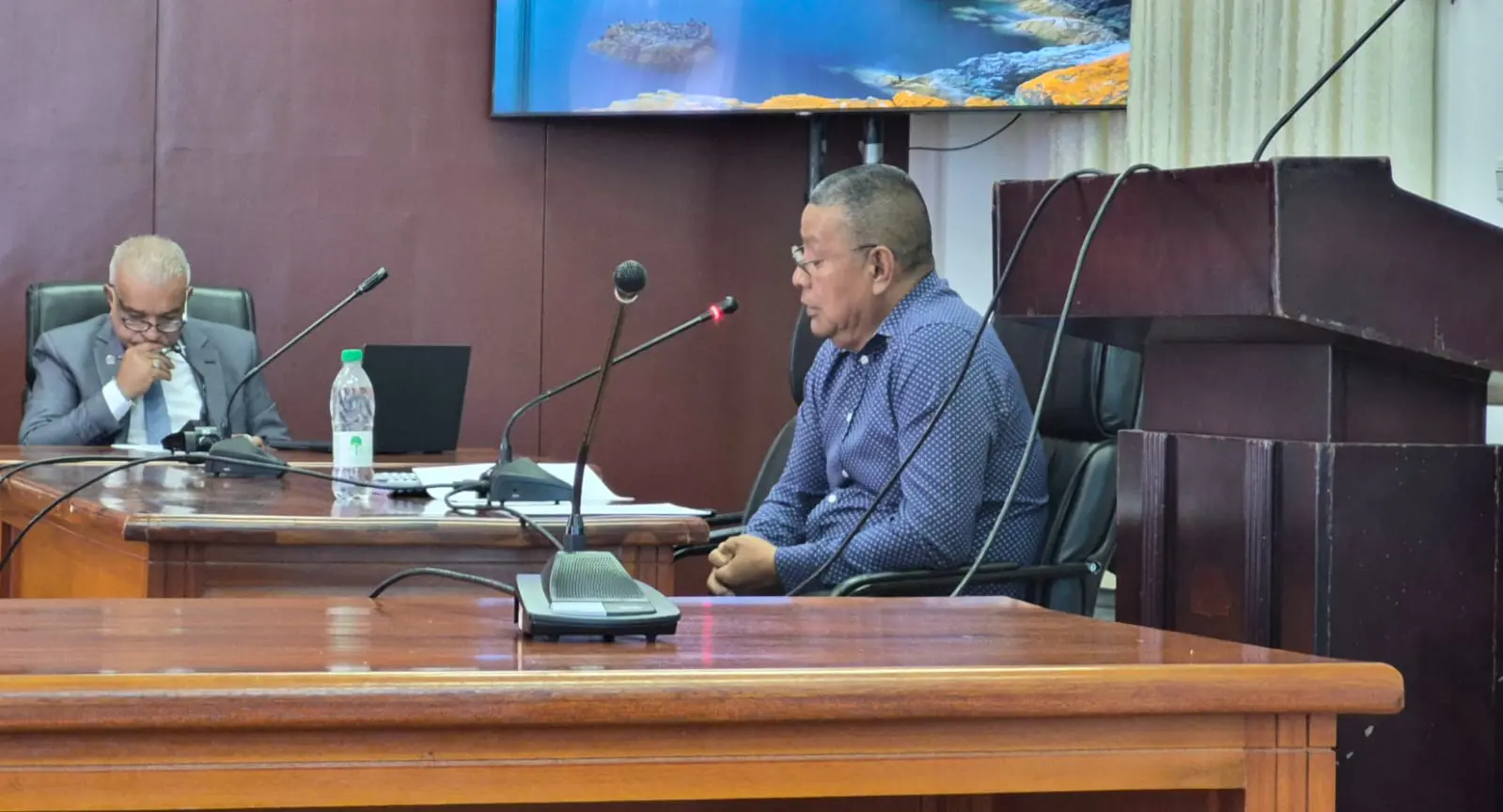
Former Director of Maritime Safety at the Maritime Administration Department (MARAD) Captain John Flores yesterday told the Commission of Inquiry (CoI) into the sinking of the MV Barima that an earlier identification of the vessel during the distress operation could have given rescuers an additional hour to respond, allowing them to save more lives.
Flores said so while being questioned by Commissioner Nyree Dawn Alfonso, who examined communication problems during the rescue operation and whether the various agencies involved had effectively shared information.
“If we knew right away that it was the Barima, I am certain we would have saved all of those lives who came out of the boat alive. Almost certain,” Flores told the CoI which continued at the Arthur Chung Conference Centre at Liliendaal.
He agreed with Alfonso that an earlier identification could have given rescuers an additional hour to respond and allowed them to deploy the necessary resources more quickly.
Flores explained that the rescue coordination team had not immediately established that the distress situation involved the Barima, noting that authorities sometimes received false distress calls and would not necessarily deploy aircraft and all available resources until a situation was confirmed.
He said that had he known earlier which vessel was in distress, he would have responded with an “overwhelming force.”
The commissioner’s line of questioning also called attention to communication difficulties among the different agencies and persons involved in the rescue, including the Coast Guard, fishermen, aircraft and maritime personnel. Further, Alfonso observed that information about sightings and coordinates did not always appear to reach those actively involved in the search at sea, with different groups seemingly operating independently.
Flores acknowledged that communication was poor during the early hours of the operation, although he said information about a distress flare sighting was transmitted through Starlink to fishermen, the Coast Guard and his team. He explained that communication between the Maritime Rescue Coordination Centre and aircraft was limited, with information generally being relayed through an air coordination rescue centre.
Flores said the first two hours of the operation were chaotic, but he believed that by approximately 3:00 to 4:00 a.m., the authorities had developed a better understanding of where the different responding units were operating.
He agreed that communication needed to be improved and acknowledged that more efficient coordination during the early hours could have made the rescue operation more effective.
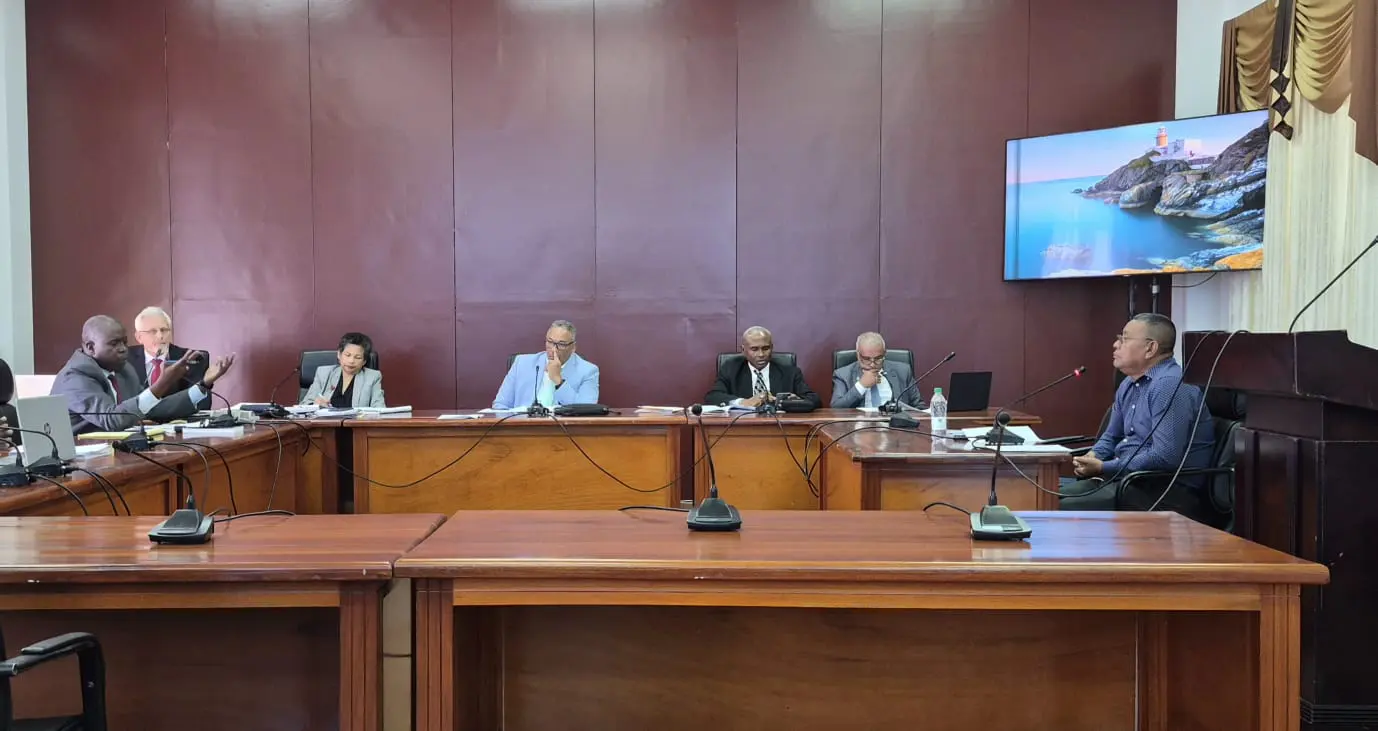
Alfonso also questioned the unsuccessful attempts to contact the MV Barima through the lighthouse, noting that the vessel should have been able to communicate with the lighthouse in the event of an emergency or mechanical problem.
Flores responded that authorities had attempted to contact the vessel but received no response, adding that the vessel’s radio equipment had limitations.
During questioning by Commissioner Dr Andrzej Jasionowski, Flores acknowledged that the absence of stability documentation made it difficult for inspectors to accurately determine whether a vessel was operating within safe loading limits. He explained that without the relevant technical records, inspectors would have no reliable reference against which to assess certain aspects of a vessel’s safety, including its stability.
The Commissioner also questioned Flores about the absence of detailed records showing where survivors and bodies were recovered during the search operation.
Flores acknowledged that the rescue coordination team often received general locations rather than precise coordinates and that there was no comprehensive post-operation register identifying which vessels recovered individual survivors and bodies.
He explained that some survivors were brought ashore by fishermen and other vessels through locations outside the main Coast Guard receiving point, including areas east of Charity.
The questioning also exposed uncertainty surrounding the number of life rafts recovered from the vessel, with Flores recalling that four had been found, although he could not confirm whether all had subsequently been retrieved.
The Commission is examining the circumstances surrounding the July 18 sinking of the MV Barima, which resulted in the deaths of 73 people, while 76 others survived. Dozens of other passengers remain missing.








Discussion