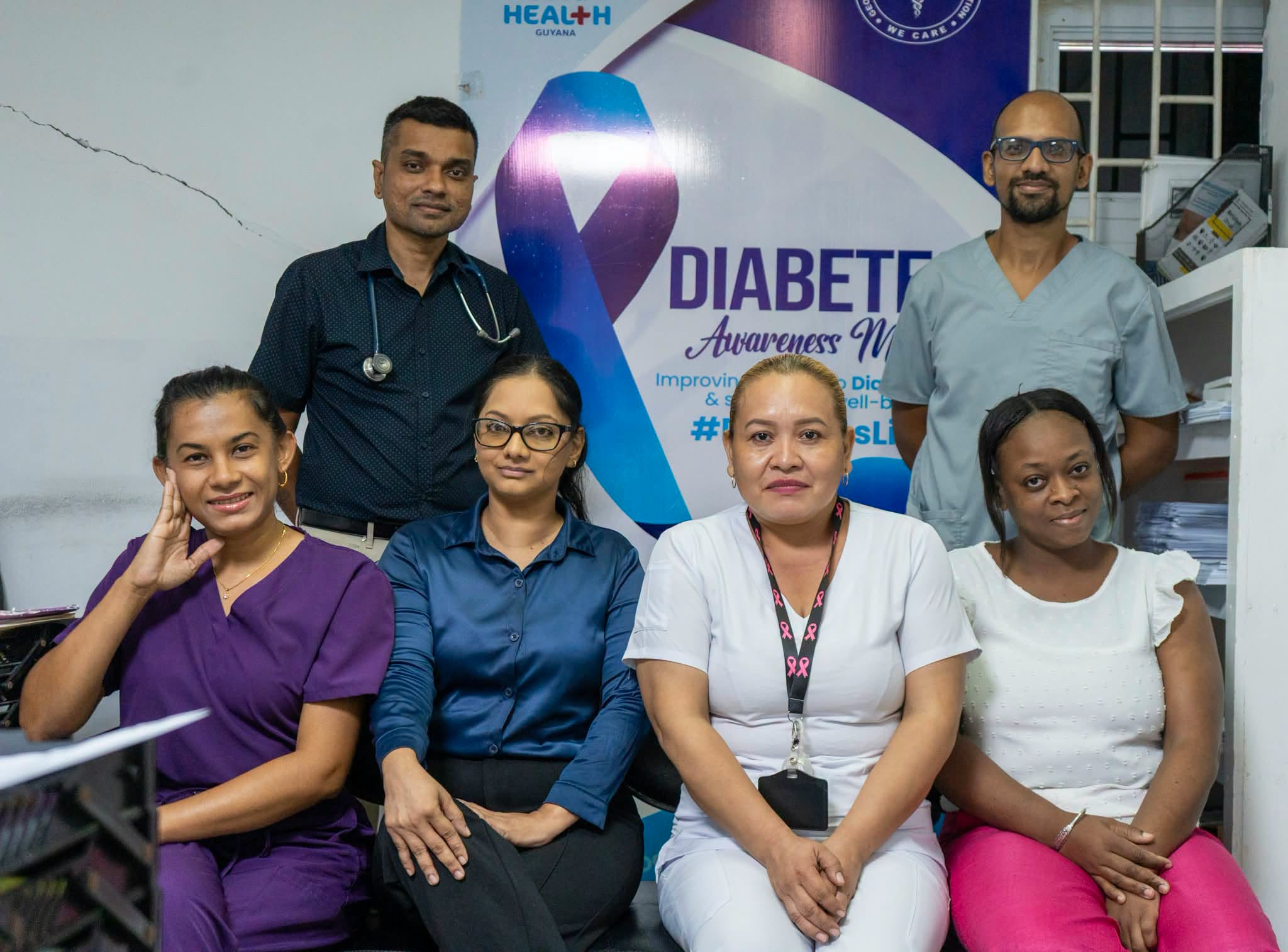
People living with diabetes are being urged to seek early treatment for foot problems to reduce the risk of complications and avoidable amputations.
In a recent statement, the Georgetown Public Hospital Corporation (GPHC) outlined the services available at its Diabetic Foot Centre and advised patients to pay close attention to wounds and other changes affecting their feet.
Established in July 2008, the centre provides foot screening, risk assessments, wound care, ulcer treatment, education and follow-up care for patients from across the country.
Head of the centre, Dr Kumar Sukhraj, advised people at risk to check both feet daily, including the soles and between the toes, and to seek assistance if they cannot see an area clearly.
He encouraged people with numbness, poor circulation, changes in foot shape, a previous ulcer or amputation, or an active wound to seek care.
According to the statement, nerve damage can prevent patients from noticing blisters, cuts or injuries caused by footwear rubbing against the skin.
Sukhraj advised that a new wound, blister or discharge, or a foot that becomes red, hot or swollen, should be assessed promptly, preferably on the same day.
Emergency care should be sought if the skin turns black, the foot suddenly becomes cold or pale, redness spreads quickly, or the patient develops a fever or feels very unwell, the statement said. Patients were also advised against cutting calluses or applying chemicals or home remedies to wounds.
Treatment at the centre may include cleaning wounds, removing unhealthy tissue, treating infections and relieving pressure to support healing. The team also assesses circulation, blood glucose control and footwear, with further tests, specialist assessment or hospital care arranged where necessary.
Doctors and nurses trained in diabetes and wound care work alongside surgical and vascular teams, medical specialists, rehabilitation professionals, dietitians, pharmacists, and laboratory and imaging staff, depending on patients’ needs.
The hospital said education forms an important part of the service, with patients taught how to examine their feet, select suitable footwear, care for their skin and nails, and recognise changes requiring attention. Families are also involved in helping patients manage their care at home.
Referrals can be made through health centres, regional hospitals, other clinics and GPHC departments. Patients seeking information on appointments and referrals can contact the hospital’s Help Desk.













Discussion