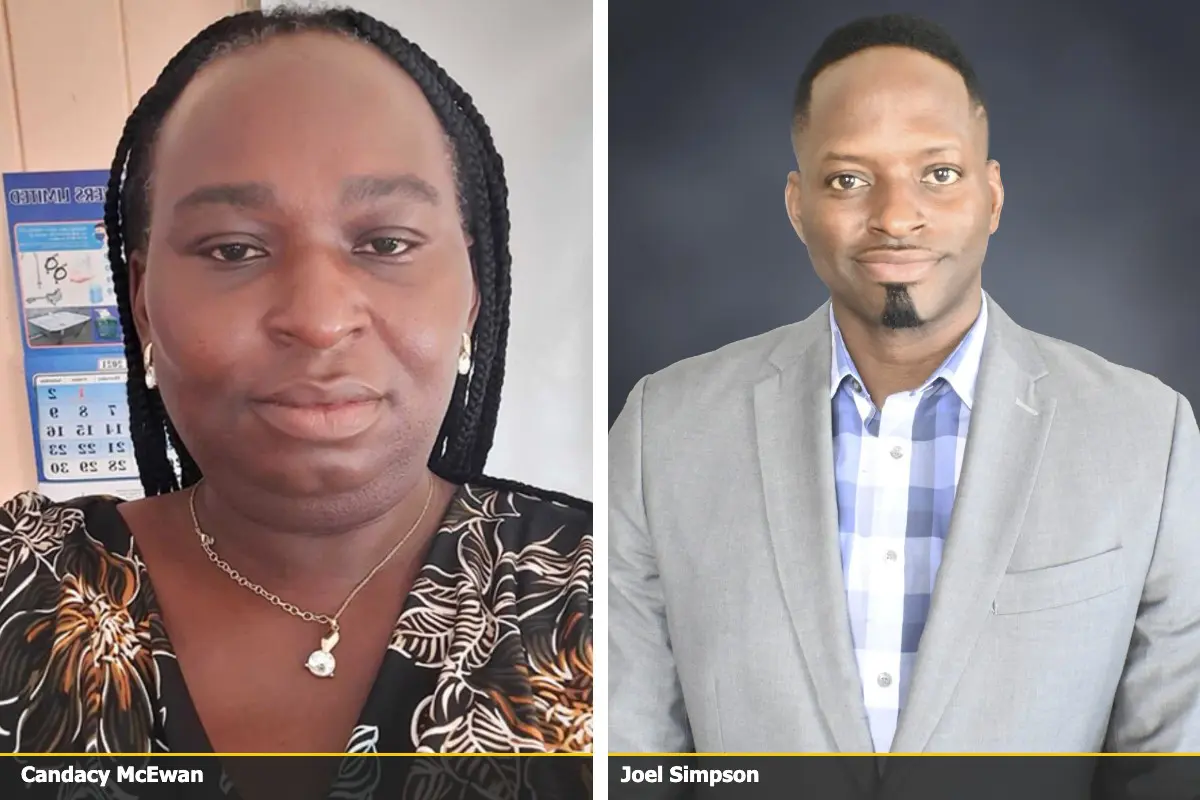
By Candacy McEwan and Joel Simpson
Candacy McEwan (she/her) is the first-named litigant in McEwan and Others versus the Attorney General of Guyana case, founder and Executive Director of Guyana Trans United.
Joel Simpson (they/them) is the founder and Managing Director of SASOD Guyana. SASOD Guyana is the fifth-named and only organisational litigant in the McEwan case.
Eight years ago, on November 13, 2018, Guyana took an important step toward becoming a country where everyone can live with greater dignity and freedom. On that day, the Caribbean Court of Justice ruled in McEwan et al. v. Attorney General of Guyana and struck down Guyana’s colonial-era law criminalising cross-dressing.
For one of us, Candacy, that decision was deeply personal.
The case began after Candacy and several others were arrested in February 2009 under a law dating back to 1893. They spent three nights in police detention and were ultimately fined for appearing in public in clothing authorities considered inconsistent with their sex assigned at birth. What happened to them was humiliating. But instead of accepting that treatment as simply the way things were, they decided to challenge it.
With support from the University of the West Indies Rights Advocacy Project (U-RAP), SASOD Guyana and others, the case travelled through the system and eventually reached the Caribbean Court of Justice. Nearly a decade after the arrests, Guyana’s highest court unanimously ruled that the law was unconstitutionally vague and violated fundamental rights. The Court recognised something simple but powerful: difference is part of being human, and our laws must respect that difference.
But court victories alone do not finish the work.
Three years later, in 2021, Guyana’s political leaders took the next important step. Attorney General and Minister of Legal Affairs Mohabir Anil Nandlall introduced legislation to formally remove the discriminatory provision from the 1893 Summary Jurisdiction (Offences) Act. In presenting the measure, the Attorney General made clear that Parliament had a responsibility to remove legal provisions which were found to violate Guyana’s Constitution.
Minister of Parliamentary Affairs and Governance Gail Teixeira also spoke in support of the repeal. She reminded the National Assembly that lawmakers were there to uphold the Constitution and the rights it guarantees. Ultimately a majority of parliamentarians also supported the legislation, and the discriminatory provision was formally removed from Guyana’s statute books.
The story of McEwan is not only the story of four courageous people who challenged an unjust law. It is an example of how democratic institutions can work together to make our country better: citizens challenge injustice, advocates stand with them, courts uphold constitutional rights, and elected leaders turn those principles into lasting law.
When Candacy and others were arrested in 2009, few could have predicted that their experience would eventually lead to a landmark Caribbean Court of Justice decision — or that Guyana’s Parliament would later formally erase the law used against them.
Today, eight years after the judgment, there is still more work to do to ensure that every Guyanese — including lesbian, gay, bisexual, transgender, queer, intersex and asexual (LGBTQIA+) people — receives equal treatment and protection under our laws.
Among the unfinished business is another outdated colonial-era statute criminalising private, consensual intimacy between adults of the same sex. Just as Guyana ultimately recognised that the colonial cross-dressing provision had no place in our laws, it is time to remove these remaining discriminatory provisions as well.
There is growing support for doing so. A national survey in 2022 found that 53.9% of Guyanese were likely to support eliminating the law criminalising sex between men. The Guyana Together campaign has brought together more than 250 businesses, civic groups, trade unions and professional associations in support of repeal. And Guyanese voters elected a government that publicly committed to legal protection and equal treatment of LGBTQIA+ people.
And, there is another important gap to close. Guyana’s workplace discrimination law still does not explicitly protect workers from discrimination based on gender, sexual orientation, gender identity and gender expression. No Guyanese citizen should have to fear losing a job, being denied an opportunity or being treated unfairly at work simply because of who they are or whom they love.
Anniversaries like this one are important because they remind us that progress in Guyana has been possible when people across our institutions have been willing to lead.
On this anniversary, we remember the courage it took Candacy and the other litigants to bring the case. We celebrate the advocates who stood behind it. And we remind our leaders today that discriminatory, colonial-era laws have no place in twenty-first century Guyana.







Discussion