by Angela Maria Moreno Salazar, Liza Haynes Mathias, Caroline Shenaz Hossein
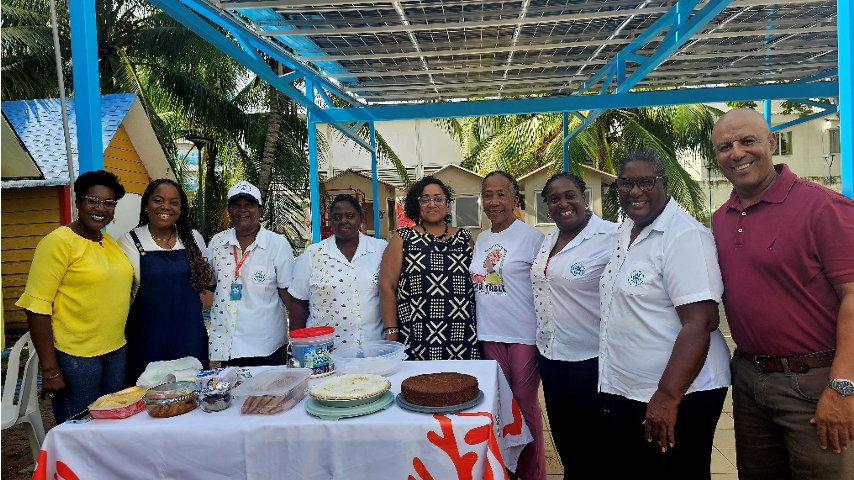
During a recent research trip, we met with people in small focus groups and in individual meetings with grassroots organizations, territorial leaders, and community organizers, and learned how Raizal Economics is localized, informal, and cooperatively organized by small businesswomen. On meeting members of the Raizal People Territorial Governance (RAPTEG), Fier Tiebl (creole word for fair tables, and the food vendors), Fishing Co-op, and the Association of Raizal Women Farmers, we learned that Raizal women are the ones counteracting ethnocultural and linguistic erasure through economics.
Who Are the Raizals?
The concept of “Raizal” is unique and represents a Caribbean blend of African and indigenous cultures. Raizal people believe that their Black Raizal and English Creole language and way of life are under threat by the Colombian imposition of Latin American politics and culture (i.e., the vast, diverse region encompassing Central and South America). As Bill No. 79 of 2018 reads, the Raizals are defined as “the descendants of the Amerindian, African, and European peoples who settled the Archipelago of San Andrés, Providencia, and Santa Catalina and built a society with its own language and culture.” This definition provides insight into how Raizals perceive themselves, including their culture and political standing. Raizal woman know that they have a Caribbean culture worth preserving, and are doing just that through business.
Leaders we met point to a hidden political agenda to ‘Colombianize’ the islands, beginning with the 1953 Declaration of the Free Port under President Gustavo Rojas Pinilla (1953–7) that permitted cultural invasion by continental Colombians, whom Raizals refer to as Hispaniards (paña), a term to describe colonizers from mainland Colombia. A policy of moving non-Raizal populations (or the Hispaniards) into the Archipelago laid the groundwork for assimilation. With the onset of a public school system in the Spanish language, land-grabbing, armed violence, and drug trafficking pose risks for young Raizal community members. Women of RAPTEG explained that Sons of the Soil and the Archipelago Movement for Ethnic Native Self-Determination have mobilized to protect Raizal rights and the island’s social economy as the Government of Colombia and its Ministry of the Interior do not seem to be interested in addressing said issues.
For decades, the Raizal people have sustained continuous political, social, economic, and cultural resistance in response to what the Colombian state has represented in their territory. Geographic distance alone has not been the reason for their historical neglect; the government persistently assumes that the islands require state intervention – without the consultation of Raizal people themselves regarding their own priorities, needs, worldviews, beliefs, traditions, and customary practices.
What Are the Fier Tiebls?
The Fier Tiebl (formally known as the Fair Table Association) is a cooperative network of Raizal women (currently represented by 21 members) who have been selling homecooked foods/provisions – like breadfruit, coconut rice and stew chicken, fish, bami, coconut/cassava cakes – on roadside tables by their homes since the 1970s. Although they had previously worked independently, association members decided to organize collectively in order to access the different forms of support offered by the departmental government, including signage identifying their locations, promotional materials, and the provision of tables and chairs that would improve their working conditions.
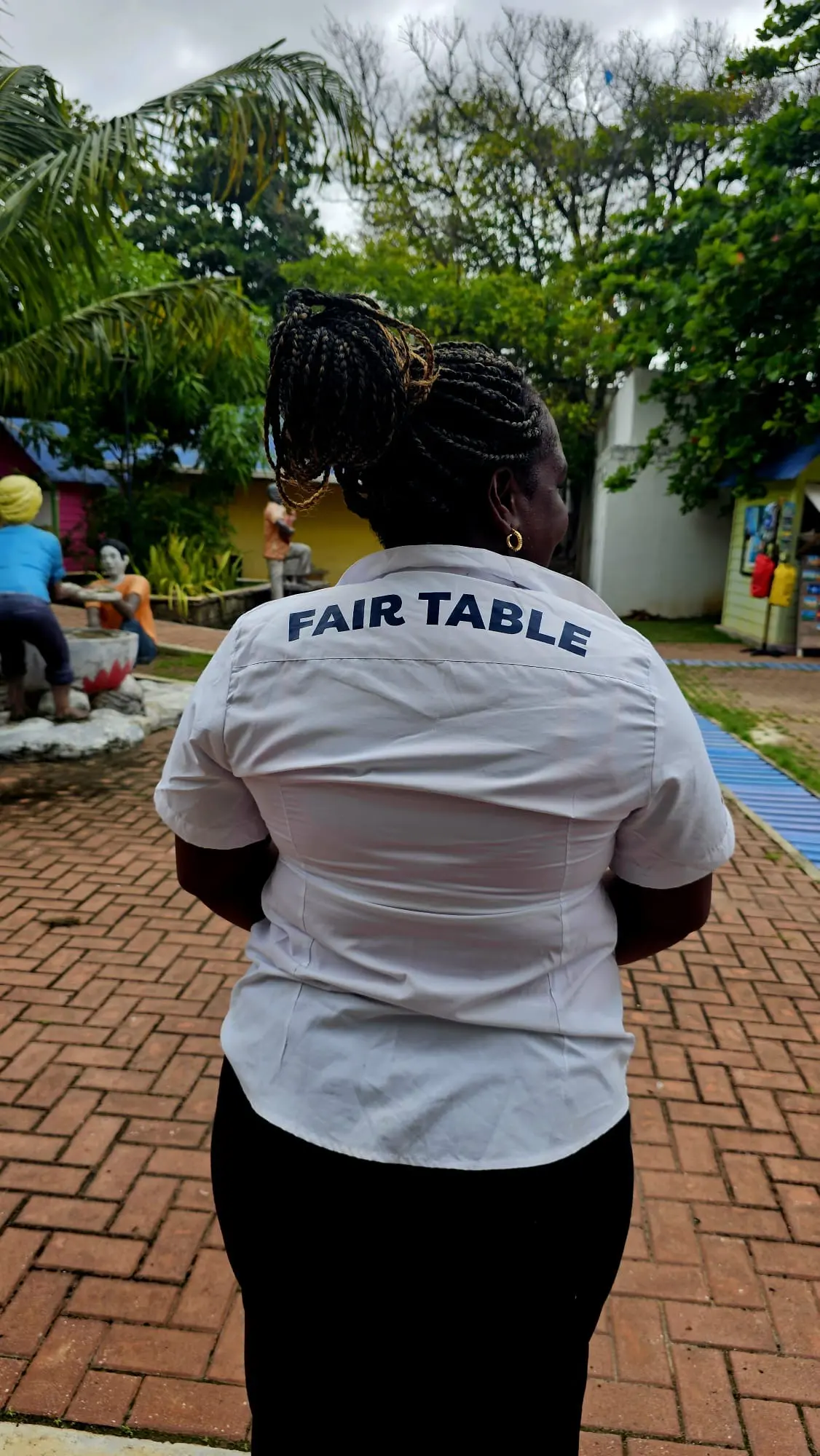
The original intention of the “Fair Tables” was to earn a living with integrity for and with people who are known and trusted, such as neighbours and family members. With time, it has evolved into a social economic business that promotes foods of the Raizal people and preserves the Caribbean Raizal culture across the island, now one of the most visited and touristic attractions of Colombia. Formal recognition only began in 2019-2020 as a mechanism to receive aid from the National Government and to obtain permission from the departmental government to work at local public and tourist places. Since then, the Fair Table collectivity has grown stronger, gained social recognition, and received government support. For many residents, they are Raizal’s cultural ambassadors.
Women cooks make sure that they buy their meats/fish and vegetables from local farmers and fishermen, while women of the Fair Tables prepare foods all over the island on the roads. The Fair Tables are connected to other businesses, too. These Fair Tables cater foods to the Native Lodges, academic activities, locally owned B&B hotels, so guests can sample local dishes. Miss Licy is an example of a Native Lodge where the owner hosts tourists in her home. Unlike traditional, expensive, foreign-owned hotels, these homestays offer tourists an inside view of Raizal cultural practices and ways of life.
Local farmers (numbering 43, of which 36 are women) are also collectively organized. Women farmers harvest food supplies (e.g., plantain, corn, potato, cassava, breadfruit, mango, soursop, papaya, banana, herbs like parsley and rosemary) to be sold at Fair Tables and prepared for Native Lounge guests. Each meal is a representation of Raizal culture – and deeply meaningful to Raizal women, who profoundly believe that a circular economy system is how Raizal identity is sustained on San Andrés Island.
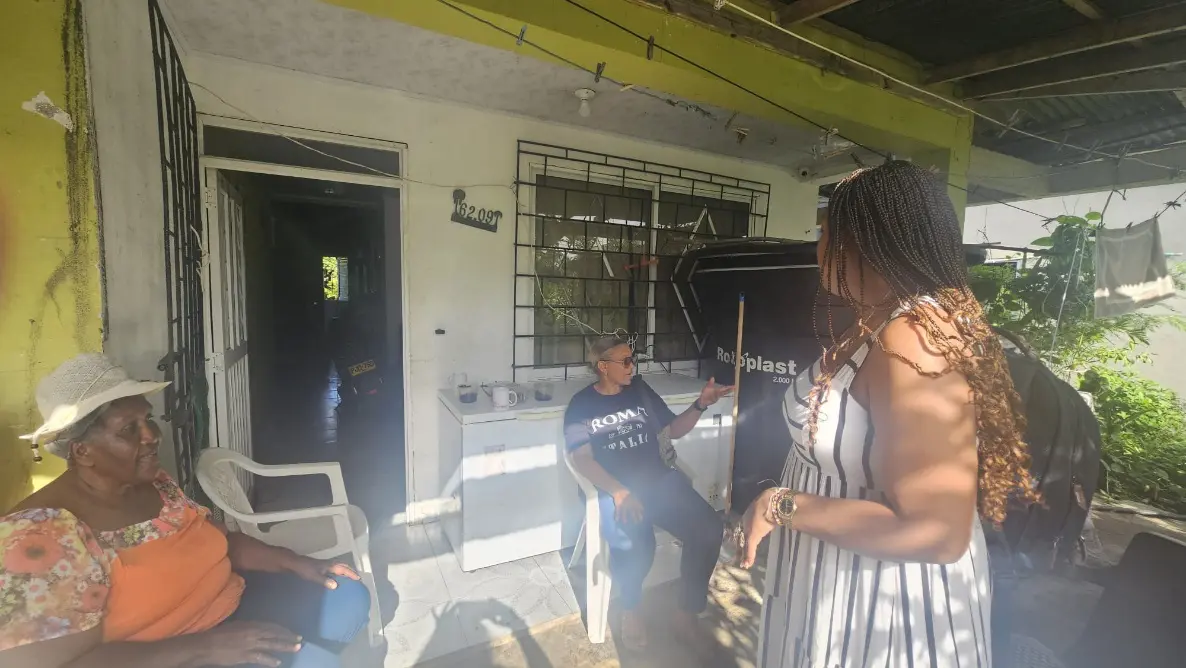
To cope with life under internal colonization and with limited opportunities, Raizal women have created an alternative economic system where they work together in food (e.g., farming, fishing) and money systems. According to “Miss Dilia”:
“I got into Fair Table work by watching my mama doing it … [and I] always
helped her. Many ladies ‘ere don’t have husbands and this is a way for us to
make a life and money” (16 July 2026).
Money and access to finance can be difficult for small business people. We learned about the practice of cadenas decembrinas, a type of Rotating Savings and Credit Association (ROSCA). In other parts of the Caribbean, ROSCAs are known as Pardna or Boxhand, and refer to a group of people who know each other and come together to share funds in turn. In San Andrés, ROSCAs are an economic practice used mostly by women who organize funds informally on a monthly savings system. These cadenas decembrinas are usually carried out before the Christmas holiday season to help women acquire extra savings. The Raizal women we met are thinking about cooperative financial economies, and ensuring excluded Raizals have access to monies through self-help groups.
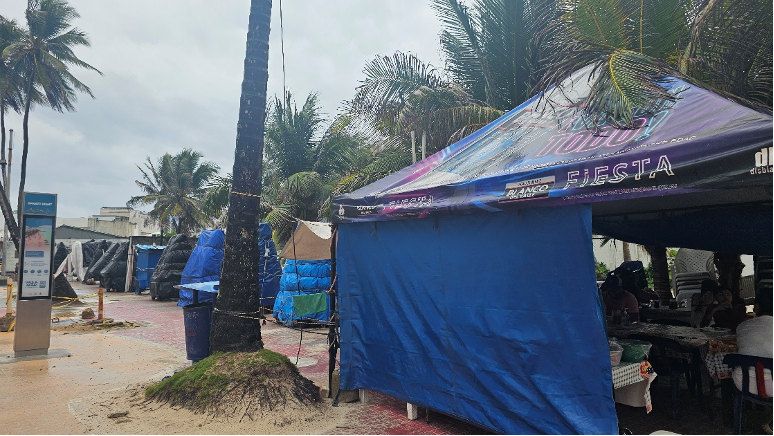
The Fair Tables are all over the island and described as a sharing economy where people come together for traditional food. As Fair Table lady “Miss Victolina” explained:
“These traditional kitchens hold profound significance
for us Raizals and the people who come here to visit. It is
because [Fair Tables] are ancestral spaces where people
eat, connect, and pass down traditions from one generation
to the next” (16 July 2026).
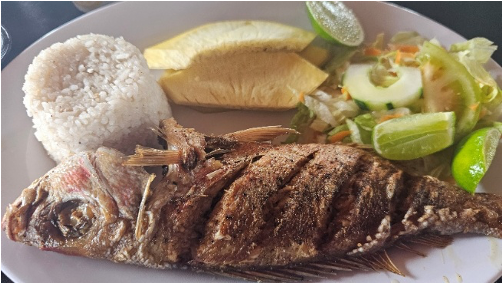
Raizal women are accepting the task of protecting culture through human forms of business. Like “Miss Victolina” stated above, the Fair Tables are making Raizal foods part of the economy that both residents and tourists alike want to be part of. Afro-Colombian women visit small businesses to get their hair braided, join cadenas banks that operate like the Susu systems in the Caribbean, stay at Raizal-owned hotels, and eat local dishes like steam or fry fish and breadfruit at Fair Tables. All of these businesses work because they are interlinked –
and because Raizal women are conscientiously making these businesses come together.
Making Raizal Economics Better Known Across the Caribbean
A strong recommendation for the greater Caribbean region is to learn about the economic livelihoods of the Raizal people. Dr. Liza Haynes, Director of the National University of Colombia Caribbean Campus, and the first Caribbean woman to head up the campus, emphasizes the need to make the economic work of Raizal women visible, because the Raizal economic practice is one that teaches us all about the value of informal institutions and economic cooperation.
Leaders of the Fair Tables also stated that they want people to learn about how them and how they engage in social business – in cooperation with Native Lodges, cadenas money systems, fisheries and women-owned farms, and family networks–as a means of both preserving Raizal culture and life and including these systems in the ongoing research being done on community-led economies in the Caribbean and beyond.









Discussion