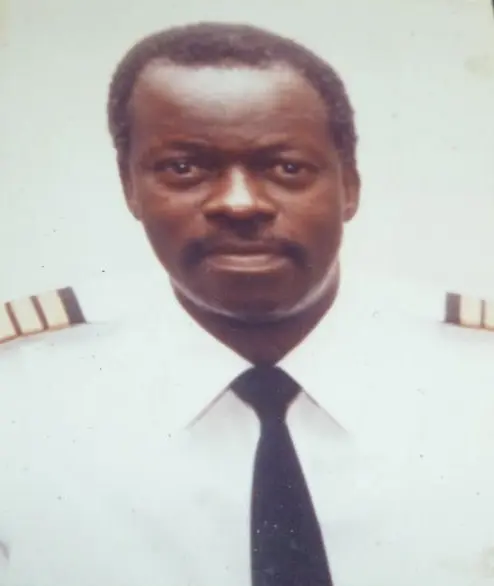
The 18th of November 1978 was a normal work day and the weather was good that afternoon when then co-pilot Astill Paul took off from the then Timehri International Airport for Port Kaituma in northwestern Guyana in control of an aircraft to fly out US Congressman Leo Ryan and his delegation never expecting to witness part of a mass murder-suicide that rocked the local and international community.
The US Congressman of California had gone to the People’s Temple agricultural commune, Jonestown in the jungles of Port Kaituma, the day before to investigate complaints by family members and others back in the US about human rights abuses and poor working conditions in Jonestown.
The People’s Temple was led by its founder and preacher Jim Jones. A total of 918 of his followers died on 18th November in a murder-suicide tragedy, the day that Paul and Spence were tasked to transport Ryan and his congressional delegation back to Georgetown.
Ryan was one of five people who was shot dead at the airstrip after the Guyana Airways Corporation 19-seater Twin Otter prepared to depart. The others killed were three US journalists and a woman defector of the People’s Temple.
Nine hundred and nine people died by injection or ingesting either cyanide laced Flavor Aid willingly or forcibly at the main settlement in the jungle. Four died in a murder suicide at the People’s Temple headquarters in Georgetown. Jones was found dead with what was believed to be a self-inflicted gunshot wound to his head in Jonestown.
At the time of the massacre Paul, now 80, was training to become a captain and the flight that day was one of his last flights as a copilot before he became a full-fledged captain with the GAC for which he had been flying since 1972. The late Captain Guy Spence was in the co-pilot’s seat to assess him.
Paul, a past Queen’s College student was trained in piloting in New Jersey and Daytona Beach Florida.
In an interview, Paul told Kiskadee Watch that in those days the army had three or four Islanders and private planes, mainly single-engine aircraft and had not had the capacity to transport many passengers.
“GAC did all the heavy work,” he said.
The retired pilot recalled that as they flew over Port Kaituma airstrip, a big truck was parked on the runway. It did not move even though they circled the airstrip to land.
“In the interior, all kinds of things happen. You try landing and an animal is lying or a car is driving across the runway. I saw it as one of those days. However, people were in the tray of the truck, and it wasn’t moving which I guess should have sent a message,” he said.
Spence asked him how he was going to deal with the issue. Paul, committed to landing, told him there was room between the truck and the threshold where he could land. On the airstrip also were a single engine aircraft at the northern end of the airstrip and a Guyana Defence Force aircraft parked in an east to west direction not far from the other aircraft.
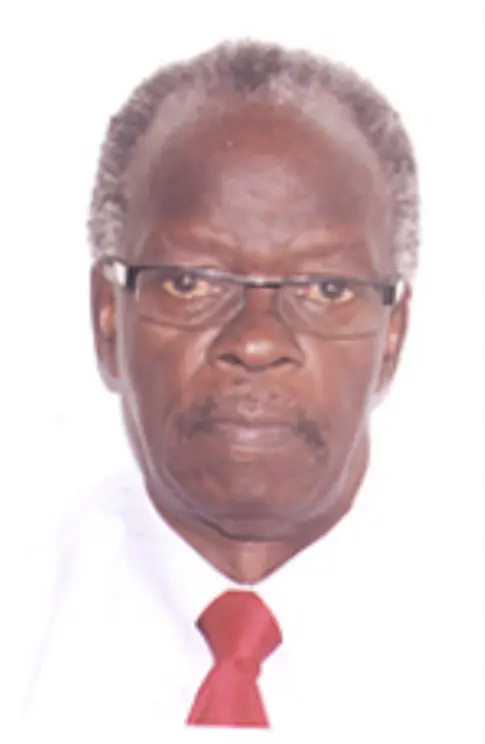
After landing at about 4.00 pm the third crew, Kenrick Glasgow, off loaded the cargo while people made their way to the aircraft.
Paul came out of the aircraft to write up the load sheet for the return trip while Spence remained in the aircraft.
“There were a lot of people, about 30 to 40, who wanted to go out. I said this is crazy. Only 18 seats were available.”
He asked Ryan’s aide, Jackie Speier to give him the names of the passengers. “She wore a black and white polka dot dress with a pair of red shoes, something I will never forget. People were all over her. I told her we have to get out of there because it was getting close to sunset, and we couldn’t fly after a certain hour. Jackie tried to get a list, but it was difficult. People started piling onto the aircraft.”
Paul was on the right side of the plane, a crew from the MSNBC News were filming and he was telling them to board the aircraft, but they continued filming. He was talking to two men on either side of him when a tractor with a trailer came in sight.
“They started shooting pellets, but the shots sounded like people were pelting the aircraft with stones and that was what I thought because people were loud in their protest in wanting to leave Jonestown.”
While talking to the two men a commotion broke out and when he turned from one man to the next, he was lying on the ground. He had been shot from under the left side of the plane.
“I realised it was serious business and not anyone pelting stones at the plane.”
He saw a house at the edge of the airstrip and a man with a big straw hat but instead he ran for cover in nearby bushes. Lying on his back he saw the shots cutting the top of the leaves above him. After the shooting stopped briefly and he felt safe to move, he ran towards the truck on the runway to get help but the people on the truck stared at him with hostility.
“I realised this was not a place to be.”
He was subsequently told that the people in the truck were supposed to shoot down the GAC aircraft as it came in to land, but they failed.
The shooting resumed and he ran towards the GDF aircraft where some soldiers were taking shelter in a dugout at the side of the airstrip.
After the shooting subsided and the tractor left the airstrip Paul returned to the aircraft. Spence had never left it. He lay flat in the aisle between the seats while the shooting took place.
When he entered the aircraft, Paul said three people were sitting in it. He told them the aircraft was going nowhere, and they had to come off.
“Two came off but one did not move. She was sitting erect in the seat with her eyes open.”
He touched her on her shoulder and had no response. Not aware that she had died and thinking she was just unconscious, he called the third crew to help him lift her off the aircraft and put her under the wing. As they got to the second step, Paul said her head tilted sideways and her brain fell on the first step. “That experience is not for the fainthearted,” he said.
Informing the authorities
Unaware of the murder-suicide taking place in Jonestown, Spence and Paul assessed the airworthiness of the plane. A bullet had damaged the fuel control unit of the aircraft.
Paul then told the survivors that the aircraft could not fly that night, and they would have to spend the night in Port Kaituma.
He then called Georgetown via the GAC radio set and relayed what had occurred at the airstrip calling it an ‘insurrection’.
“No one in Georgetown had heard anything yet. The truck was still parked on the airstrip. I told them and the way our aircraft was parked another aircraft couldn’t land. I could try to do whatever I could at Port Kaituma.”
When the news was relayed to then Prime Minister Forbes Burnham, Paul said, they were told to return to Georgetown by whatever means possible.
The GDF plane was down and was being repaired. Paul spoke with Tommy Fernandes, the pilot of the single engine plane who agreed to bring him and Spence back to Timehri.
A bullet had hit the cowling of the small aircraft, but it was airworthy.
They put a survivor, Monica Bagby, who was shot in the back, on the plane with them.
Paul said he was reluctant to leave Port Kaituma that evening because he felt he could have assisted with the training he had in first aid.
Several people had died. “With the bleeding I saw around me, I was hoping to stay in there and help as much as I could. I sent for the dispenser, and I was told he wasn’t at Port Kaituma. He had gone up the river.”
With no medication or rubbing alcohol available Paul recalled giving a green five-dollar bill to a man to buy two bottles of either two bottles of high wine or two bottles of rum. The man came back with rum.
He stripped into pieces the T-shirt he wore under his uniform shirt to clean and disinfect wounds. “Lots of people were injured. Some were shot dead.”
The American Charge d’Affaires sustained three bullets to the right buttock and Speiers too was shot. They survived.
“At that point the Congressman was already dead. I didn’t see when he was shot. I was on the other side of the aircraft.”
A near disaster
Returning to Timehri on the small aircraft piloted by Fernandes were Paul, Spence, Glasgow and Bagby.
They were about 3,000 ft high and in the vicinity of Hogg Island in the mouth of the Essequibo River when Paul noticed that the pilot was descending. Spence was writing and he was next to Bagby, he said.
He asked Fernandes where he was landing and he said Timehri where he was seeing lights. Paul, who was born on the Essequibo Coast and was well acquainted with certain landmarks noticed the Parika Stelling ahead and the lights from cars on the road and he told Fernandes that he was not at Timehri. “I was staring death in the face.”
He alerted Spence to what was happening and told him to take over the controls which he did.
“When Captain Spence took over, we were not too far from the ground. He brought us to Demerara then he told Tommy to take over to land. That was a very scary moment or me. It was scarier for me than what went on at Port Kaituma that day,” he said.
After landing at Timehri, a helicopter took the men to Georgetown to meet with Burnham at his residence on Vlissengen Road where senior officers of the GDF, Guyana Police Force and the American ambassador among others had gathered.
The American ambassador had suggested to Burnham that the US had planes in Puerto Rico, and the US government could dispatch them to Guyana immediately, but Burnham said they were capable of dealing with the problem.
Burnham told Paul and the others not to speak to the media about the incident. So, Paul said he remained quiet about it observing and noting the untruths many people said about what happened at the airstrip that day.
About 1.00 am on Sunday morning then Commissioner of Police Balram Raghubir took Paul to the Criminal Investigation Department at Eve Leary to give statements about what occurred. He said the police instead complained about working overtime without food and Paul gave him the food that was provided for him on his return. Paul was tired and because of the manner in which he was being questioned and which was time wasting to him, he suggested to the police that he write his own statement and return it the next day. He did just that.
He got back home at about 5 the Sunday morning to numerous phone calls from anxious relatives and the international media. The San Francisco Times offered to take him to San Francisco to share his story, but he refused.
Sunday was a busy day, he said. The news of the shooting at the airstrip and massacre at Jonestown had broken.
However, once the news of the tragedy had reached Georgetown that same Saturday, Captain Lloyd Marshall who had been on duty from 4.00 am had been told after 5.30 pm to stand by to fly into Matthews Ridge.
“When you hear a lot of people say they did this and they did that, I can say Captain Marshall did a lot. He flew from about four that Saturday morning and on his return after five in the afternoon, he flew in soldiers to Matthews Ridge. From Matthews Ridge the soldiers had to make their way to Port Kaituma. We all worked beyond the call of duty.”
That Sunday night, GAC chief pilot Malcolm Chan A Sue asked Paul to fly the following day to Matthews Ridge. Paul was reluctant but Chan A Sue told him if he wanted to continue his career as a pilot he should go out and fly. He understood what Chan A Sue meant psychologically and took to the air with Captain Marshall.
On their way to Matthews Ridge in the Hawker Siddeley 748, they flew over Jonestown. Looking out of the window he saw the buildings but no movement. Below looked like a dump, he said. The aircraft circled and returned at a lower altitude.
“I said ‘Lord have mercy. Dead bodies were scattered in groups on the ground, all hugging up in death. You could see the bodies had started bloating. This story is not for the faint of heart,” he said.
Being helpful
Days later, he remembered an incident in which he helped an elderly Black woman and her two grandchildren, a girl about 16 years and boy about to clear immigration at Timehri.
The Wednesday of the week of the Jonestown tragedy, Paul had returned from a flight from Barbados and was awaiting a relative coming in on a Pan American flight.
While waiting, he saw the elderly Black woman crying. She told Paul that immigration was not allowing her and her grandchildren to land because she could not read or write. She explained she had come from San Francisco to Guyana to worship with Jim Jones.
He filled up the immigration form and made the three sign them. As he left them the elderly woman told him to tell Paula Adams, a member of Jones’ inner circle, that they were going to be out soon. He saw Adams and gave her the message. The woman and her grandchildren went to Jonestown and did not survive the massacre. Adams survived until she was shot dead in another murder suicide some years later by her Guyanese partner Laurence Mann.
“Remembering the woman and her grandchildren hit me hard. If I had minded my own business the children might have been alive now but trying to be helpful they were all killed.”








Discussion