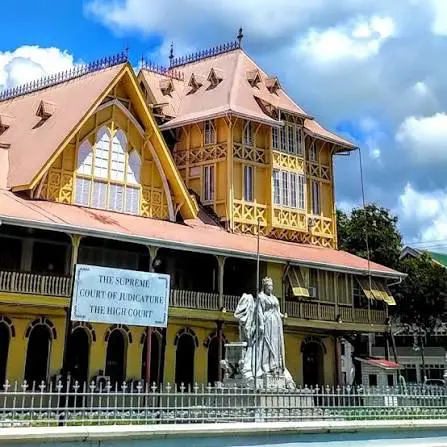
The Supreme Court of Judicature yesterday said it values and respects the role of the media and remains committed to maintaining a professional and constructive relationship with its members.
Its statement was issued in response to a post by Anand Persaud, the Editor-in-Chief of Kiskadee Watch on his Facebook page.
In that post, Persaud said: “Pretty ironic that the Caribbean Association of Judicial Officers issued a ‘media’ release on their conference here when the same media was barred from its conference! The media is not a plaything for the judiciary”.
In its statement, the Supreme Court said that it had “come to our attention that Mr Persaud of Kiskadee Watch has made a public statement suggesting that the media was barred from attending the 9th Biennial (Caribbean Association of Judicial Officers) CAJO Conference”.
It clarified that an invitation to attend and cover the Opening Ceremony was extended to the media and shared in this group.
It added that the working sessions that followed the Opening Ceremony were reserved for registered judicial officers.
“It is therefore important to distinguish between the media being barred from the Conference and attendance at the working sessions being restricted to registered participants.
“The Judiciary values and respects the role of the media and remains committed to maintaining a professional and constructive relationship with its members”.
In an invited comment Persaud told Kiskadee Watch that the post on his Facebook page was never intended to suggest that the media should have access to the working sessions. He said it was understood that as with all conferences of that type those would be limited to those registered.
However, he said that the Supreme Court has apparently ignored the fact that the media is well within its right to pursue interviews with attendees of these conferences. He said on two consecutive days of the conference reporters attached to Kiskadee Watch were treated with disdain by conference organizers and told that they were not to be present in the precincts of the conference. That, he said, was completely unacceptable and a breach of the reporters’ rights moreso at a time when the judiciary faces a series of challenges that the media has been exploring for a considerable amount of time. These include the absence of confirmed appointments at the top of the judiciary, concerns about internal divisions in the Caribbean Court of Justice, attacks on members of the judiciary and the continuing sloth in the delivery of justice. These were pertinent matters to be raised with attendees and it was not within the power of the Supreme Court to prohibit reporters from exercising their duties.
Furthermore, Persaud said that the judiciary seemed to have an antiquated view of the role of the media to wit that it was invited solely to the ceremonial opening of the conference and that was where its participation ended. In essence the judiciary wanted the benefit of coverage by the media of its conference without a recognition of the media’s own interest. This was also borne out by the issuing of the statement on the conference which the judiciary expected to be reported on. Persaud said that a more enlightened position needed to be adopted on the media by the judiciary.










Discussion