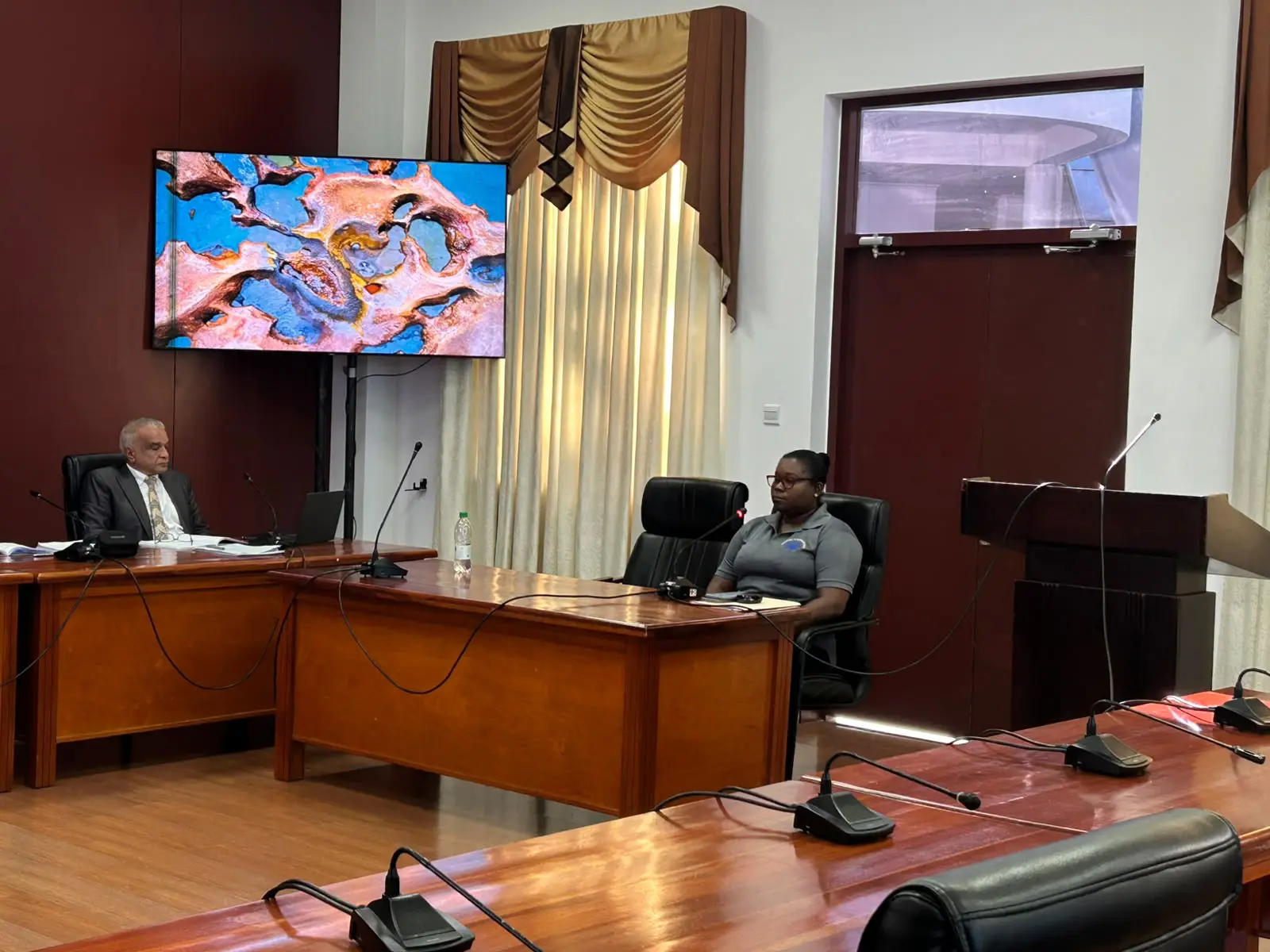
The 268 tonnes reported as the MV Barima’s cargo load on its final voyage was an estimate drawn from freight payments, goods cashier Kenese McLean told the Commission of Inquiry yesterday.
She said the Transport and Harbours Department divided general freight revenue by $6,200 to arrive at a tonnage figure, and acknowledged that the calculation could not tell commissioners what the cargo actually weighed when the ferry left Georgetown on July 18.
“It’s not giving me the actual weight,” McLean said under questioning from Commissioner Nyree Dawn Alfonso.
McLean pointed to $1,281,698 recorded for general freight and explained how the department converted that revenue to about 206.7 tonnes. “What we normally do is divide that by 6,200,” she said. She recalled that the rate was tied to freight tariff categories but could not fully explain how it had been set. “That question, ma’am, literally is what I inherited in terms of tonnage, so I’m just working with it,” she told Alfonso.
Once a second cargo category was added, the subtotal came to about 268.85 tonnes. McLean confirmed it was rounded down to 268. A commissioner noted that the calculation still did not account for vehicles, an all-terrain vehicle, fertiliser and parcels. McLean said invoices came in later and she added miscellaneous entries the following Monday.
“They just wanted the figures right there and then, so I just calculated right there and just gave what we had at hand,” she said.
The commission also tested the freight figures against a different record: the vessel’s deck log. For the June 26 voyage, Commissioner Andrzej Jasionowski put the freight subtotal at about 295 tonnes. He said the draft recorded in the deck log for that sailing corresponded, by his calculation, to roughly 100 tonnes of cargo. McLean said she could not assess the deck log against her figures. “I’m normally using revenue and the tonnage that they give to me to calculate,” she said. “It’s strictly revenue.”
The follow-up came a day after McLean faced questions about another gap in the July 18 cargo records. As Kiskadee Watch reported on November 26, Jasionowski said his review of wharf CCTV showed 213 gas cylinders being loaded, while the electronic cargo records listed 101. The difference of 112 was based on the commissioner’s comparison of the footage and the records; the hearing did not establish where the remaining cylinders might have been recorded.











Discussion