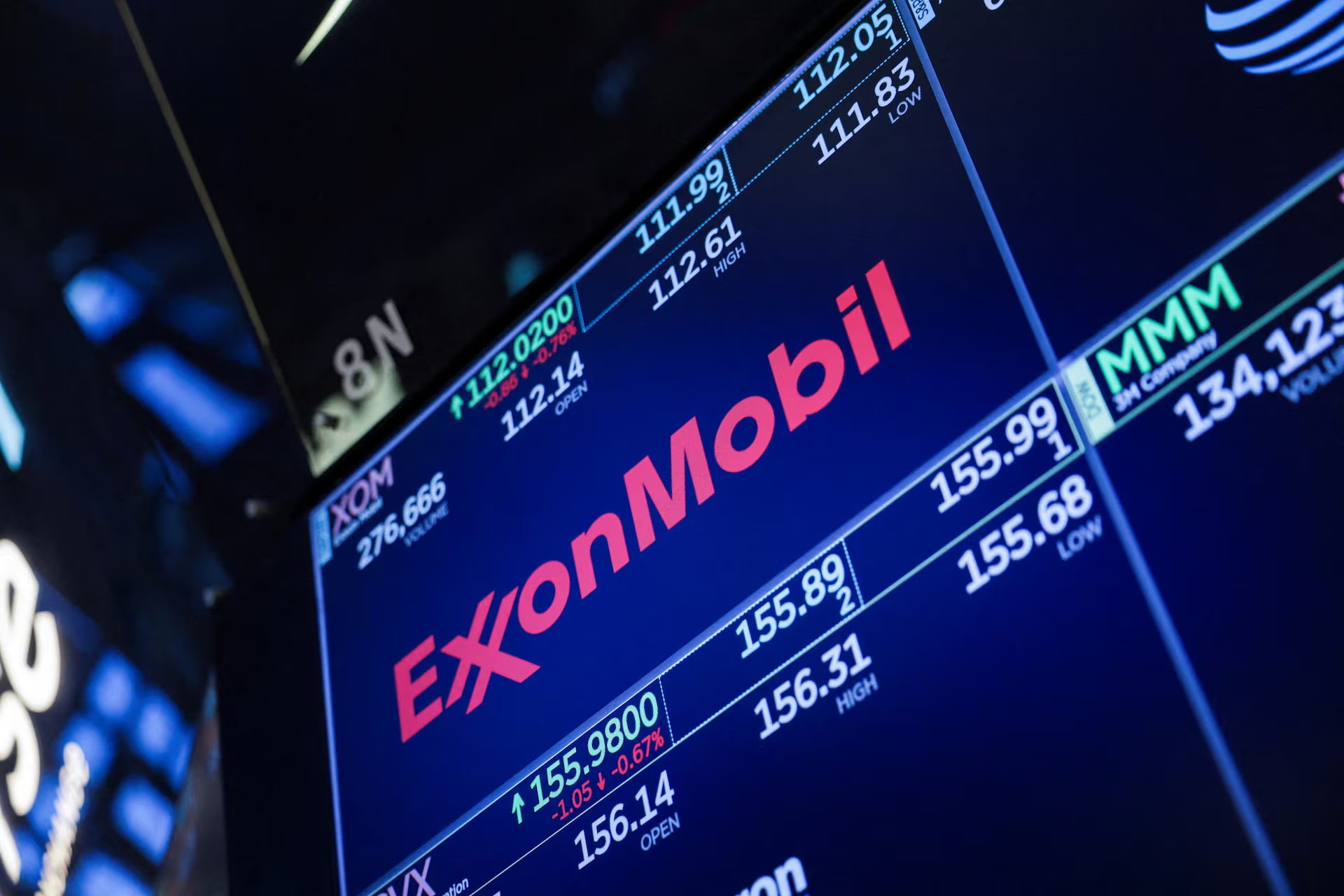
Net payments for services surged to US$8.818 billion during the first half of this year, more than four times the amount recorded over the corresponding period in 2025, as the Stabroek Block partners repatriated higher earnings and recovered increased expenditure.
The 2026 Mid-Year Report from the Ministry of Finance says net services payments stood at US$2.118 billion at the end of June last year, representing an increase of US$6.7 billion—or approximately 316%—in one year.
Factor-service payments, which include repatriated earnings on foreign investment, climbed from US$852.1 million to US$4.737 billion.
The Ministry of Finance attributed the increase to higher repatriated earnings from the Stabroek Block co-venturers’ share of profit oil as both production and world-market prices rose. The three co-venturers are ExxonMobil, Chevron and CNOOC.
Non-factor services payments increased from US$1.266 billion to US$4.081 billion.
The report said this reflected payments for construction services associated with active oil and gas developments and exploration, together with technical, trade-related and other business services.
The government has revised projected factor-service outflows for the full year to US$7.923 billion, more than twice the US$3.599 billion forecast when the budget was presented.
Total net services payments are now expected to reach US$13.629 billion, compared with the budget projection of US$8.077 billion.
The sharp increase in oil-related outflows occurred as crude export earnings rose by 82.1% to US$15.054 billion during the first half.
The report says the Stabroek Block partners were able to accelerate cost recovery because of increased production and higher crude prices.
Under the 2016 Production Sharing Agreement, the companies can use up to 75% of monthly production to recover expenditure, with the remaining profit oil divided equally between the government and the contractor group.
The report says the historical cost bank has been reduced, allowing Guyana to receive a larger share of gross revenue. However, it cautions that clearing the historical cost bank will not result in the government receiving 50% of gross revenue, since current operating and new project-development costs will continue to be recovered.
Former Auditor General Anand Goolsarran recently warned that the expected increase in Guyana’s oil receipts made rigorous auditing of recoverable expenses even more important. He noted that the findings of audits covering billions of United States dollars in expenditure remained unresolved or unpublished.
The report projects that total petroleum deposits into the Natural Resource Fund will reach US$6.498 billion this year, compared with the US$2.744 billion forecast in January.











Discussion