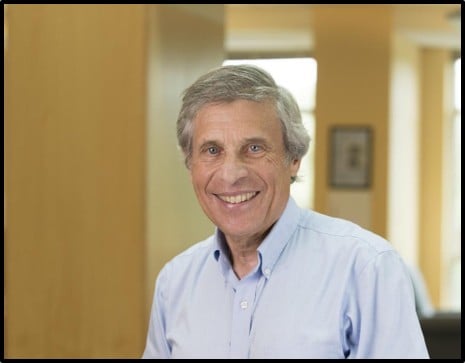
The English-speaking Caribbean’s development has fallen short of the aspirations of its pioneering thinkers, economist Professor Jay Mandle argues in a new collection of essays published by the University of Guyana Press.
Essays on the Political Economy of the Anglophone Caribbean, launched on October 6, examines economic diversification, political development and climate threats, including the vulnerability of Georgetown, according to a university release issued yesterday.
Mandle, the W. Bradford Wiley Professor of Economics, Emeritus, at Colgate University, examines developments in Antigua and Barbuda, Barbados, Grenada, Guyana, Jamaica, and Trinidad and Tobago.
His analysis considers the ambitions of thinkers such as Walter Rodney, Lloyd Best and Arthur Lewis, who sought to chart a future for the region’s newly independent and soon-to-be-independent states following the collapse of the West Indies Federation.
While examining why those aspirations have not been fully realised, Mandle argues that opportunities for economic and political advancement remain.
The book includes an examination of Trinidad and Tobago’s experience with economic diversification and the growing threat climate change poses to coastal Georgetown.
Director of UG’s GREEN Institute, Dr Thomas Singh, who chaired the launch, said the publication provided an opportunity for the region “to once again attempt to make sense of our reality, to learn about what works, and about what doesn’t work.”
Mandle is also a member of the institute’s advisory board.
Professor Emeritus Paget Henry of Brown University said the book “speaks to our moment”. He described neoliberal economics and French post-structuralism as “two intellectual hurricanes” that had influenced the Caribbean during what he characterised as a period of “intellectual recolonisation”.
Henry argued that Mandle’s work offered an opportunity to reconsider economic approaches that had not served the region well.
Trinidadian economist and former United Nations Development Programme Senior Policy Advisor Dr Vanus James addressed the book’s treatment of decolonisation and diversification.
Drawing on his experience working with Best and Lewis, James argued that Trinidad and Tobago’s difficulties in diversifying its economy reflected “slow learning” rather than Dutch disease. He identified what he called “public policy disease”, rooted in authoritarian governance, as the principal obstacle.
Mandle said learning remained central to his study of the Caribbean and that he hoped the essays would “contribute to an understanding of the way forward”.
He stressed the importance of testing established ideas against evidence and making opportunities for learning accessible beyond academic circles.
Explaining his decision to publish through UG Press, Mandle said: “I wanted it to be a book about the Caribbean, published by the Caribbean.”
UG Press Manager Kerrina Leslie described academic publishing as an investment in knowledge and the preservation of scholarship from and about the region.
Dean of the Faculty of Social Sciences, Dr Dianna DaSilva-Glasgow, expressed hope that the book would be used in classrooms, research, policy discussions and debates about Caribbean development.
The EPUB edition is available for purchase and the paperback for pre-order through the University of Guyana Press website](https://press.uog.edu.gy/.










Discussion