The emergency beacon that transmitted a distress signal when the MV Barima sank was not linked to the international registration database used to identify its owner, leaving operators without the information needed to immediately establish which vessel was in distress.
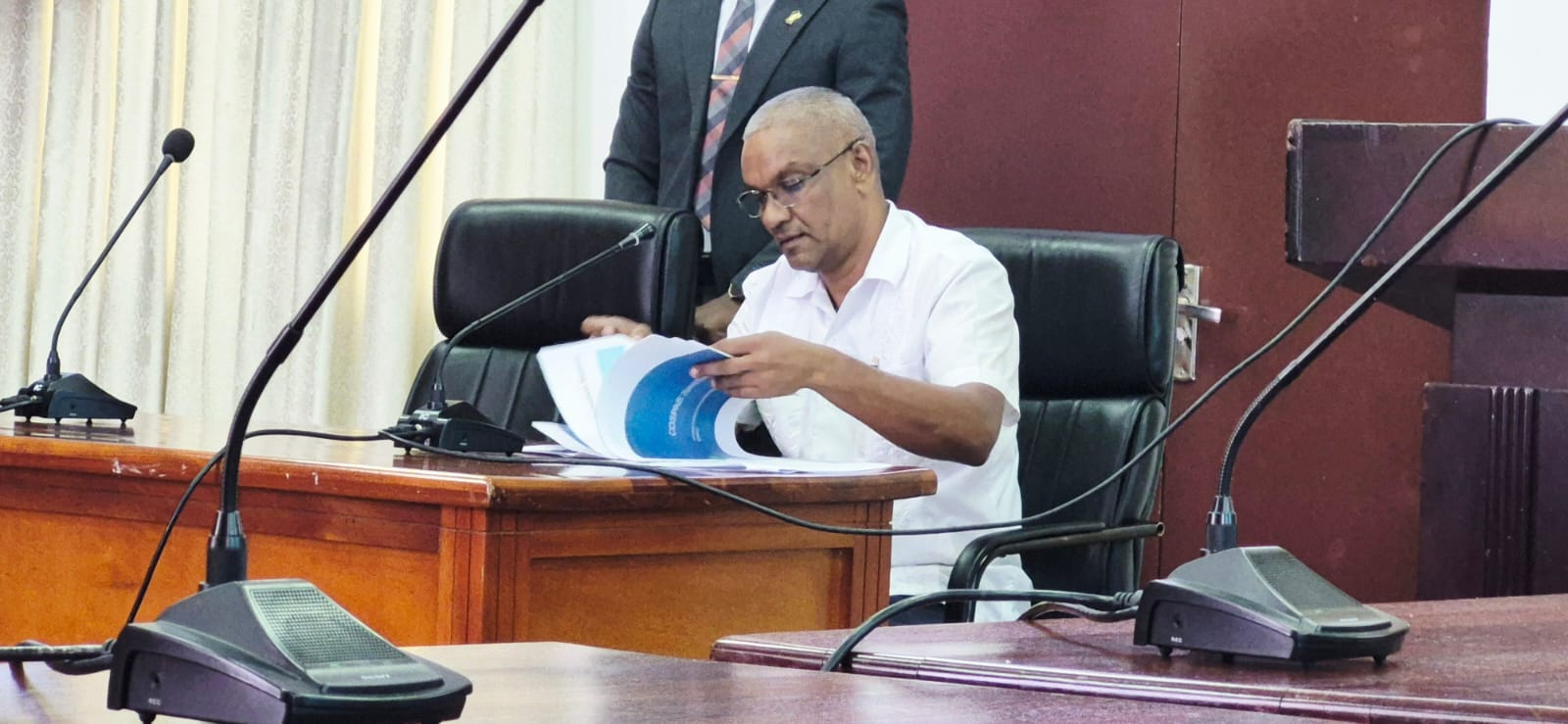
Speaking with Kiskadee Watch in an interview yesterday, Director of Air Navigation Services at the Guyana Civil Aviation Authority (GCAA) Rickford Samaroo explained that while the beacon associated with the July 18 disaster was registered in the United States, its identifying information was not entered into the specific international database accessible to personnel processing distress alerts.
Samaroo spoke about how the beacon registration system works and why the distinction between a beacon’s country of registration and its entry in the international database matters. He said the international beacon registration database is operated through the United States Mission Control Centre (USMCC) system and allows authorised users around the world to search for a beacon using its unique hexadecimal identification code, known as its Hex ID.
When the relevant information is entered into the database, a search can reveal who the beacon belongs to, the vessel or person associated with it and the relevant contact information. However, Samaroo said that when a beacon’s information is absent from that database, a person searching its identification code cannot retrieve those details, even if the beacon has been registered with another authority.
He explained that the absence of information from the international database did not necessarily mean the beacon had not been registered anywhere. In the MV Barima’s case, the beacon was reported to have been registered in the United States, but a database search did not identify its owner. (An emergency beacon is a radio instrument that transmits a distress signal when activated and continues transmitting until its battery is exhausted).
The international satellite-aided search-and-rescue system, known as COSPAS-SARSAT, detects signals from emergency beacons operating on a frequency of 406 megahertz. The signals are processed before alerts are forwarded to the search-and-rescue centre responsible for the relevant area.
Guyana participates in the system through an arrangement with the USMCC, with the Timehri control tower serving as the local point of contact.
Samaroo had told the commission that distress alerts normally reach Timehri within three to five minutes of detection and generally contain detailed information.
When a maritime distress alert is received, personnel at the control tower check the beacon’s registration, establish its location by plotting the coordinates and relay the information to the relevant agencies, including the Guyana Defence Force Coast Guard and the lighthouse.
During the MV Barima emergency, however, the absence of identifying information in the database meant personnel could not use the beacon’s Hex ID to immediately establish the vessel’s identity and retrieve its ownership and contact details.
The beacon nevertheless transmitted a distress signal, which prompted the search-and-rescue response.
Samaroo said responsibility for registering a beacon in the international database rests with the person or operator who purchases it and intends to use it, explaining that the registration information is important because it allows responding authorities to identify who is in distress and determine whom they need to assist.
When questioned about who should have ensured that the MV Barima’s beacon was properly registered, Samaroo said that if the beacon was installed on and being used by the vessel, the operator would have been responsible for ensuring that its information was entered into the database. He noted that the MV Barima’s age did not mean the beacon itself had been in use for the vessel’s entire lifetime. Such equipment could have been acquired and installed much later, including as part of an upgrade.
However, Samaroo said he was unsure whether the Maritime Administration Department had regulations specifically requiring maritime beacon operators to enter their information into the international database. He said that in aviation, regulations require aircraft owners and operators to provide the relevant registration information before using such equipment.
Asked whether the missing information could have saved lives during the July 18 disaster, Samaroo said he could not determine how much difference it would have made. He maintained, however, that the distress message had been relayed in accordance with established standard operating procedures and that the responding agencies, including the Coast Guard and Maritime Administration Department, had acted as quickly as they could under the circumstances.
Meanwhile, Samaroo had also testified that he learnt of the disaster after 1 am on July 19, more than two hours after the Timehri control tower received the initial distress alert at approximately 10:43 pm on July 18. He said GCAA Director General Egbert Field contacted him at about 1 am to inform him that approval had been given for two aircraft to depart from Ogle Airport to investigate the incident. Samaroo subsequently contacted the control tower and was briefed on the alert.
He said the established protocol required his immediate notification of aeronautical distress alerts but did not impose the same requirement for maritime incidents.
The commissioners have requested the standard operating procedures governing the response to distress alerts, along with communications relating to the incident, an after-incident report and the relevant case file.
The inquiry is examining the circumstances surrounding the sinking of the state-operated MV Barima, which was travelling from Georgetown to Port Kaituma when it capsized off Guyana’s coast on July 18. The disaster claimed 73 lives, while 76 people survived. The commission is expected to examine the search-and-rescue response as part of its investigation into the tragedy.












Discussion