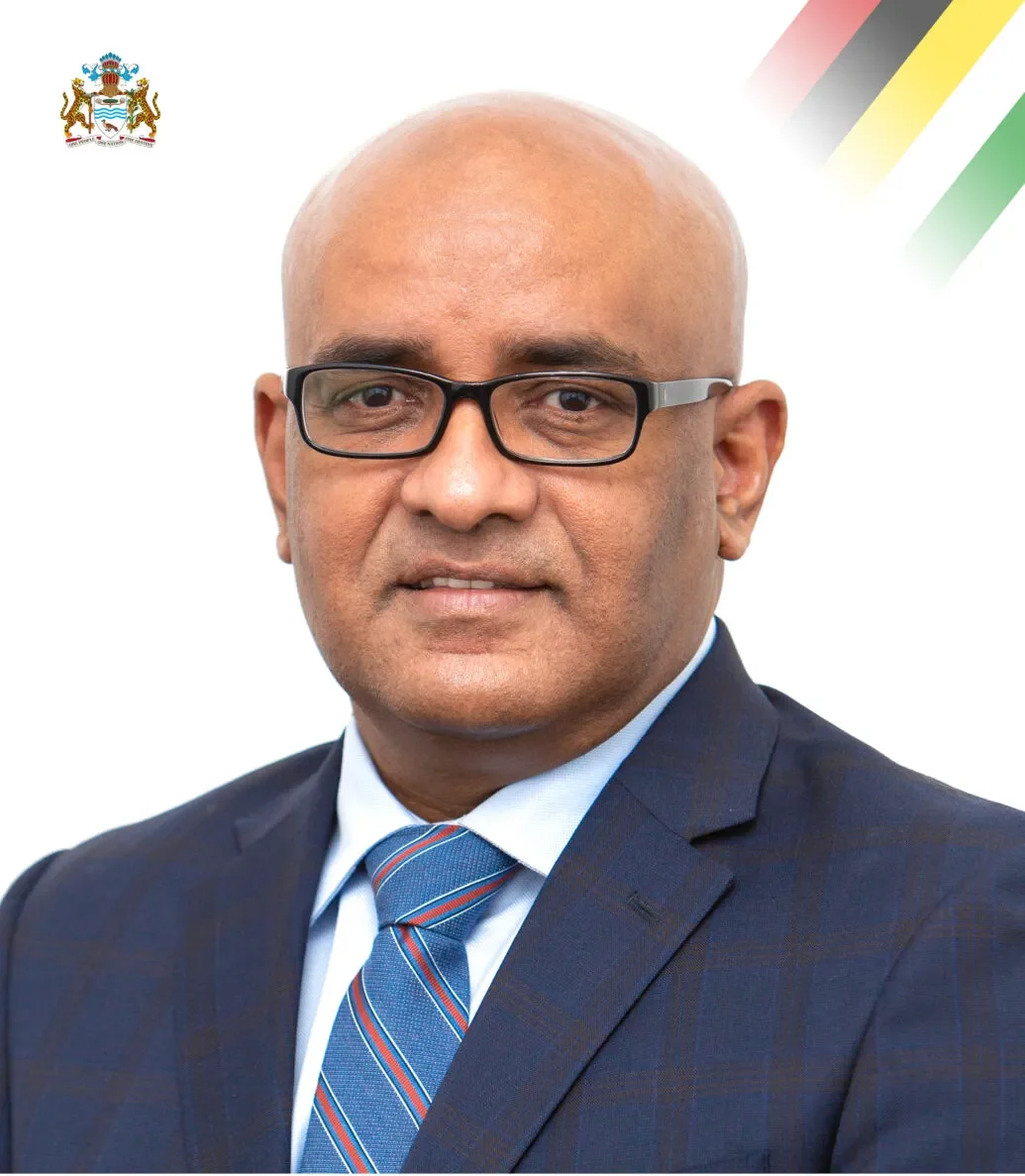
Vice-President Bharrat Jagdeo has warned that the PPP and PNCR risk political extinction unless they move beyond entrenched divisions, as he recalled talks with former opposition leader Robert Corbin which he said ended after Corbin was accused of selling out to the governing party.
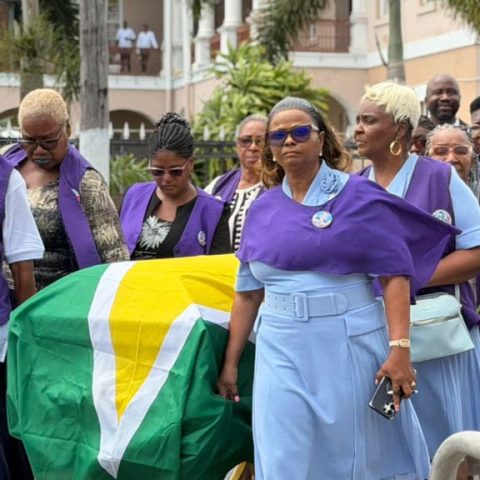
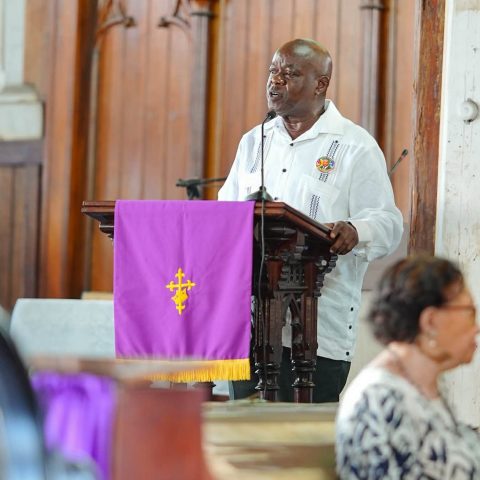
Jagdeo made the remarks at the wake of former PNCR leader Robert Corbin on Wednesday evening, as Corbin’s wife, Carol, and political figures including Terrence Campbell, Saiku Andrews, Dexter Todd and James Bond sat at the front.
Bond, a former PNC/R member who is now with the PPP/C, nodded in apparent agreement during Jagdeo’s remarks, while Campbell and Andrews sat with their arms folded and remained stony-faced.
The vice-president rejected suggestions that the former PNCR leader had been his puppet, saying Corbin fiercely defended his party while recognising the need to build trust and cooperate in the national interest.
“Robert Corbin defended his party fiercely in every engagement we had. He always defended his party, was the strongest advocate for the People’s National Congress. But he had a bigger vision for the country, and he understood government,” Jagdeo said.
He argued that younger Guyanese were no longer confined by rigid party loyalties and could agree with different parties on different issues.
“Unless our parties, these two parties change today, the era of binary thinking of old is long gone. We will face extinction. We will face extinction,” he declared.
Jagdeo said Corbin had recognised the damage caused by decades of racial division, mistrust and pressure to conform to party positions. He described him as willing to take political risks to overcome those barriers.
According to Jagdeo, discussions between the two parties began after he obtained unanimous support from his Cabinet and the PPP leadership, at a time when former president Janet Jagan was still alive.
He said he met Corbin and senior PNCR representatives at the Office of the President, accompanied by Roger Luncheon and other PPP leaders.
“That was the first meeting, and we had a second meeting, and then there was…the PNC’s Congress, and he was accused of selling out to the PPP and Jagdeo, and that was the end of the discussion,” Jagdeo said.
Jagdeo argued that the parties shared more common ground than their political rivalry suggested, including their origins in the same movement, patriotism and a working-class orientation alongside support for private enterprise.
He said, however, that cooperation required trust, without which bringing political rivals into executive government could produce policy paralysis.
Referring to constitutional changes made in 2001, Jagdeo maintained that they had created extensive opportunities for inclusion. Nevertheless, he said mistrust had obstructed the implementation of parliamentary arrangements which could have produced a form of legislative power-sharing.
“If we were to bring the same mistrust that harmed us from accomplishing things at the legislative level into the executive at the cabinet, we would have had a paralysis,” he said.
Jagdeo contended that the parties needed to understand the origins and consequences of Guyana’s historical divisions and develop approaches suited to a changing electorate.
He said the PNC would have to determine its own direction, while he, as PPP general secretary, was seeking to make his party receptive to new ideas, approaches and people who had previously opposed it.
Jagdeo acknowledged that the PPP made mistakes, but defended its record and maintained that some form of cooperation between the two parties would be necessary for Guyana’s future.
“We believe that the future of Guyana would involve, at some level and some fashion, whatever that framework may be, these parties working together. They have to, as a necessity,” he said.
He offered no specific framework or timetable for such cooperation.
Jagdeo also recalled private discussions with former president and PNC leader Desmond Hoyte, arguing that exchanges between political leaders could differ markedly from their public confrontations.
He cited a meeting concerning the collapse of Globe Trust, saying Hoyte understood his position on protecting small depositors despite political accusations surrounding the institution’s failure.
Returning to Corbin, Jagdeo said the former opposition leader had paid a political price for his willingness to pursue cooperation.
“I genuinely miss him and his thinking,” he said, adding that the country was poorer for his death.
“And I wish, and I wish, and I wish he had succeeded. Maybe this would have been a different case study. That we had succeeded.”
Corbin died in hospital on October 4 at the age of 78. Tributes highlighted his decades of public service and role in bringing former political adversaries together through coalition-building.
Despite his words at Corbin’s funeral, political analysts have long said that it was Jagdeo who comprehensively shut the door to shared governance on the passing of Hoyte. Critics say Jagdeo was of the view that parliamentary instruments enabled sufficient sharing of power and that entrenching the PPP in government was his main objective. After the end of Jagdeo’s two terms, the Donald Ramotar administration showed no interest in shared governance with the PNCR or the Alliance For Change and the first Irfaan Ali term was similarly disdainful of any deeper political cooperation particularly in the aftermath of the attempt to rig the 2020 elections in favour of APNU. Ali pioneered a One Guyana proposal which critics have said is One Guyana according to the PPP. Jagdeo’s outpouring at Corbin’s night reflection is seen as recognition of the existential threat posed to the PPP, PNCR duopoly as crystallized in the 25% vote that WIN’s Azruddin Mohamed grabbed after a three-month campaign at the 2025 general elections and mainly from PNCR strongholds.
Shared governance and deeper engagement would also have to address longstanding PNCR concerns about corruption and management of the oil and gas industry among other issues. Thus far the PPP/C government has not been inclined in this area. Tantalisingly, a PPP/C-PNCR/APNU alliance would yield a two-thirds majority in Parliament and the ability to make major changes to the constitution.










Discussion