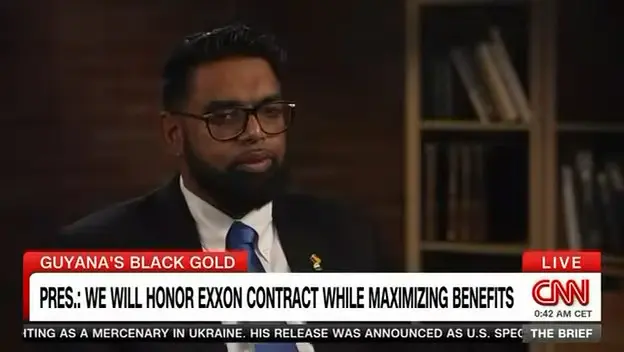
President Irfaan Ali yesterday said in an interview with US news network, CNN that he does not see the United States forcing its positions on Guyana.
CNN anchor and chief national security analyst Jim Sciutto, questioned Ali on whether President Donald Trump’s approach to the hemisphere raised concerns about American control rather than partnership.
Ali said he did not see the United States as trying to force its position on Guyana or become a dominant force in the relationship.
“We are a sovereign state and we’re working with the US as a partner. As a partner in development, as a partner in security. And that is how we see this,” he said.
He described the United States as an important ally and said the relationship should be based on shared values and priorities.
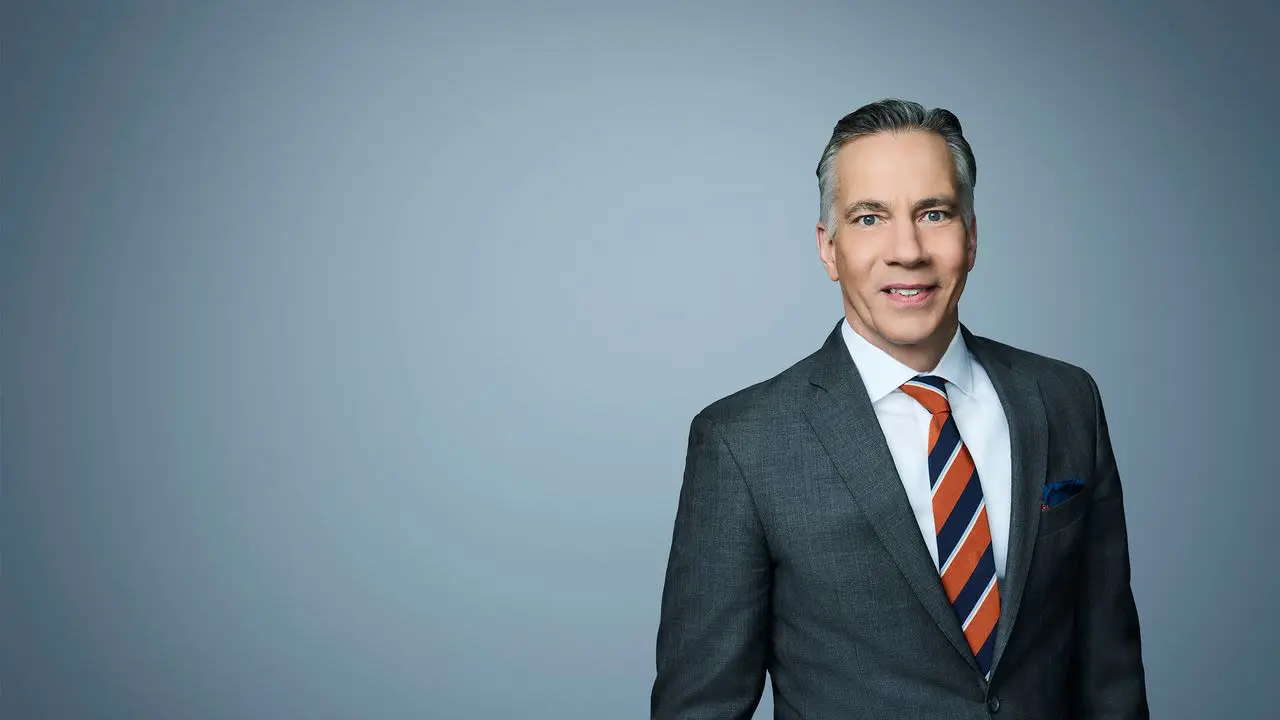
Asked whether both sides approached the partnership that way, Ali responded: “I can speak for Guyana. That is how we are pursuing this relationship.”
Analysts say Guyana has come under intense pressure from Washington on a number of fronts and has caved in. These include abandoning its previous strong support for Cuba and ending Havana’s medical aid programme. Georgetown has also agreed to accept nationals from third countries that the US is deporting. This move has drawn strong condemnation in Guyana.
There are also growing concerns that Washington’s rapprochement with the Delcy Rodriguez regime in Venezuela and a major new oil deal with Caracas could undermine US support for the impending ruling by the International Court of Justice (ICJ) on the 1899 arbitral award settling the boundary between the two countries. Venezuela has repeatedly sought to pressure Guyana into bilateral talks on this matter while Georgetown remains steadfastly committed to the ICJ process.
Guyana has also not condemned Washington’s flagrant breach of international law which has seen hundreds of people killed in attacks by the US navy on suspected drug traffickers in the Caribbean and Pacific.
Ali and US Secretary of War Pete Hegseth on Wednesday signed a defence declaration at the Pentagon providing for expanded military training, combined exercises with the Guyana Defence Force and support for monitoring Guyana’s airspace.
Umpteenth
Meanwhile, for the umpteenth time, Ali has acknowledged that Guyana’s oil agreement with ExxonMobil does not offer the country the best deal, but reiterated that his government will respect the contract while seeking greater benefits and creating opportunities for ordinary families to invest in energy projects.
Ali said investment vehicles would be developed in the coming months to widen Guyanese participation in the sector.
“So you will see in the coming months that we’ll be developing investment vehicles through which the ordinary Guyanese families can invest in important projects in the energy sector, giving them fair return and at the same time an opportunity to participate in the sector,” he said.
He did not identify the projects, minimum investments, eligibility requirements or arrangements for managing investors’ risks.
Ali’s comments came as he defended his government’s approach to the production sharing agreement signed under the previous APNU+AFC administration.
“And we recognize that the sanctity of contract is important. We recognize that we entered into a contract and whilst it will not be a contract that offer the best deal to the country, it is a contract that we have entered into as a country,” he said.
The focus, he added, was on managing the agreement and securing more benefits for citizens and the local private sector.
“Incrementally we want to transfer more and more benefits to the Guyanese private sector and Guyanese citizens as a whole,” he said.
The 2016 Stabroek Block agreement provides for a two per cent royalty, allows up to 75 per cent of production to be allocated to cost recovery and divides the remaining profit oil equally between the government and contractors. Guyana’s share of total production therefore varies with the amount allocated to recoverable costs.
The government’s position against renegotiation is longstanding. In August 2020, shortly after the PPP/C returned to office, Stabroek News reported that ExxonMobil Guyana President Alistair Routledge was willing to discuss greater local-content benefits but opposed renegotiating the agreement. Routledge said the government had indicated that it would review, rather than renegotiate, the contract.
That approach has remained contested. Stabroek News reported in January 2025 that chartered accountant and attorney Christopher Ram criticised Ali and Vice President Bharrat Jagdeo for defending an agreement they had criticised while in opposition.
More recently, Kiskadee Watch reported criticism from Ram and attorney Melinda Janki of the President’s reliance on sanctity of contract. They pointed to Article 31.2, which permits amendments by written agreement among the parties. Their argument is that respecting the agreement does not prevent the government from seeking mutually agreed changes.
Border
The CNN interview also covered the border controversy with Venezuela, biodiversity and reparations ahead of King Charles III’s forthcoming visit.
On Venezuela’s claim to the Essequibo region, Ali expressed hope for a ruling from the International Court of Justice early in the new year.
“And we will abide by that ruling, whatever that ruling is. And we have encouraged Venezuela to also abide by the ruling, the rule of law,” he said.
The case concerns the validity of the 1899 Arbitral Award settling the boundary between British Guiana and Venezuela.
On biodiversity, Ali said protection and restoration needed to be supported by a system that placed economic value on natural assets and allowed countries to earn from their conservation.
“We have to find a viable economic model, a market-based model. And that is what we’re pursuing. That is part of the agenda in the Global Biodiversity Alliance,” he said.
Asked about the prospects for international cooperation amid pessimism over climate and biodiversity commitments, he maintained that countries had to remain optimistic.
Sciutto also questioned whether an acknowledgement of slavery’s wrongs by King Charles, without a formal apology, would be sufficient.
Ali described the King as a friend of Guyana who had worked closely with the country on climate issues, and said he looked forward to the visit.
King Charles and Queen Camilla are scheduled to visit later this month. The government announced the visit as marking 60 years of bilateral relations between Guyana and the United Kingdom.
Ali reiterated that Guyana, as part of CARICOM, had advocated an apology followed by reparations, while calling for a mature and dignified discussion.
He proposed a development-focused approach addressing inequalities and gaps in health, education, human capacity and technology, alongside support for climate adaptation and mitigation.
“The conversation should not be misguided by countries looking for some payoff because that is not the case at all here,” he said.
His remarks follow earlier calls for an unequivocal apology. In his 2021 Emancipation message, reported by Stabroek News, Ali said reparative justice must include a full and unconditional apology from those responsible for, or who benefited from, the transatlantic trade in captive Africans and their enslavement.
In August 2023, ahead of an apology in Guyana by descendants of slave owner John Gladstone, Ali also described an apology as only a first step towards comprehensive reparative justice, pointing to slavery’s enduring consequences.








Discussion