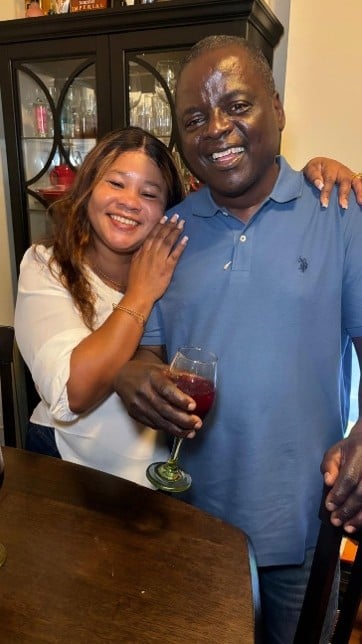
On the night the MV Barima sank, Jasmin Cort was sitting in a cinema watching The Odyssey, a story built around storms, survival and one man’s desperate struggle to return home.
She did not yet know that, miles away in the Atlantic Ocean, her father, Neil Cort, and her uncle, Kenrick Cort, were aboard the vessel as it went under.
The coincidence has haunted her since.
Cort said that while she watched waves rise across the screen on Saturday, July 18, 2026, real waves were overtaking the MV Barima and those aboard it. As she followed a story centred on homecoming, her father and uncle were beginning a journey from which they have still not returned.
For Cort, who grew up fascinated by Greek mythology, the parallels between her family’s experience and Homer’s epic have become inescapable.
In The Odyssey, Odysseus, King of Ithaca, spends years fighting to return to his family after the Trojan War. Although the journey should have taken weeks, storms, shipwrecks and the wrath of Poseidon keep him away for a decade.
Cort said her father had been only miles from Guyana’s shore and his family, but they have still been unable to bring him home.
The sea, she said, was not the only obstacle.
In her view, the modern barriers have names such as maintenance schedules, safety regulations, procurement procedures, investigations and commissions of inquiry.
“To me, Poseidon wears human faces, sits behind desks and, when something goes wrong, holds press conferences,” she said.
Questions over the vessel
Cort pointed to the history of the MV Barima, which had served Guyana for decades before its final voyage.
In 2022, the Department of Public Information reported that the vessel, then described as 88 years old, had been docked for emergency repairs after its systems became “heavily compromised”. Approximately $90 million was reportedly allocated for the works.
Four years later, the vessel departed Georgetown on July 18, bound for Port Kaituma. It sank later that night near the mouth of the Pomeroon River.
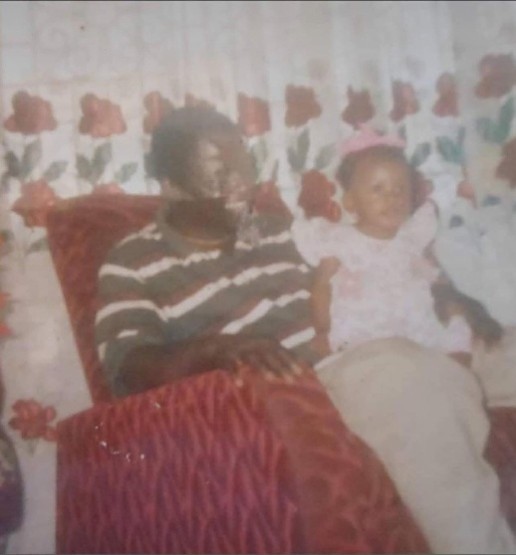
Cort’s father and uncle were among those who did not return.
She said the human decisions and systems governing the operation of a modern passenger vessel must be subjected to questions about responsibility, accountability and justice.
Public Works Minister Juan Edghill had said after the disaster that there was no report indicating that the vessel was unseaworthy and that it had been operating within its maintenance schedule.
However, records which subsequently surfaced were reported to have identified urgent defects and requests for repairs in the months preceding the tragedy.
Cort said those accounts now stand side by side while families continue to wait for answers.
For her, the issue extends beyond whether the sea was rough or whether the vessel was old. It includes what was known about its condition, what action was taken and whether the systems intended to protect passengers functioned as they should have.
A wreck still underwater
Cort also expressed frustration at the pace of the process to salvage the MV Barima.
The government closed its invitation for expressions of interest to undertake the salvage on August 14, some 27 days after the sinking. Bids were subsequently opened, but the wreck remains beneath the water.
President Irfaan Ali told reporters on September 14 that he had not been comprehensively briefed on the stage reached in the procurement process.
For the authorities, those developments may form part of an administrative process. For Cort and other relatives, every additional day represents more time without answers and without the remains of their loved ones.
She said that while institutions can describe someone as “missing”, a daughter experiences that status differently: her father has simply not come home.
Cort acknowledged that salvaging the vessel could not guarantee the recovery of the remains of her father, uncle or any other missing passenger. However, she believes it could give families some comfort to know that every reasonable effort was made.
She also believes the wreck could contain evidence capable of helping investigators establish what happened during the vessel’s final voyage.
The MV Barima should therefore be brought to the surface not because the vessel itself requires mourning, she said, but because within and around it may be the answers for which families are searching.
Living between hope and grief
Cort said The Odyssey is generally regarded as the story of a man attempting to return home, but it is also about those whose lives are altered by his absence.
Odysseus’s wife, Penelope, waits for her husband, while his son, Telemachus, searches for information about his missing father.
That aspect of the story now carries greater meaning for her.
Cort said homecomings are not only desired for people who are still alive. Families of the dead also pray for their loved ones to be returned so they can be buried with dignity.
Her family wants something to bury and somewhere to place flowers. They also want relief from imagining what may have happened to the two men beneath the water.
Until then, the family remains caught between grief and hope.
They attend meetings, participate in protests and continue pressing for answers while attempting to resume their lives.
Cort said her mother now sleeps without the husband with whom she shared a bed for 34 years. For her, almost any moment can trigger a memory of her father.
His voice and laughter still seem close in her mind, she said, but become more distant whenever she attempts to focus on them.
One of the things she treasured most about her father was what she described as his unrelenting, childlike faith in Jesus Christ. That faith, she said, has helped to sustain the family.
It also preserves the hope that he could somehow still return alive.
But the uncertainty has brought its own pain.
“Not knowing gives us hope, and that hope can be torture at times,” she said.
Different journeys home
Odysseus was the only member of his crew to reach Ithaca alive. Cort said he was then left with the responsibility of honouring those who had died during the journey.
She believes the MV Barima’s final voyage has similarly carried many people with it.
Her father has his journey. Her uncle has his. Their families, the State and the institutions responsible for the vessel must also travel their own paths towards truth, accountability and closure.
They will not all arrive at the same destination.
For Cort, home no longer means only seeing her father and uncle walk through the door alive. It may now mean recovering their remains, learning what happened and being able to lay them to rest.
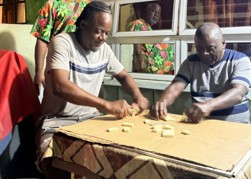
She remembers her father’s laughter and singing voice, and her uncle’s smile as he played dominoes and shared “love” around the table.
In a perfect world, she said, both men would still be alive.
Reality has demanded something crueller.
If she cannot have the miracle of their return, Cort said she wants the dignity of a burial.
She also wants the answers that may still be inside the wreck, the truth about what happened and accountability for any failures which contributed to the tragedy.








Discussion