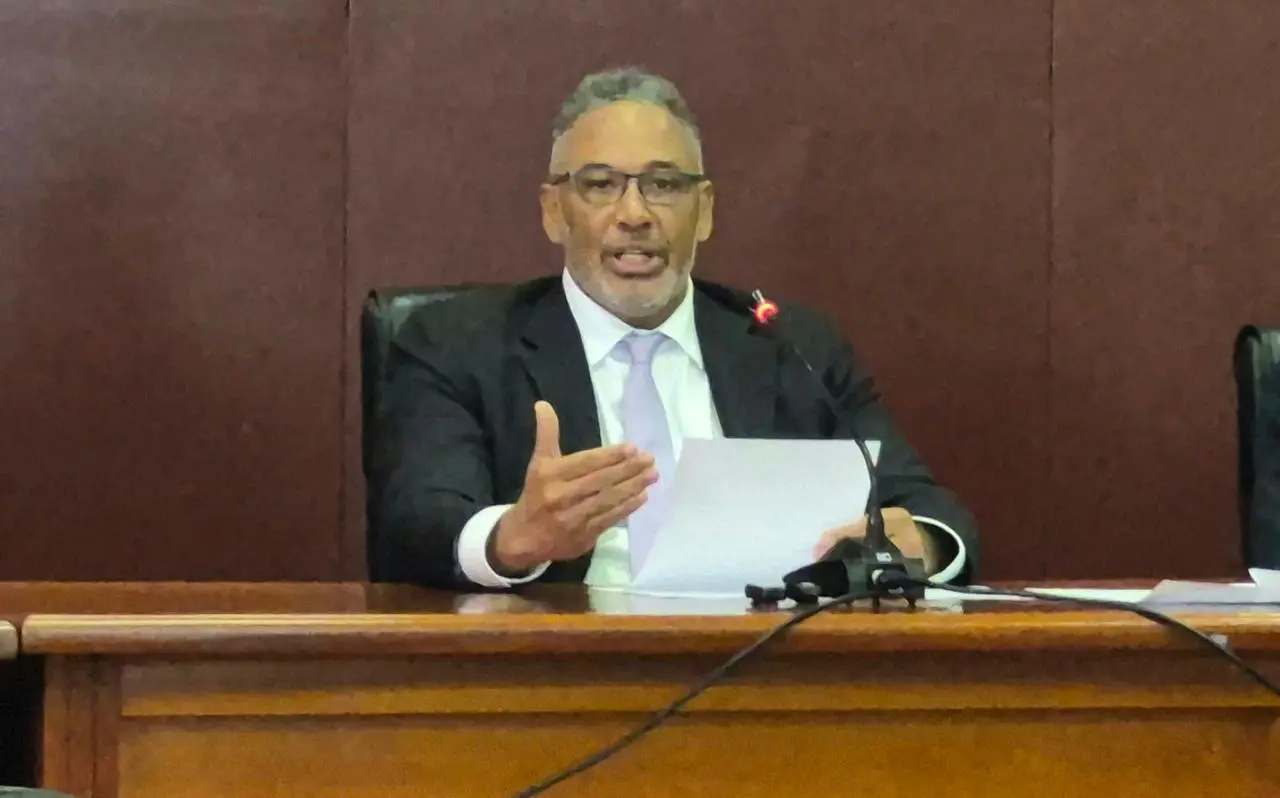
Head of the five-member Commission of Inquiry (CoI) set up to investigate the circumstances surrounding the MV Barima disaster, Belizean Justice of Appeal Godfrey Phillip Smith has said that the Commission cannot say at present if it will be able to cover the travel costs of all the persons who will be coming to give evidence.
Smith said he couldn’t answer that question of compensation when he spoke to reporters last Wednesday after officially declaring the CoI proceedings open at the Arthur Chung Conference Centre, Liliendaal, Greater Georgetown.
“What I do know is there is a budget that the secretariat has for matters like that and I don’t at this moment know the size of that budget and how many people it will cover, but certainly…we will ensure whatever it takes to ensure that we fully discharge our obligations,” he said.
Opposition Member of Parliament Ganesh Mahipaul in a statement recently called on the CoI to publicly guarantee that survivors will not have to bear the cost of transportation, accommodation and meals when they travel to Georgetown to give evidence, noting that survivors have already endured the trauma of the disaster and should not face additional financial hardship simply because they choose to testify before the Commission.
“The survivors have already paid a price. They should not have to pay to be heard,” he expressed, urging the Commission to make clear, without ambiguity, that the basic and reasonable expenses of every survivor who is required to attend the inquiry will be covered.
For survivors travelling from outside Georgetown, Mahipaul said this should include airfare or other reasonable transportation costs, accommodation and meals for the period they are required to remain in the capital to provide testimony.
For survivors living in and around Georgetown, he said transportation to and from the Commission and meals should also be provided where their attendance is required. “These are not unreasonable demands,” Mahipaul said, noting that such measures would remove practical barriers that could prevent survivors from coming forward.
Mahipaul observed that survivors could provide some of the most important evidence before the inquiry and that every effort should therefore be made to ensure they are able to participate. “If we genuinely want the truth about what happened aboard the MV Barima, then we must create an environment in which survivors feel welcomed, respected, supported and protected, not burdened,” he said.
He is also urging the Commission to communicate directly with survivors about the arrangements so they know beforehand that testifying will not impose a financial burden on themselves or their families.
Following preliminary visits and meetings with affected communities before the formal hearings begin on Wednesday, commissioners are expected to travel to Mabaruma on Monday to visit the wharf and meet with survivors and families from surrounding areas, followed by a visit to Port Kaituma on Tuesday.
Secretary to the Commission Javed Shadick has indicated that the Commission has identified more than 100 potential witnesses, including survivors, relatives of those who died, first responders and officials.







Discussion