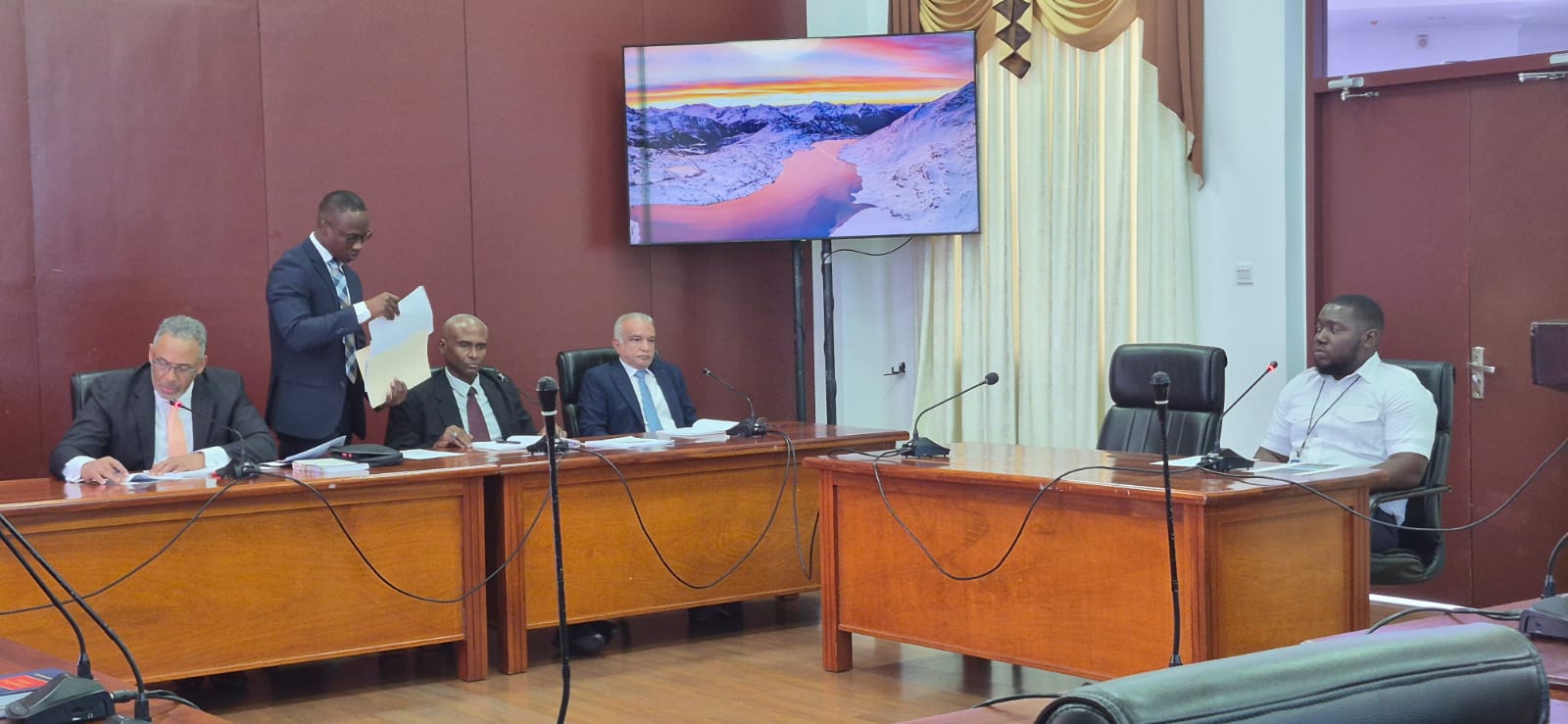
A MARAD vessel used to transport 50 survivors of the MV Barima disaster did not have enough blankets for everyone rescued, despite concerns about hypothermia, the Commission of Inquiry heard yesterday.
MARAD pilot trainee Shemar Morrison testified that blankets were distributed and efforts made to keep survivors warm after they were brought aboard. Asked by Commissioner Nyree Dawn Alfonso what was done for those without blankets, he said the vessel’s heaters were used to maintain a normal room temperature.
Morrison told the inquiry, which is continuing at the Arthur Chung Conference Centre, Liliendaal, that some survivors were bleeding and their wounds had to be cleaned and bandaged.
He also recalled one person being unresponsive. He said he checked the person’s neck for a pulse and checked for breathing but could not determine whether the person was dead.
Morrison said he transported 50 survivors to the Coast Guard base on the Pomeroon Coast before returning to the search area.
He first noticed debris at about 4.30 am, including life jackets, iceboxes, gas bottles and food items floating in the water. He arrived at the location at approximately 4.55 am after receiving a call from the harbour master to transfer survivors.
The vessel left the search site at about 5.30 am and reached the Pomeroon base at approximately 7.30 am, he testified.
Morrison said the search vessel navigated using coordinates supplied by the Maritime Rescue Coordination Centre (MRCC). He received the initial coordinates from Captain John Flores and two additional sets by VHF radio and telephone.
The vessel proceeded to the initial position before moving to the other locations. He estimated that the first debris was found about five nautical miles west of the original position.
Morrison said he manually entered the coordinates into the vessel’s electronic navigation system, using a photograph of them stored on his personal cellphone.
He agreed to assist the commission in checking whether he still had the photograph and whether the vessel’s navigation records could be retrieved. He also said he retained WhatsApp messages and could provide the relevant conversations.
Morrison told the commission that he was not a regular member of the search-and-rescue team but had been asked to assist because of his training and qualifications.
He also recalled Public Works Minister Juan Edghill being at the MRCC and telling personnel to concentrate on their duties and avoid releasing photographs because they did not want to create a stir in the media.
The five-member commission was sworn in on July 30 following the July 18 sinking, which left 73 people confirmed dead.
Chaired by former Belizean judge Justice Godfrey Phillip Smith, the commission also comprises Dr Andrzej Jasionowski, Captain Hamada Fouda, attorney Nyree Dawn Alfonso and retired Rear Admiral Hayden Pritchard.
It is examining the circumstances surrounding the capsizing and sinking, the loss of life and the response to the disaster, including compliance with maritime safety requirements and operational shortcomings.
Evidence-taking began on October 14, following preliminary engagements with survivors and relatives and visits to relevant facilities. More than 100 potential witnesses had been identified for processing, and the inquiry is expected to take approximately six months, depending on the time needed to complete the evidence and report.









Discussion