-says economy will expand 23.7%
The World Bank projects that Guyana’s economy will expand by 23.7 per cent this year, leading Latin America and the Caribbean, but says the country’s rapid oil-driven growth underscores the need for stronger institutions and public investment management to ensure that the wealth produces inclusive development.
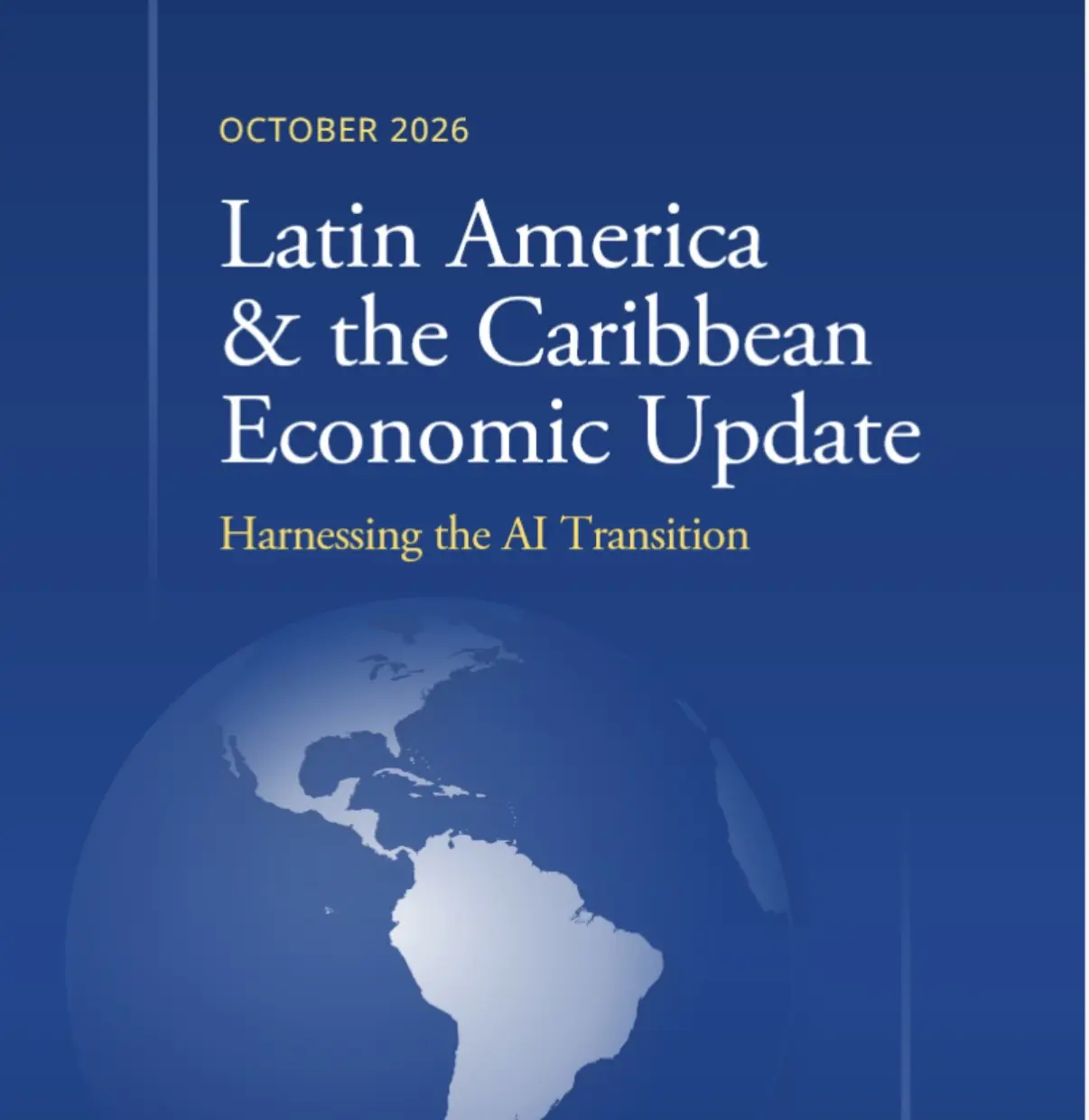
In its October economic update, Harnessing the AI Transition, the Bank identifies Guyana as the only country in its regional table projected to achieve double-digit growth in 2026. The wider region is expected to expand by 2.2 per cent, compared with 2.4 per cent in 2025.
The report says Guyana’s expansion has brought rising government revenues, improved external balances and a declining public-debt-to-GDP ratio. Alongside those gains, however, it stresses the importance of “ensuring that oil wealth translates into broad-based and inclusive development.”
It also cautions that oil-producing countries such as Guyana face the task of managing revenue volatility and avoiding spending patterns that amplify economic booms and downturns as public finances expand.
The Bank attributes Guyana’s exceptionally rapid and sustained growth since 2020 to the scaling up of offshore oil production.
Its forecasts put growth at 18.7 per cent in 2027 and 15.3 per cent in 2028, following the projected 23.7 per cent this year. The report records expansion of 19.3 per cent in 2025, 43.8 per cent in 2024 and 33.8 per cent in 2023.
The figures use information available up to September 23. The 2026 rate is a full-year projection rather than growth already recorded.
Guyana’s forecast substantially exceeds the next-highest rates in the regional table—4.7 per cent for both the Dominican Republic and Paraguay, 4.5 per cent for El Salvador and 4.2 per cent for Panama.
The report describes a divergence within the Caribbean, with Guyana’s oil-led expansion lifting subregional averages while tourism-dependent economies face more tempered growth, high transport costs and vulnerability to energy prices.
Suriname is projected to grow by 3.9 per cent this year and 4.6 per cent in 2027, before accelerating to 21.5 per cent in 2028.
Above
The World Bank’s projection for Guyana is 2.9 percentage points above the government’s revised full-year forecast of 20.8 per cent.
According to the Department of Public Information (DPI), the government estimated that the economy expanded by 33.3 per cent in the first half of 2026, while the non-oil economy grew by 10.1 per cent. Its September assessment projected full-year non-oil growth of 10.2 per cent.
Stabroek News reported in January that Finance Minister Dr Ashni Singh had initially forecast overall growth of 16.2 per cent when presenting the G$1.558 trillion budget.
The budget provided for a G$495 billion transfer from the Natural Resource Fund and a G$779.6 billion Public Sector Investment Programme, including expenditure on roads, bridges, energy infrastructure, schools, hospitals and housing. The scale of that investment provides context for the World Bank’s emphasis on strengthening the management of public expenditure.
Construction grew by 24.7 per cent during the first half, supported by government expenditure and private investment, while services expanded by 7.2 per cent.
The performance was uneven. Agriculture, forestry and fishing together contracted by an estimated 0.5 per cent, as above-normal rainfall affected other crops despite gains in several subsectors.
Rapid economic expansion has also occurred alongside rising consumer prices. According to the government’s mid-year assessment, prices increased by 4.4 per cent between December 2025 and June 2026, largely because of higher food prices.
The twelve-month inflation rate stood at four per cent in June, while the government revised its year-end inflation forecast to 4.3 per cent.
Wider region
For the wider region, the World Bank warns that volatile energy prices could slow the decline in inflation and prolong high real interest rates, restricting credit and investment. Heavy debt and interest payments also limit governments’ capacity to invest.
Climate shocks present further risks. Damage to agriculture, transport networks and access to markets can increase food prices and erode purchasing power, particularly among poorer households which spend a larger share of their income on food.
The report also examines how artificial intelligence could improve productivity, while stressing that technology alone will be insufficient without stronger workforce skills, management capacity and businesses able to incorporate the tools into their operations.
It recommends technical training, assistance to small and medium-sized enterprises and stronger digital government and data systems.












Discussion