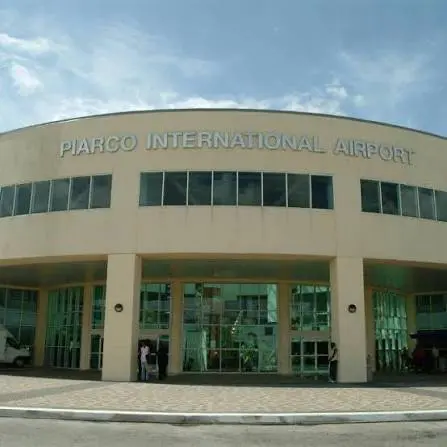
Indigenous organisations from across the Caribbean have urged the Trinidad and Tobago government to abandon a proposal to rename the Piarco International Airport after former Prime Minister Basdeo Panday, arguing that the move would erase one of the country’s most significant Indigenous place names and undermine internationally recognised Indigenous rights.
In a June 30 letter to Trinidad and Tobago Prime Minister Kamla Persad-Bissessar, the Guyana Organisation of Indigenous Peoples (GOIP), the Caribbean Organisation of Indigenous Peoples (COIP), the Indigenous Peoples Advisory Group of the Caribbean Development Bank (IPAG-CDB), the United Maroon Indigenous Peoples (UMIP) and the Merikin Heritage Foundation (MHF) said they were acting in solidarity with the Santa Rosa First Peoples Community, the First Peoples Sovereign Nations of Trinidad and Tobago and the Warao people, all of whom oppose the proposal.
Accompanying the letter, Professor and Chair of the Anthropology Department at Bridgewater State University, Diana J. Fox, writing as an academic partner of GOIP, COIP, IPAG-CDB and UMIP, urged media organisations to publish the appeal.
“These organisations have come together to protest the proposed change of Piarco International Airport in Trinidad and Tobago, erasing an important Indigenous place name,” Fox wrote.
She added that the correspondence “also represents the solidarity of Indigenous Peoples of the Region, too long rendered invisible” and expressed the hope that its publication would “galvanize support and fairly represent the perspectives of this burgeoning Indigenous Peoples Movement in the Region.”
In the letter, the organisations noted that the airport has carried the name Piarco since 1931 and argued that the Indigenous name should be preserved as the airport approaches its centenary in 2031. They also pointed out that Panday himself and members of his family had publicly objected to the airport being renamed in his honour.
The groups noted that “Piarco,” a pre-Columbian Kalinago word, is an enduring reminder of the First Peoples’ presence in Trinidad before European colonisation and that the airport occupies sacred Indigenous land.
Citing Articles 11, 13 and 19 of the United Nations Declaration on the Rights of Indigenous Peoples (UNDRIP), they contended that Indigenous peoples have the right to retain traditional place names and that governments are required to consult them before implementing measures affecting their rights.
According to the organisations, advancing the proposal without meaningful consultation would violate the principle of Free, Prior and Informed Consent (FPIC), which Trinidad and Tobago endorsed when it supported UNDRIP in 2007. They also cited the American Declaration on the Rights of Indigenous Peoples, saying both instruments require states to engage Indigenous communities before decisions affecting their heritage are made.
The letter also quoted Chief Ricardo Bharath Hernandez of the Santa Rosa First Peoples Community as describing the proposal as “a profound disrespect to the history and heritage of the nation,” while stressing that historical place names serve as tangible reminders of societies that existed before later waves of settlement.
While acknowledging Panday’s contributions as Trinidad and Tobago’s fifth prime minister and the country’s first leader of Indo-Trinidadian descent, the organisations argued that his legacy could be honoured “in other tangible ways” that would not require the removal of an Indigenous place name. They urged the government to reject the proposal, undertake genuine consultation with Indigenous communities on matters affecting ancestral lands and national landmarks, and work with Indigenous organisations to formally recognise and preserve sacred sites.
Indigenous groups in Guyana had unsuccessfully protested the renaming of the Timehri International Airport to the Cheddi Jagan International Airport.











Discussion