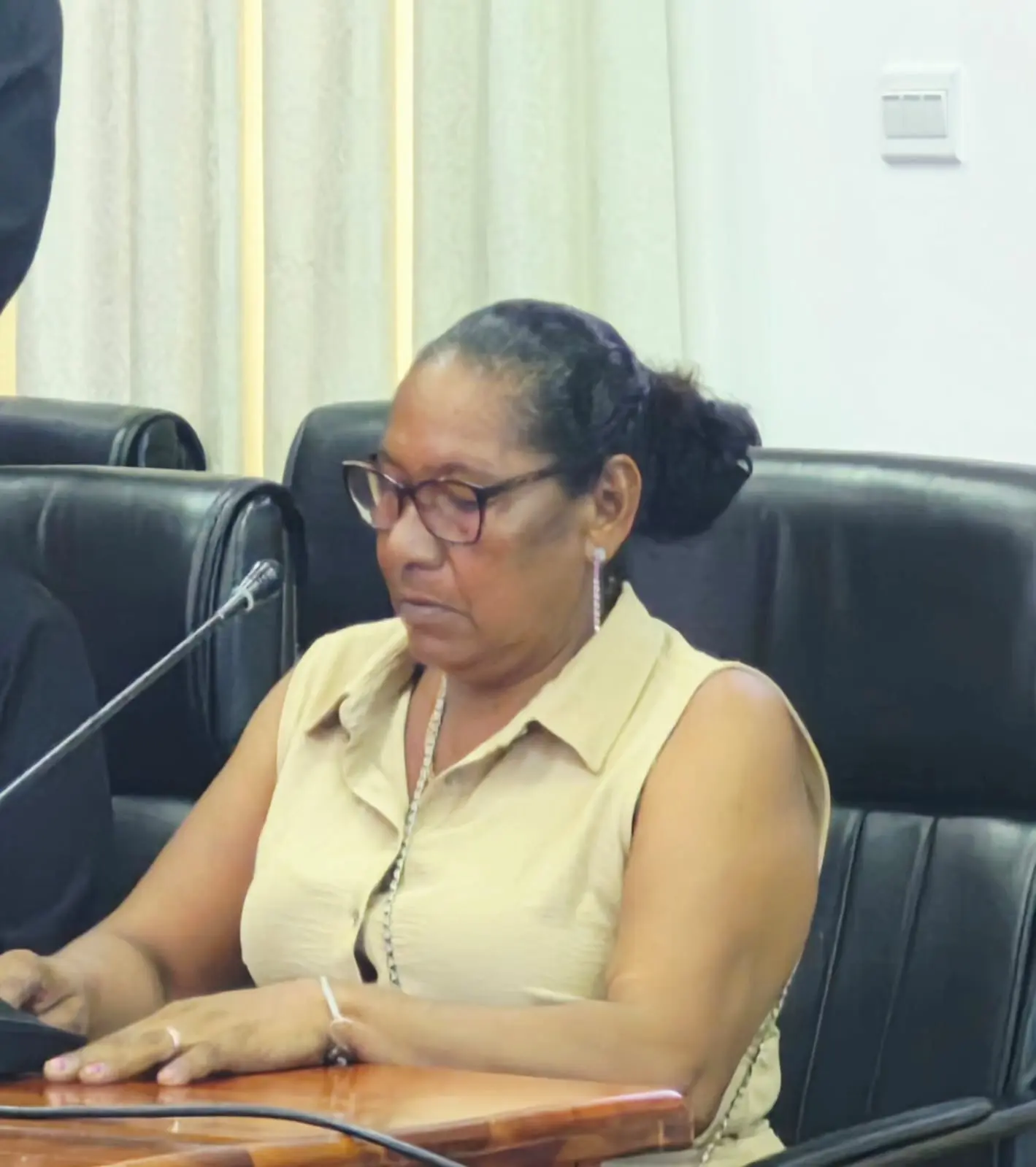
The screams of children are the last thing Helena Moonsammy said she remembers hearing as the MV Barima went down, a sound that continues to haunt her months after she survived the tragedy in which four of her grandchildren perished.
Testifying before the Commission of Inquiry yesterday, Moonsammy recounted the terrifying moments when the vessel overturned, describing how passengers were thrown into the water and forced to fight for survival in darkness.
“I could hear children scream,” she told the commission, explaining that the sounds of the children remain with her to this day.
Moonsammy was travelling with seven grandchildren and a niece on July 18 when the MV Barima capsized. Four of her grandchildren died, while three survived, along with her niece.
Recalling her experience on the boat, she said she had been forced to spread a sheet on the floor to accommodate the children because there was insufficient seating space. The benches in the passenger deck were crowded with boxes, bags, cases of water and other cargo, including bags of chicken feed, leaving little room for passengers to sit or lie down.
Five of the children were initially placed in the middle section of the boat, while she later found space at the back for herself and three others, including the youngest child.
Questioned by Commissioner Nyree Dawn Alfonso, Moonsammy confirmed that cargo occupied much of the passenger seating area, forcing some passengers to sit on the floor.
She also told Commissioner Dr Andrzej Jasionowski that she had never seen the MV Barima carrying such a large quantity of cargo on the passenger deck during her previous journeys. She also said she had never before seen so many travellers on the boat.
She recalled seeing bags of chicken feed lined along both sides of the passenger deck, while hammocks were tied in several areas as passengers struggled to find space.
No access to life jackets
Moonsammy also told the commission that life jackets were kept inside a steel enclosure secured with a lock, making them inaccessible to passengers during the emergency. She explained that passengers would have had to climb over boxes and other items to reach the jackets, but the vessel capsized so quickly that she didn’t get the time.
She said passengers had never been given instructions about emergency procedures, including where life jackets and life rafts were located or what to do in the event of an emergency.
Moonsammy added that no announcement or warning was issued when the vessel began experiencing difficulties. She recalled that, shortly before the vessel capsized, another passenger warned that the boat was sinking. According to her, a crew member responded that it was normal.
Questioned by Commissioner Alfonso, she clarified that the person who raised the warning was a passenger who had been interacting with a crew member. She said the exchange frightened her, causing her to get up and attempt to check on the children. However, the vessel capsized within seconds, leaving her with no opportunity to reach them.
Engine problems
During questioning by Commissioner Rear Admiral (Ret’d) Hayden Pritchard, Moonsammy recalled that the boat’s engine had cut out twice before the tragedy. She also described a loss of steering shortly before the vessel overturned, saying she felt the captain had lost control of it.
Moonsammy said she had been positioned towards the back of the vessel and could not see whether water was entering other sections. She recalled that the journey initially appeared relatively smooth, with one of her grandchildren remarking that the boat was not rocking as much as expected.
She said she had noticed that the vessel was travelling further away from the shoreline than she was accustomed to seeing during previous journeys.
As the vessel began to overturn, she was trapped underwater by items that fell on her. She described struggling to find a way out, eventually feeling the top of the vessel before managing to pull herself free.
She said she held her breath for as long as she could but eventually began swallowing water as she struggled to remain alive.
Moonsammy was eventually rescued by fishermen at approximately 7 a.m., after spending about nine hours in the water holding on to a box.
She was subsequently taken to Charity, where she received medical attention.
Daughter describes trauma
Meanwhile, Moonsammy’s daughter, Samantha Ramitt, who also testified, said two of her three children who travelled with their grandmother died, while the third survived. The youngest child, aged two years and four months, remains missing.
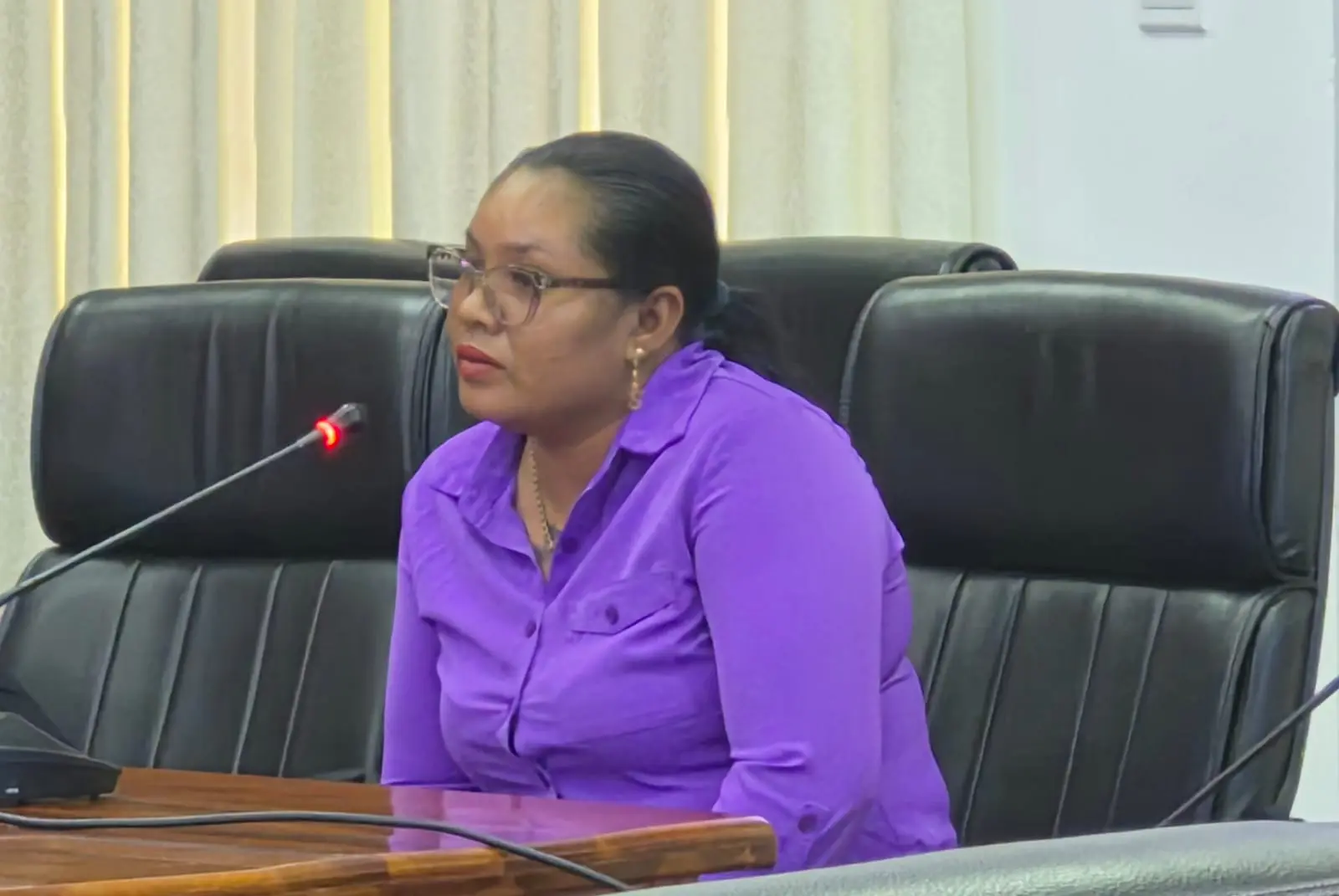
Ramitt recalled receiving a telephone call from her eldest child at about 4 a.m. on July 19, informing her that the MV Barima had capsized. She said she immediately feared the worst, knowing that her mother could not swim.
At the time, Ramitt was working in the interior of Region One and had to arrange private transportation to reach Charity, where survivors were being taken.
When she eventually reached her 12-year-old son, he told her that cargo had fallen on the children when the vessel overturned, trapping them. He also recounted how his sisters had managed to hold on to something in the water but eventually lost their grip.
Ramitt said her son had been experiencing nightmares since the tragedy and was gradually recovering, but is now afraid of travelling by boat.
She too shared that life jackets were kept in a locked enclosure aboard the vessel, similar to what her mother had described during her testimony.







Discussion