
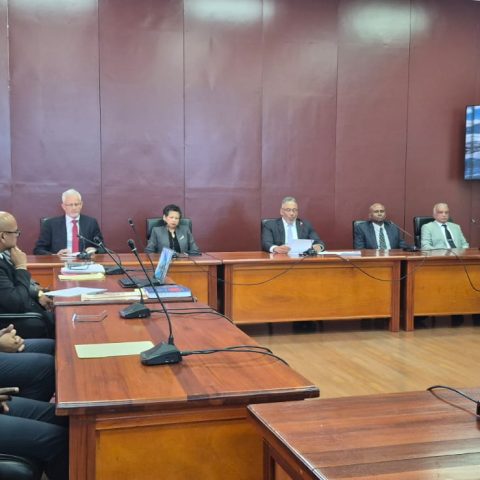
The Environmental Assessment Board (EAB) is scheduled to hold a hearing today on the appeal against the decision of the EPA to exempt proposed exploration at Kurupung in Region Seven from an impact study.
The hearing is to be held at 5 pm in the conference room of the Cara Lodge Hotel at 294 Quamina Street, Georgetown.
The Environmental Protection Agency (EPA) had earlier this year exempted the Kurupung Mineral Exploration Project from an Environmental Impact Assessment.
This triggered two separate objections to the decision. The EAB will now hear the appeal under Section 18 (2) of the Environmental Protection Act.
As reported previously by Kiskadee Watch two documents, dated September 25, have challenged the exemption for Lia (Guyana) Inc.’s Kurupung Mineral Exploration Project. They call for disclosure of the environmental management arrangements and the evidence supporting the EPA’s conclusion that the anticipated impacts would be temporary, reversible and manageable.
One appeal lists 40 individuals and four organisations, including the Guyana Organization of Indigenous People, the Oil and Gas Governance Network, the Organization for the Victory of the People and the Greenheart Movement. Among the individual signatories are Dr Vincent Adams, Dr Laura George, Sherlina Nageer and Vanda Radzik.
The other was signed by Danuta Radzik on behalf of individuals and organisations including Red Thread, the Greenheart Movement and the Organization for the Victory of the People. Its listed supporters include Neville Trotz, Norris Witter, Joel Simpson, Frederick Collins and Vidyaratha Kissoon.
The appeals concern prospecting licences GS14: L-1003/000/23 and GS14: L-1003/001/23. According to the second document, the EPA published its exemption notice on August 26.
The first appeal expressly acknowledges that the application is for exploration and does not cover commercial mining, ore processing, mine construction or radioactive tailings facilities. It nevertheless argues that drilling, handling uranium-bearing samples and storing waste require greater scrutiny than the exemption allows.
A central objection in both documents concerns the Environmental Management Plan referenced in the EPA’s notice. The objectors say the plan has not been made available for public scrutiny and question the basis on which the agency concluded that fuel, waste, drilling fluids and uranium-bearing cores could be safely contained and managed.
“What data convinced the Agency that spills and waste are expected to be temporary, reversible, and capable of being effectively managed?” the first appeal asks.
Its signatories also contend that the notice’s reference to an EPA-approved management plan suggests that approval preceded public consideration of the no-EIA decision. They argue that this would undermine the process required by the Environmental Protection Act.
Similarly
The second appeal similarly questions how the management arrangements were developed without an impact assessment and calls for the plan to be shared with Indigenous communities and the wider public.
That appeal sets out 19 grounds of objection. It disputes the EPA’s assessment of the project’s scale, pointing to proposed accommodation and a mess room for 40 people, a diesel generator, fuel storage, a water well, treatment tanks and septic facilities.
It also identifies access-road works and questions the description of the activities as temporary, citing the duration and possible extension of the prospecting licences. The objectors argue that the infrastructure and waste-management arrangements warrant an EIA under the Environmental Protection Act.
On hazardous waste, they say the project summary refers to lubricants and hydrocarbons being collected in barrels and batteries and electronic waste being sent to a certified management facility, without identifying that facility or explaining its treatment arrangements.
Both appeals raise concerns about drill cores remaining from earlier exploration near the Aricheng airstrip. Citing the project summary, they refer to approximately 88,000 metres—about 54 miles—of historical core material.
The first alleges that the material has been stored without adequate shielding or warning signs. The second questions its condition and whether exposure to weather could have allowed contaminants to reach surrounding land and waterways. Neither document supplies radiation measurements establishing contamination at the site.
The objectors also question the experience of U92 Energy Corp and seek clarity on the respective responsibilities of that company and Lia (Guyana) Inc. The second appeal calls for evidence that Guyana has the specialist personnel and regulatory arrangements needed to oversee
uranium exploration, including radiation monitoring, inspections and waste management.
Consultation with Indigenous communities is another principal ground of objection. The first appeal says that although the licences cover lands governed by the state, Kapong and Pemon communities have traditionally occupied and used the area and retain cultural and spiritual connections to it. It maintains that residents were not consulted beforehand and that many learnt of the plans through media reports.
“Until these communities have been consulted, given the opportunity to ask questions, fully understand the risks related to this project, and provide their free, prior, and informed consent,” permission should not be given for the prospecting activities, the document states.
The second appeal also argues that newspaper notices and limited objection periods do not provide meaningful access for hinterland communities facing difficulties with connectivity and basic services. It calls for information and consultation before authorisation, rather than expecting residents to assess a technically complex project without sufficient support.












Discussion