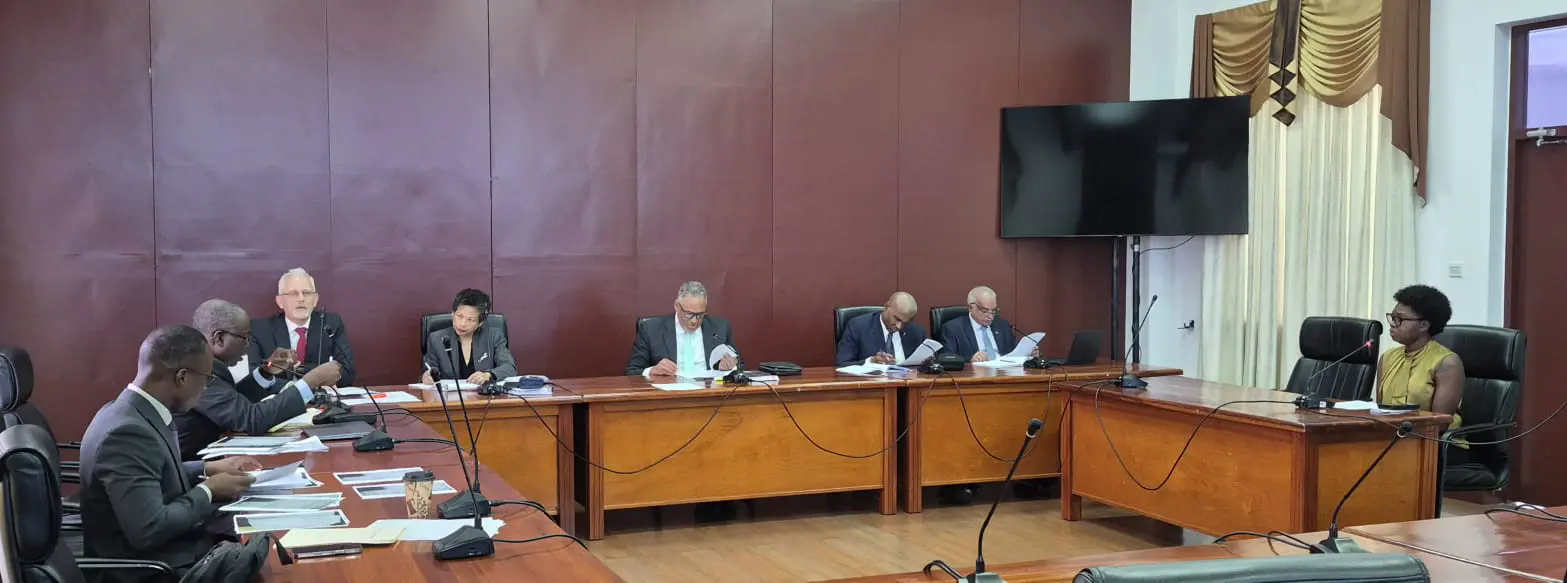
The absence of a clear system of checks and balances between ticketing and boarding at the Transport and Harbours Department’s (TH&D) Goods Wharf came up yesterday at the MV Barima Commission of Inquiry, with one commissioner describing the arrangements as confusing and questioning who was responsible for ensuring that passengers issued with tickets were actually accounted for when boarding.
Seventy-three persons died when the ferry sank on July 18 and a further 30 are missing. Seventy-six persons were rescued. It was later discovered that there were more people aboard than the manifest described.
Commissioner Nyree Dawn Alphonso raised the concerns while questioning cashier Atasha Washington, who explained that different categories of passengers were handled through separate processes, with some receiving both a cash ticket and boarding pass, while others received only a boarding pass.
Alphonso said that she was struggling to understand how the system worked, particularly because Washington issued tickets and boarding passes while other employees distributed documents and checked passengers as they boarded. The commissioner wanted to establish whether there was a central person or mechanism responsible for verifying that the passengers boarding the vessel corresponded with the tickets issued by the cashier.
Washington shared that passengers who booked in advance had their tickets and boarding passes printed before departure. Those documents were handed to checker Kessa Case last July 18, who was responsible for distributing them to passengers as they arrived. However, passengers who booked through Mobile Money Guyana (MMG) and those purchasing tickets on the day of departure were handled directly by Washington. MMG passengers presented their booking codes, which she entered into the system before issuing boarding passes marked MMG.
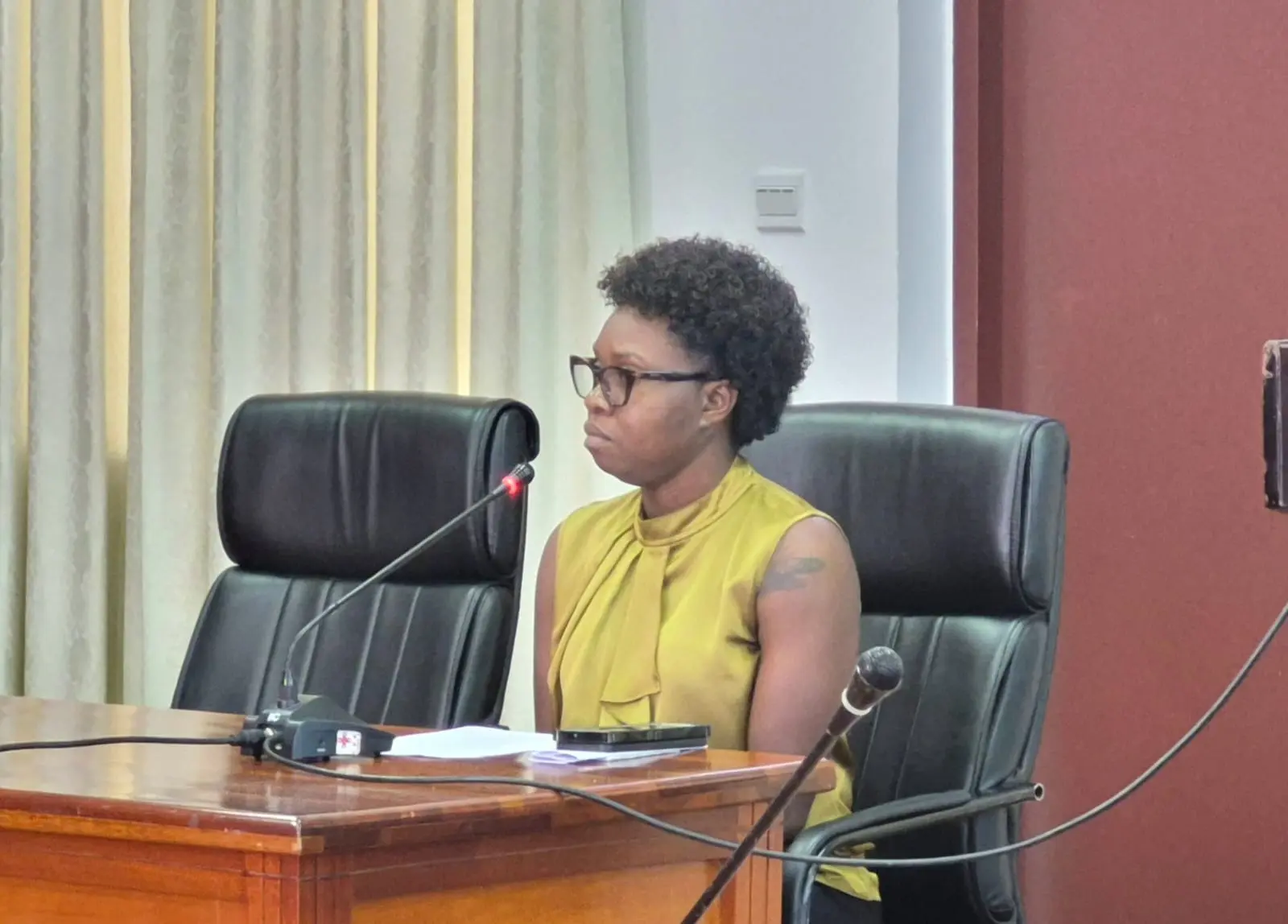
Ordinary passengers received two documents – a boarding pass generated through the online booking system and a cash ticket issued through the point-of-sale system, while MMG passengers received only a boarding pass because they had already paid online.
Alphonso questioned how the two processes were coordinated and who checked that the documents issued by Washington or another cashier corresponded with the people actually boarding the vessel. “Because who’s checking whom?” she asked, expressing concern that there appeared to be no centralised system.
She described the arrangement as appearing to operate like two separate systems, with no clear indication of how they came together to ensure that every passenger was properly accounted for.
Washington said she was accustomed to the arrangement, but Alphonso maintained that it appeared confusing from the outside and raised concerns about the absence of adequate checks and balances in managing passengers.
Exchanges
The questioning followed earlier exchanges with Commissioners Andrzej Jasionowski and Hayden Pritchard, during which Washington repeatedly said she was not involved in the physical boarding process and could not identify who was responsible for verifying the actual number of passengers entering the vessel.
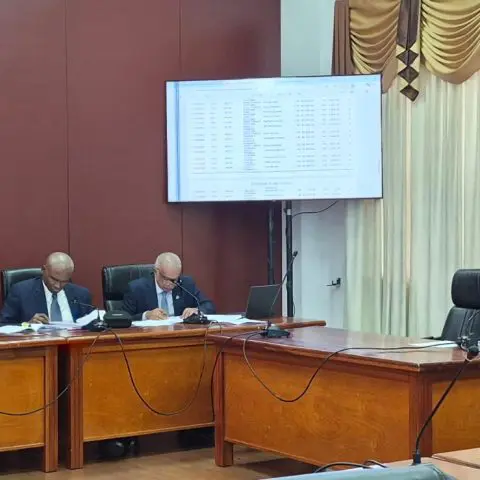
Jasionowski questioned Washington about the passenger records and the difference between the figures reflected in the handwritten booking documents and the provisional electronic manifest. After working through the various lists, eliminating duplicate names and removing two individuals who had not been booked, the commissioner and Washington arrived at a total of 116 passengers recorded in her documents.
However, Jasionowski pointed out that the provisional electronic manifest contained only 100 names. Washington said she could not explain the discrepancy, noting that the manifest was automatically generated by the system. She also acknowledged that she had never routinely cross-checked the handwritten passenger logbook against the electronic manifest, explaining that she relied on the passenger total generated by the system when preparing her accounts.
She also told the commissioner that she could not account for payments from more than 40 additional people who were reportedly aboard the vessel, as she had only collected money from passengers she had booked and remained inside her office.
During the questioning, Jasionowski also referred to CCTV footage showing a transaction at approximately 1:39 p.m., after the reported boarding period of 1:16 p.m. to 1:30 p.m. He told Washington that approximately 159 people had already boarded by the time the transaction occurred and questioned how someone could still be making a payment without her knowing that the vessel had already received more passengers than the documented total.
Washington initially suggested that the transaction could have involved freight or an MMG payment confirmation, but after viewing the footage, she identified it as a payment for freighted items and said it was not a passenger ticket transaction.
Pritchard also questioned the division of responsibilities at the wharf, particularly after Washington explained that she handed the pre-printed tickets to Case at approximately 7:00 a.m. on July 18 but continued dealing with people seeking tickets.
Washington said passengers kept approaching her because they knew she was the person responsible for selling tickets. She would tell them that tickets were sold out and instruct them to wait while she contacted her supervisor, Delon Granderson, about the possibility of accommodating additional passengers.
She said Granderson instructed her to hold on, but she received no further direction on July 18 to process additional passengers. She could not say what eventually happened to those who continued seeking passage or how they may have been accommodated outside her office.
Washington explained that, on previous trips, when the booking allocation was exhausted, she would inform Granderson, who would consult his superiors for approval to accommodate additional passengers. Once approval was granted, Granderson would communicate the number of extra tickets she could sell.
However, she told Pritchard that she had never seen a written policy establishing a maximum number of additional passengers who could be accommodated. She estimated that the largest overflow she recalled was between 15 and 20 people, but could not say whether that figure represented an official limit.
Alphonso further questioned how such additional passengers were documented after the electronic booking system had closed, and Washington said their names would be entered into the passenger logbook and processed through the point-of-sale system. However, she said that no additional passengers had been authorised for the MV Barima’s July 18 sailing and that she had not issued any extra tickets.
The inquiry also heard that the online booking system had been changed shortly before the MV Barima’s final voyage, limiting customers making group bookings to entering only one passenger’s name, while other travellers were identified as passenger one, passenger two and so on.
Washington said she raised the change with Granderson, who told her it was an upgrade. After the vessel sank, she personally contacted some MMG passengers to obtain the names of others travelling under their booking codes because those details were not available in the online records. She confirmed that contacting passengers to obtain the missing names was not a routine procedure but something she undertook after the tragedy.









Discussion