
Linden’s recurring electricity disruptions came under intense scrutiny yesterday as the town’s Mayor called for clear answers from the agencies responsible for electricity generation and distribution, while APNU representative Sharma Solomon challenged the government to account for what he described as the loss of Linden’s former power-generating infrastructure.
The issue was raised at a meeting convened by the Mayor of Linden, Dominique Blair who brought together representatives of the electricity providers, the Ministry of Public Utilities and other stakeholders to address the continuing outages affecting residents, businesses and the wider community.
In opening the meeting, the Mayor said the objective was not to assign blame, but to establish what was causing the disruptions, what measures were being taken to address them and what residents could expect going forward.
He said Lindeners deserved accurate information rather than speculation and uncertainty.
The Mayor also said the meeting should help identify the challenges facing the electricity system, assess the measures being implemented and determine what further action was necessary to bring greater stability to the town’s electricity supply.
“We want greater clarity, better communication, and a clear way forward for the people of Linden,” he said.
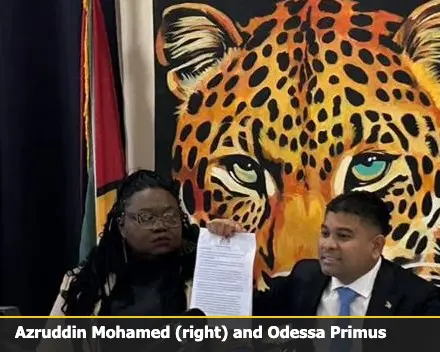
Solomon, however, argued that the current electricity situation could not be considered solely as a technical problem.
Solomon said Linden’s claim to concessionary and reliable electricity was rooted in the town’s history, particularly its contribution to the bauxite industry, the sacrifices of its workers and the infrastructure that was developed to support industrial operations and the wider community.
He argued that electricity in Linden had historically formed part of a broader economic and social arrangement under the bauxite industry.
According to Solomon, the bauxite industry not only employed workers but generated electricity, maintained infrastructure and provided social services that became integrated into the life of the community.
He said workers negotiated wages, pensions and other benefits through decades of collective bargaining, while concessionary electricity was among the benefits associated with the industry.
Solomon said Linden residents consequently built their homes, businesses and lifestyles around the expectation that the town would have access to affordable electricity.
He rejected the notion that Lindeners were simply seeking a special subsidy from the government.
Supplied
“Linden supplied labour. Linden supplied resources. Linden carried and still is carrying this environmental burden. Linden hosted the necessary infrastructure,” Solomon argued.
Solomon also questioned what happened to the generating capacity that previously existed in Linden.
He pointed to several former power-generating facilities, including diesel and steam generation plants and another facility which he said was never brought into operation before being dismantled.
He argued that Linden therefore did not historically lack electricity-generating capacity.
“The question is not why Linden needs more electricity. The question [is] what happened to the generating capacity and infrastructure that Linden already had?” Solomon asked.
He subsequently raised questions about the role of Texas Ohio Energy, a private operator that he said was brought into Linden’s electricity sector with responsibility for rehabilitating and operating the town’s power facilities.
Solomon alleged that the company was eventually allowed to acquire the electricity infrastructure and that the assets were subsequently used to secure financing.
He further alleged that a US$1.2 million insurance payment following damage to a turbine was not reinvested into rehabilitating the facility.
According to Solomon, the assets eventually went into receivership, after which some of the power-generating infrastructure was dismantled and sold.
The claims were made during the meeting and would require verification against the arbitration documents referenced by Solomon and responses from the relevant parties.
Solomon also pointed to the agreement reached following the July 18, 2012 Linden unrest, arguing that the settlement represented a formal recognition of Linden’s historical relationship with electricity.
He said the agreement maintained the town’s concessionary electricity arrangements and provided for mechanisms to examine the management and economic implications of electricity in Linden.
According to Solomon, a management committee intended to examine the generation, management and distribution of electricity was never established.
He also referred to an economic committee which, he said, was intended to be involved before any government could seek to alter the economic rate of electricity in Linden.
Solomon argued that the agreement could not simply be treated as a political footnote.
He said it was part of the settlement of a national crisis and created obligations that should continue to be respected.
The government’s explanation for the current disruptions, however, focused on a recent surge in electricity demand.
A representative of the Utilities said the present situation was a technical problem and was not related to Linden’s concessionary electricity rates.
The representative apologised to residents for the inconvenience and frustration caused by the outages, while explaining that the utility routinely forecasts demand and plans additional generation capacity based on projected growth.
He said Linden had experienced steady growth in electricity demand over the past six to seven years and that, until recently, the existing generation system had been able to meet that demand.
However, demand had suddenly increased beyond the system’s current capacity.
The representative attributed part of the increase to the heat, with residents using more air-conditioning units, fans and other appliances.
He said electricity demand was now peaking not only during the traditional evening period but also around midday.
As an immediate response, the two electricity suppliers are expected to add 1.5 megawatt generators to their respective fleets.
The Utilities representative said the generators are expected to be commissioned within the coming days, with further relief anticipated by mid-next week.
Additional generation is also being considered to bridge the gap before larger projects become operational.
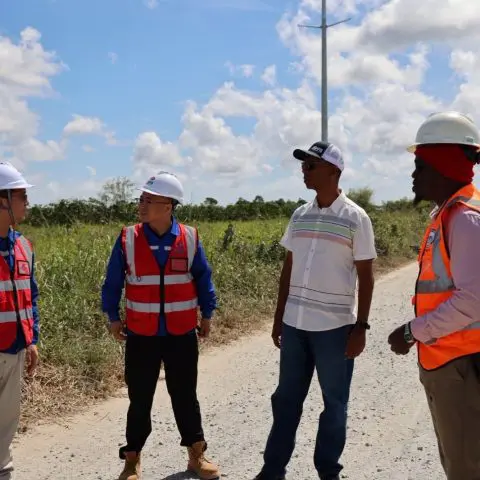
A solar project currently under construction is expected to eventually provide approximately 50 megawatts of additional generation capacity.
The first section is expected to be commissioned by the end of this year.
The government is also looking at restoring the transmission connection between Georgetown and Linden.
The representative said the connection would allow electricity to flow in either direction depending on where additional power is required.
Such a link, he said, would provide another option for addressing generation shortfalls in Linden and improving the resilience of the electricity system.
The Utilities representative also addressed complaints that sawmill operators were being unfairly targeted by the scheduled outages.
He denied that the sawmillers were being singled out, explaining that the scheduling was based on the overall electricity load profile.
According to him, demand falls significantly between approximately 10 p.m. and 11 a.m., when businesses are closed and most residents are asleep.
Sawmill operators were therefore encouraged to conduct operations during that period to reduce pressure on the system during peak hours.
The representative said the utility had previously seen the main peak between approximately 7 p.m. and 9 p.m., but was now experiencing another significant peak around midday.
He again linked the midday peak to increased use of air-conditioning and fans.
Residents were urged to conserve electricity while the authorities work to stabilise the system.
The Utilities representative maintained that the immediate crisis requires a technical solution and said the additional 1.5 MW generators, further generation projects and planned solar capacity should gradually reduce the pressure on Linden’s electricity system.








Discussion