
The Amerindian Peoples Association (APA) has renewed its call for accountability over the sinking of the MV Barima, warning that the deaths and the continuing anguish of affected families must not be allowed to fade from public attention.
In two posts as part of its continuing campaign on the disaster, the organisation highlighted an appeal by Kangaruma Toshao Raphael Joseph, who urged Guyanese to remember those who died, those who remain missing and the survivors.
“Remember we must, forget we will not,” the APA declared.
The organisation described the July 18 sinking as an avoidable tragedy and said remembering it also required recognition of the families and communities whose lives had been permanently changed.
“Every person who lost their life had a family, friends, responsibilities and dreams. Their names and stories must not disappear beneath the passage of time,” it said.
The APA said the disaster should lead to stronger enforcement of maritime-safety requirements, safer vessels, accountable operators and a transportation system which placed human life above convenience, politics or profit.
It added that Indigenous and coastal communities were entitled to the same standard of safety, protection and public services as other citizens.
The state-owned ferry capsized and sank off the Essequibo Coast while travelling from Georgetown to Port Kaituma. Seventy-three deaths have been confirmed, 76 persons were rescued and approximately 30 remain unaccounted.
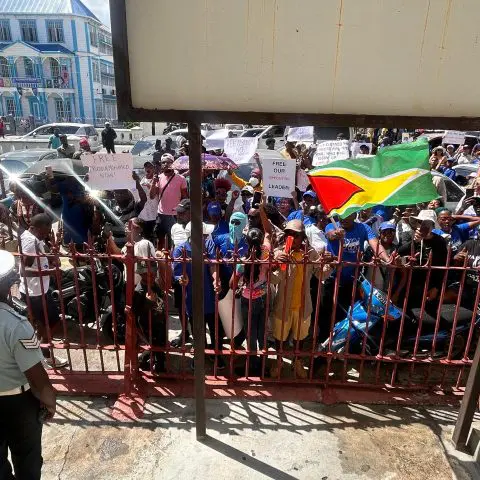
The APA has been among civil-society organisations demanding accountability over the disaster. It joined other groups in backing a petition signed by 165 organisations and individuals which called for the resignation of five public officials and rejected the composition and manner in which the government-appointed Commission of Inquiry was established.
That petition called for an independent technical marine-safety investigation conducted in accordance with international standards. It also sought public and accessible hearings, testimony from survivors and eyewitnesses, support for affected families and the eventual publication of the inquiry’s findings and recommendations.
The signatories argued that the Commission of Inquiry could not replace the independent technical investigation required following a serious marine casualty.
The inquiry subsequently announced that it was preparing to begin public hearings and had conducted a preliminary visit to the accident site, started obtaining information from state agencies and begun examining documents concerning the vessel’s seaworthiness, sailing conditions and operation during its final voyage.
Meanwhile, three companies have submitted financial bids to salvage the wreck on a “no cure, no pay” basis. BK International Inc tendered $1.034 billion, Industrial Fabrication Inc bid $1.895 billion and Netherlands-based KMS B.V. submitted a bid of $2.0351 billion, according to a National Procurement and Tender Administration Board record.
The bids must now be evaluated, with the lowest price not automatically determining the award. The assessment is expected to include the bidders’ technical capacity, proposed recovery method and ability to protect and document evidence for the inquiry.
The APA said honouring those who died required ensuring that the disaster produced meaningful reforms and that no other family experienced a similar tragedy.








Discussion