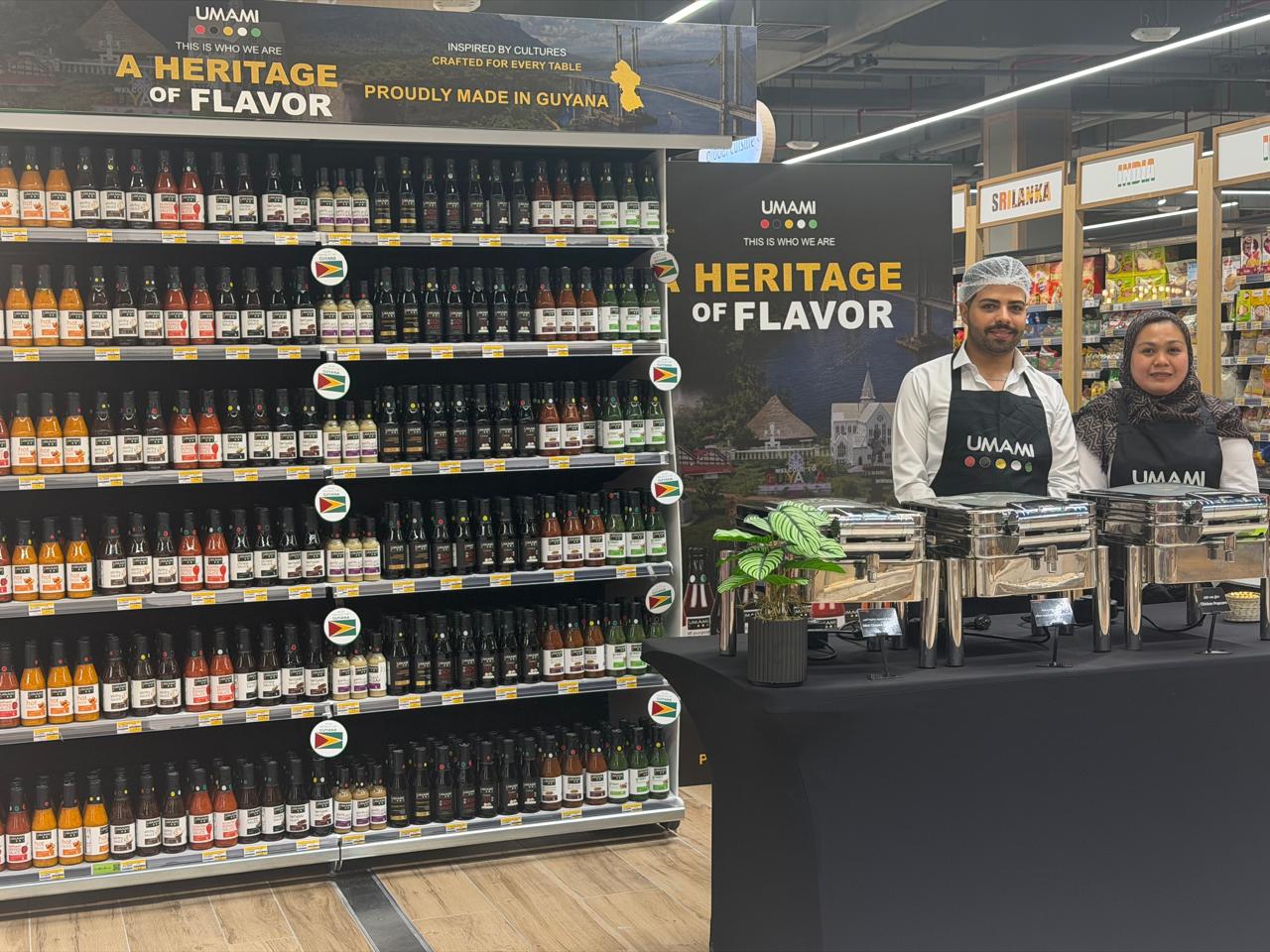
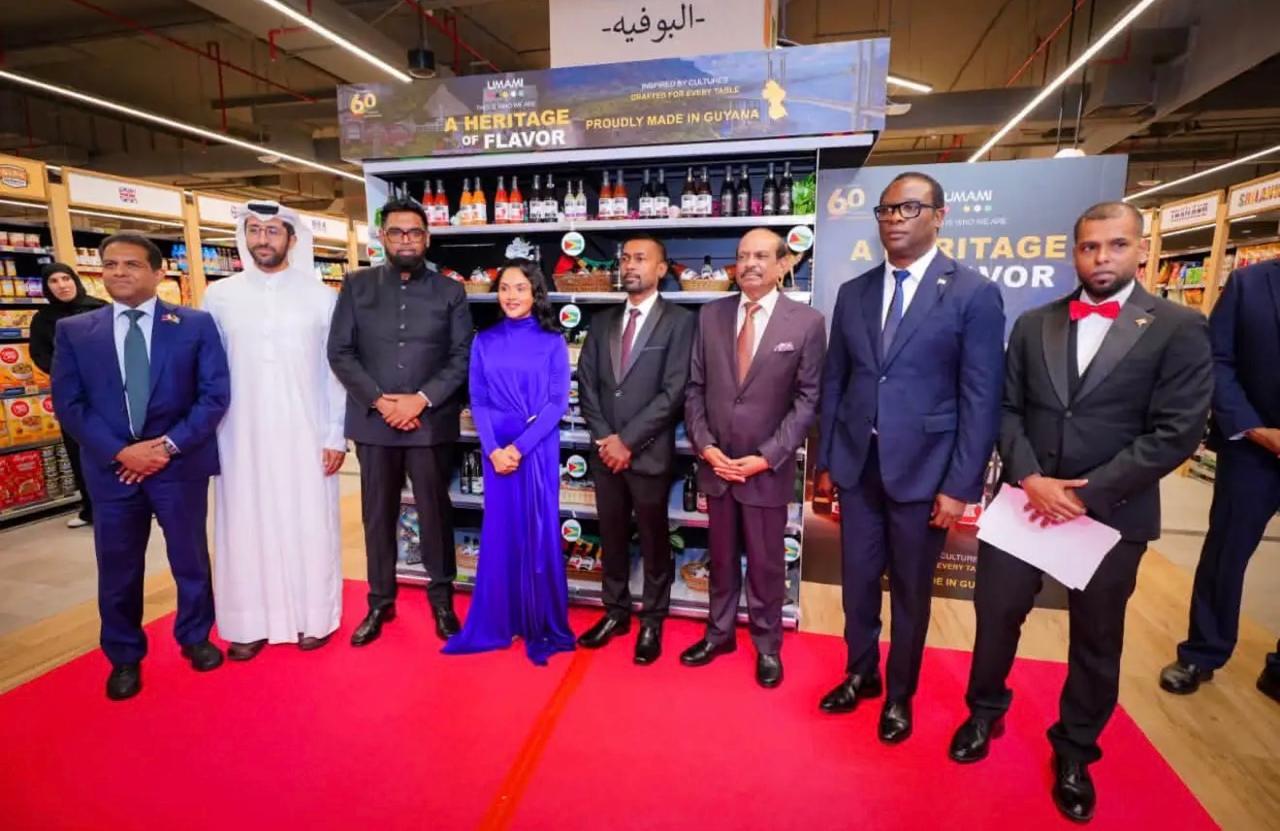
Guyanese-made sauces, seasonings and condiments are now being sold in Qatar following the launch of Umami Incorporated’s products at LuLu Hypermarket in Abu Sidra on September 8, marking the company’s entry into the Middle Eastern market.
The launch brought together LuLu Group Chairman Yusuf Ali, the retailer’s global management team, Qatari ministers and ambassadors, along with representatives of Umami and other officials.
Umami Managing Director Chris Persaud described the development as a significant milestone for the Guyanese manufacturer, saying the company’s presence on shelves in Qatar demonstrates that products manufactured in Guyana can meet international standards and compete alongside established global brands.
“For Umami, having our products on shelves in Qatar is a very significant milestone. “It represents much more than simply entering another market,” he said in an interview with Kiskadee Watch recently.
The move provides Umami with a foothold in the Middle East and the potential to expand further across the Gulf through its relationship with LuLu, which has a major retail presence in Qatar and other Gulf markets.
Persaud said the development demonstrates that Guyana’s export potential extends beyond the shipment of primary commodities, with local manufacturers capable of adding value to agricultural resources, producing finished goods and building brands for international markets. “Guyana has tremendous opportunities beyond exporting primary commodities,” he said. “We can add value to what we grow and produce, manufacture world-class finished products in Guyana, build Guyanese brands, and export those brands internationally.”
The company introduced a selection of its sauces, seasonings and condiments to the Qatari market, with Persaud saying the initial range represents some of the flavours that have helped establish the Umami brand in Guyana and the Caribbean. The company intends to expand the range as consumers become familiar with the products and Umami gains a better understanding of preferences in the Qatari market.
Qatar’s diverse population, Persaud said, presents an opportunity for the brand, given that consumers come from the Middle East, Asia, Africa, the Caribbean and other parts of the world.
However, he acknowledged that establishing a sustained presence in the market will require more than securing shelf space.
Umami plans to build consumer awareness, support promotions and tastings and assess which products perform best, with the aim of generating repeat purchases and establishing a long-term presence in the region.
Persaud noted that securing shelf space with an international retailer was not automatic as Umami had to ensure that its products, manufacturing systems, documentation, packaging and labels met the requirements of the market and retailer. The company operates under internationally recognised food-safety standards, including FSSC 22000, ISO 22000 and HACCP. Additional requirements included product registration, shelf-life documentation, product specifications, export documentation, Arabic and English labelling, packaging standards, barcodes and case configurations.
The company also had to demonstrate that it could supply the market consistently. “This is why I often say that exporting starts long before the container leaves Guyana,” Persaud said. “The real work is building a company and a manufacturing system that is export-ready.” He identified consistency as one of the major challenges facing Guyanese manufacturers seeking to enter international markets.
According to Persaud, international buyers need assurances that manufacturers can maintain product quality, food-safety standards, pricing, packaging, documentation and delivery over time. He also pointed to the relatively high cost of freight from Guyana, imported packaging and production inputs, smaller production volumes, international certification and compliance with different regulatory requirements as challenges for local manufacturers.
Umami sought to address those challenges by investing in its factory, equipment, food-safety systems, certification, product development, laboratory testing, packaging and personnel.
Persaud is urging other Guyanese manufacturers to prepare for international opportunities before they arise, rather than waiting until an overseas buyer expresses interest. He said manufacturers should have their certifications, production capacity, barcodes, packaging, documentation and quality systems in place in advance. “Do not wait until an international buyer approaches you before thinking about certification, production capacity, barcodes, packaging, documentation or quality systems,” he said.
He further advised that Guyanese manufacturers should not underestimate their ability to compete internationally because of the country’s relatively small size. “The international customer ultimately cares about the quality of your product, whether you meet the required standards, whether your pricing is competitive and whether you can deliver consistently,” he said.











Discussion