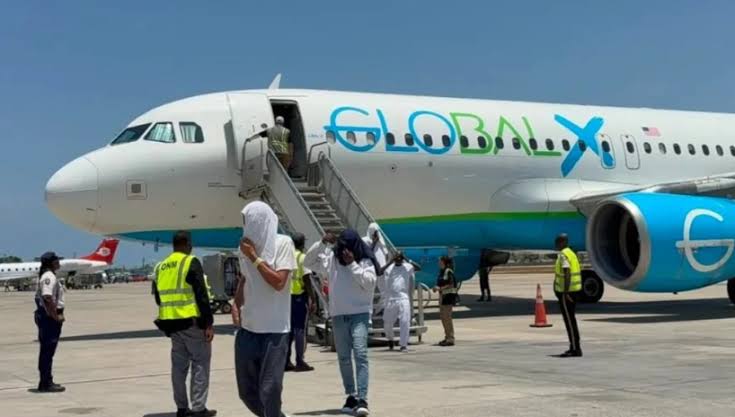
-Guyana has rejected some persons
The United States plans to send one flight a month carrying third-country nationals to Guyana, but US Ambassador Nicole Theriot says she cannot estimate how many people will arrive because Guyana decides who it will accept from each proposed passenger list.
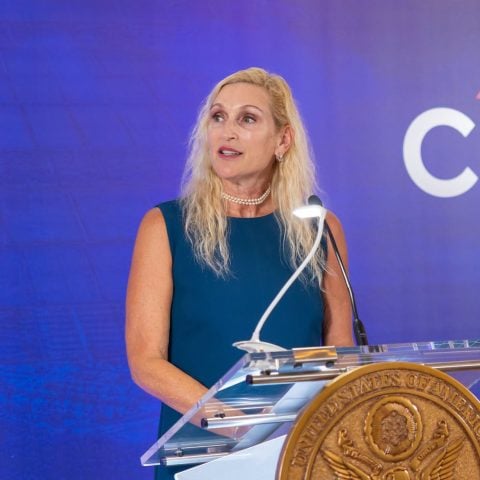
Speaking to reporters on the sidelines of the 27th INTERPOL Americas Regional Conference, Theriot said the US provides a manifest and the Guyana government vets the people on it. She said Guyana uses information supplied by the US alongside information available to its own authorities and has rejected some proposed passengers.
Theriot said the US had planned for one flight a month, but that the number ultimately transferred would depend on Guyana’s decisions. She therefore could not give a figure for the remainder of the year.
The ambassador also discussed the International Organization for Migration’s (IOM) role. She described a US$7.8 million contract covering two years and said IOM’s assistance includes support for people transferred under the programme, skills training where needed, and help with health and other welfare needs. She did not provide a spending breakdown or establish how much of the contract is allocated specifically to people sent to Guyana.
Asked what happens after a person arrives, Theriot described people remaining in Guyana while arrangements are made for their return to their country of origin, as well as the possibility of choosing another destination. She did not say how long the first group would remain in Guyana or where they would go next.
Six people—four Cubans and two Afghans—arrived on September 4, one day before Guyana publicly announced its one-year cooperation framework with the US. The government has said they entered voluntarily, have needed skills and have no known criminal records. The two-year IOM contract described by Theriot is distinct from the stated term of the Guyana-US framework.
President Irfaan Ali has said Guyana retains the right to reject anyone proposed for transfer. According to him, the US must provide criminal-history and medical information before Guyana conducts its own health and security checks, and only those formally approved by his government may travel here. “People just can’t arrive on a plane,” he said. Ali has also said the IOM would arrange temporary accommodation, basic support and assistance with voluntary return where appropriate.
APNU MP Terrence Campbell urged the government to disclose more about the third-country nationals transferred from the US and the agreement governing their stay. “If you’re not good for the United States, you’re not good for Guyana,” he said.
Campbell said the public had not been given sufficient details about the six persons’ backgrounds or the terms of the arrangement. He argued that accepting them should have involved public discussion and warned the government against proceeding without greater scrutiny.
Campbell suggested that the six must have broken US laws to have been removed.
And opposition MPs Sherod Duncan of APNU and Amanza Walton-Desir of the Forward Guyana Movement have called for the signed agreement to be published.










Discussion