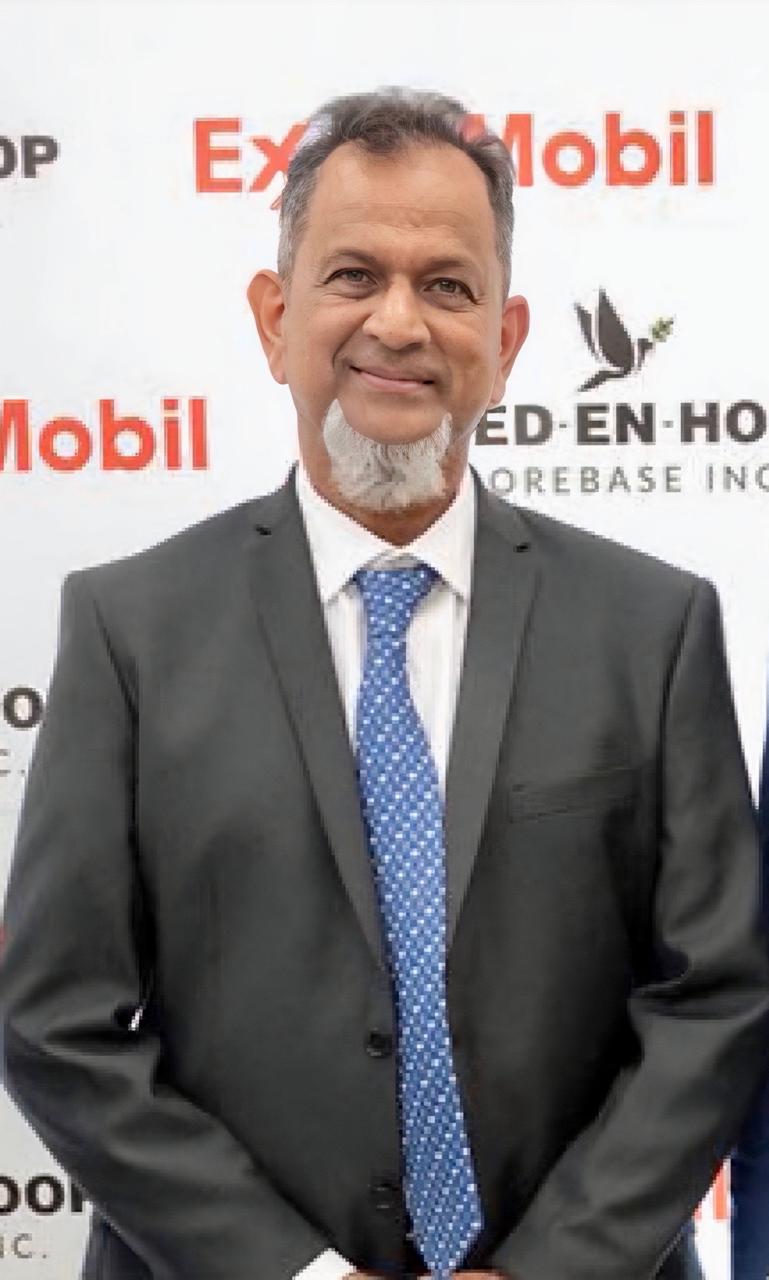
Businessman Nazar Mohamed yesterday listed a series of issues that have deepened his concern about whether he and his son, Opposition Leader Azruddin Mohamed, can receive a fair extradition hearing.
In a lengthy statement, Nazar Mohamed cited reports that the US visa of Justice Gino Persaud was under review. Justice Persaud has not said anything publicly about this matter.
Mohamed sought to link the development to decisions Justice Persaud delivered in cases involving the family, including disputes over tax assessments for imported luxury vehicles.
He said neither he nor his son had ever met Justice Persaud, conducted business with him or had any personal, professional or social relationship with him.
“Our only connection is that matters involving our family came before him as a judge of the High Court,” Mohamed said.
He noted that Justice Persaud had delivered decisions adverse to the state in litigation involving the family and that the judge was subsequently criticised publicly by President Irfaan Ali, Vice-President Bharrat Jagdeo and Attorney General Anil Nandlall SC.
Mohamed argued that the circumstances could have a chilling effect on judicial officers required to adjudicate cases involving his family.
“No judge should have to wonder whether ruling against the Government could affect his career, his ability to travel, his reputation or his personal life,” he said.
Mohamed also accused senior government officials and sections of the media of conducting a sustained campaign against his family following his son’s entry into politics and subsequent election as Leader of the Opposition.
He contended that the campaign had created a public presumption of guilt while extradition proceedings against him and his son remained before the courts.
“I am not suggesting that my son, as Leader of the Opposition, or I should be immune from scrutiny. Neither of us is above the law,” he said.
“But there is a profound difference between legitimate scrutiny and creating a public presumption of guilt while our liberty remains before the courts.”
Mohamed was especially critical of Nandlall’s public commentary on the allegations against the family, saying that the Attorney General was not merely a political commentator but the government’s principal legal adviser and a party involved in defending the state’s handling of the extradition proceedings.
He referred to recent remarks in which Nandlall said that while the courts could review his statements, they could not prevent him from commenting and that he would not “seek refuge in silence.”
According to Mohamed, such commentary could prejudice proceedings in which the courts are still being asked to determine questions affecting the family’s liberty.
The Caribbean Court of Justice (CCJ) in July dismissed the Mohameds’ appeal challenging the Authority to Proceed issued for their extradition. However, three judges found that statements by Nandlall created a real possibility of apparent bias and were inconsistent with the presumption of innocence. The majority nevertheless concluded that this did not invalidate the extradition process that had commenced.
Federal
The extradition proceedings arise from a request by the United States for the Mohameds to face federal charges in Miami, Florida.
An indictment unsealed in October 2025 alleges conspiracy to commit mail and wire fraud, substantive mail and wire fraud offences and money laundering in connection with gold exports, customs declarations, bribery and the alleged evasion of taxes and royalties owed to Guyana.
The Mohameds have denied wrongdoing and have maintained that the proceedings are politically motivated.
The High Court in February dismissed their constitutional challenge to the Authority to Proceed, finding that Home Affairs Minister Oneidge Walrond acted lawfully and that there was no evidence of bad faith, improper purpose or political bias. The extradition committal proceedings subsequently continued before Chief Magistrate Judy Latchman.
Mohamed also returned to the controversy over Continental Strategy, the US lobbying firm retained by the Guyana government.
He said filings in the United States showed that the firm sent the office of Congressman Carlos Gimenez five proposed social-media messages targeting Azruddin Mohamed and linking him to Venezuelan President Nicolás Maduro.
Gimenez subsequently described the younger Mohamed as a “pro-Maduro puppet.” Jagdeo denied instructing the lobbyists to target him.
Mohamed maintained that the campaign was intended to frighten voters away from supporting Azruddin and the We Invest in Nationhood party during the 2025 general elections.
Stabroek News had raised questions about the lobbying firm’s role after the disclosure that it had supplied suggested messages to the congressman during the campaign.
Mohamed said the reported development involving Justice Persaud had now intensified his fear that outside influences could affect the judicial process.
“My son and I will continue to face these proceedings through the courts and use every lawful avenue available to us,” he said.
“We are only asking for a fair hearing before an independent court, where our fate is determined by the law and the evidence, and not by any politician.”
He added: “Never in my lifetime have I witnessed the sustained mobilisation of political power, State resources, media platforms and public officials against one family in the manner that has been directed against my family over the past two years. Any rational-thinking person who examines the sequence of events can see clearly that this extraordinary campaign is connected to my son Azruddin’s entry into politics, the growth of his political support and, ultimately, his assumption of the constitutional office of Leader of the Opposition”.








Discussion