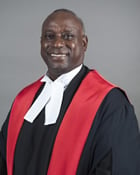
Retired Justice Courtney Abel yesterday confronted head-on the danger to judicial independence in Guyana from Saturday’s travel restriction on Justice Gino Persaud and the long-running failure to make confirmed appointments at the top of the judiciary here.
In a pointed presentation to a judicial conference in Jamaica which he altered to take account of Justice Persaud’s inability to travel via Miami as his US visa was reputedly under review, the Guyana-born Justice Abel outlined the various power strands that could be at play.
Speaking on the topic of “Current tensions between Judicial Independence and Rule of Law” and in the presence of Justice Persaud who arrived at the conference via a different route, Justice Abel said: “The United States has not publicly called the measure a sanction. Yet an unexplained restriction imposed by a foreign power upon a serving judge, preventing him from travelling, operates as a sanction in practical effect”.
The constitutional lawyer said that this has caused concern as Justice Persaud has decided politically sensitive cases.
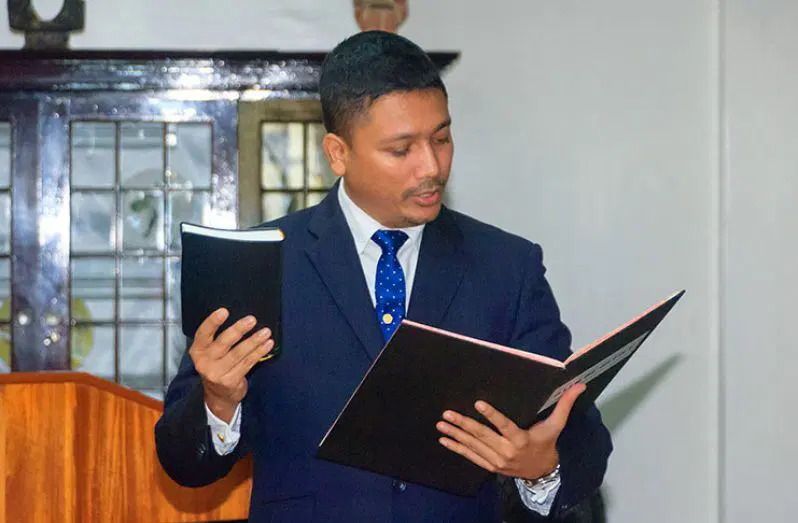
“They included revenue proceedings concerning members of the Mohamed family and the taxation of imported luxury vehicles. One member of that family was subsequently elected to Parliament and became Leader of the Opposition. Justice Persaud’s rulings were adverse to the State and the Guyana Revenue Authority. Senior governmental figures, including the President, publicly criticised aspects of those decisions. The ordinary constitutional response remained available: appeal.
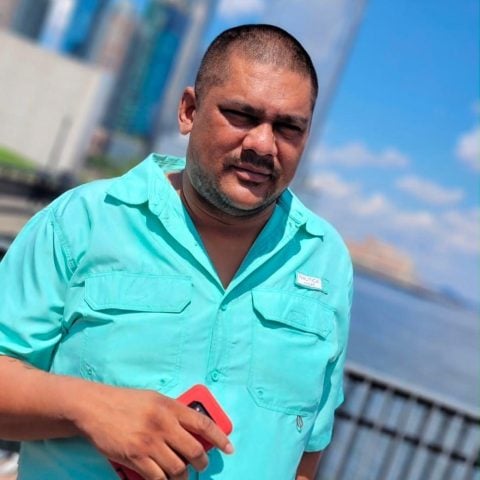
“The context is more charged still. Members of the Mohamed family have been sanctioned by the United States and are the subjects of American extradition proceedings. The action affecting the judge therefore lies at the meeting point of domestic politics, judicial decision-making and American executive power.
It has been publicly alleged that persons within the Guyana Government may have encouraged, or supplied information leading to, the American action. That allegation is unproved. The United States has given no public reason. The Guyana Government has acknowledged no such role. There is chronology. There is context. There is concern. There is not yet proof. Suspicion is not evidence. But neither is silence an answer”, he asserted.
While the Guyana judiciary has remained silent on the matter as it did when former Chancellor Justice Yonette Cummings-Edwards resigned under unexplained circumstances, Justice Abel considered an unexplained exercise of foreign executive power materially affecting a serving judge after politically sensitive decisions and asked at what point does a private immigration matter become a public question of judicial independence?
“The question is larger than Justice Persaud. It concerns the judge who comes next. What message does the unexplained closing of one gate send to every judge who must later approach another?”, he asked.
Justice Abel, who served in the Belize Supreme Court, said he was speaking not only as a constitutional lawyer, but from lived experience.
“I too have served as a foreign judge in a small jurisdiction. I learned that pressure seldom arrives wearing a name badge. Power does not always command. More often, it arranges the atmosphere.
“It may prolong an acting appointment until expectation and insecurity merge. It may criticise a judgment without confronting its reasons. It may unsettle relationships with staff. It may alter security arrangements, leaving the judge to wonder who protects, who observes and who reports.
“No direction is given. No threat is recorded. The judge remains in office. The salary is paid. The courtroom opens.
“The appearance of independence survives. But does its substance?”, he asked.
A judge, he said, may remain legally independent and become humanly exposed but judicial independence should not depend upon judicial heroism.
“The law should not require every good judge to become a constitutional martyr”, Justice Abel asserted.
What he described as the “airport gate”, he said, reveals another vulnerability.
“A judge in a small postcolonial state lives within an unequal international order. The state may face sanctions, diplomatic pressure or economic consequences. The judge may have to travel through a larger state and submit to immigration decisions for which no explanation need be given.
“Each encounter may be lawful. Each question may be routine. Judges do not acquire diplomatic immunity by purchasing an airline ticket. But context matters. Timing matters. Silence matters.
“A constitution may protect a judge from the executive at home. Who protects the judge from the collateral power of an executive abroad?”, he queried.
He concluded that the action affecting Justice Persaud may prove routine, mistaken, justified or unrelated to his judicial work.
“If so, appropriate process should disclose that. Until then, its constitutional significance lies not only in what may have happened, but in the message an unexplained action may send.
“Judicial independence is no longer threatened only by dismissal, imprisonment or an envelope pushed beneath a chamber door.
“The modern threat may be lawful in form, temporary in appearance, administrative in language, foreign in origin, digital in transmission and psychological in effect.
Its subtlety does not make it unreal”, he said.
Examined
Justice Abel then examined the failure over more than 20 years to confirm a chancellor and chief justice of the judiciary.
“An acting appointment may be lawful. It may be necessary. But permanent temporariness is a contradiction with constitutional consequences.
Can the head of a judiciary be wholly secure while political actors retain the power to decide whether the office will ever become substantive? At what point does a constitutional bridge become a constitutional waiting room?”, Justice Abel asked.
He pointed out that successive Presidents of the Caribbean Court of Justice have repeatedly urged Guyana’s political leaders to secure substantive appointments to the offices of Chancellor and Chief Justice. All to no avail.
“We must author more conciliatory methods: indigenous, relational and truly Caribbean. Methods that place us in a circle, rather than permanently opposite one another as combatants. Methods that preserve principle while making agreement possible.
“A court may show us the road. It cannot make us walk upon it. But it may remind us that constitutional progress begins when adversaries learn to become authors together”, he posited.
While the airport gate and the acting appointment are different events, he contended that they reveal the same anxiety: a judge’s formal authority may remain intact while the conditions surrounding judgment are shaped by powers the judge does not control.
“Can lawful powers, accumulated and strategically exercised, create a culture hostile to judicial independence? Can the rule of law be weakened through powers conferred by law?
“The old assault was visible. The judge was removed. The court was closed. The judgment was ignored.
“The modern assault may leave no fingerprints. It may never tell the judge what to decide. It may merely teach the judge what decisions are costly”, he stated.
In his presentation entitled `Who Writes the Judgment’ Justice Abel added: “We therefore need to understand judicial independence in its modern form. I approach it through the postcolonial Caribbean idea of freedom as self-authorship and collective authorship.
“This freedom arises from our struggle against colonial rule. It is the capacity to become the responsible authors of our lives, rather than characters in a script written by others. Collective freedom is the capacity of a people to author the institutions, laws and purposes of their common life.
“That hard-won inheritance requires the judge to remain the true author of the judgment”.








Discussion