The Guyana Water Incorporated (GWI) is set to drill 14 new wells to provide water to residents of housing developments across the country, as the utility moves to address growing water-supply challenges in expanding communities.
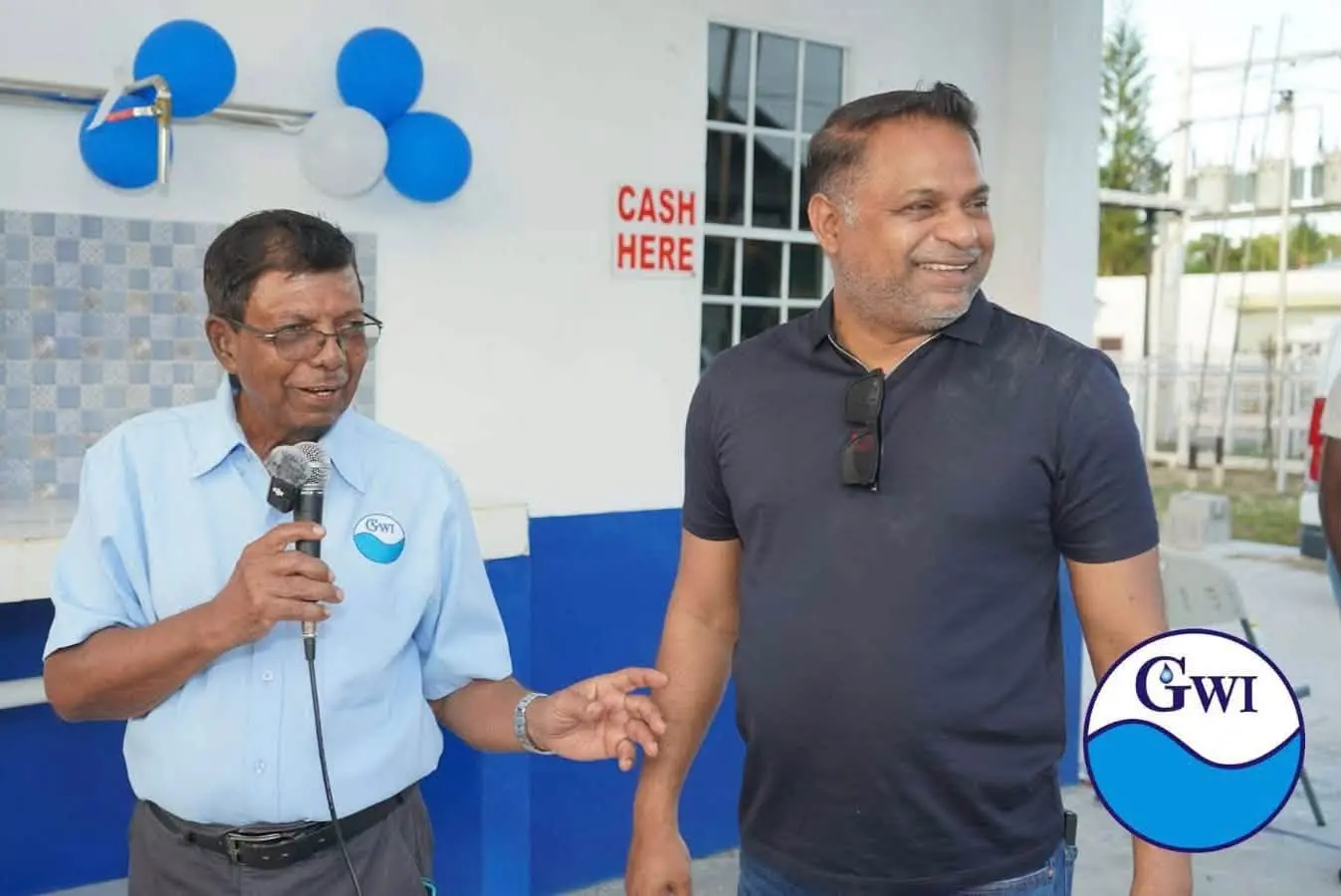
GWI Chief Executive Officer Shaik Baksh announced the planned works during the opening of the utility’s water refilling station at Vergenoegen, Region Three, saying the wells will target new housing areas developed by the Central Housing and Planning Authority (CH&PA).
Among the Region Three communities identified are Meten-Meer-Zorg, De Kinderen, Leonora and Stewartville, with Baksh saying drilling could begin as early as October or November, subject to the contractor process.
“We will be drilling 14 wells, new wells for those areas, targeting those areas,” Baksh said.
He acknowledged that residents moving into the new housing schemes may face difficulties in the meantime, explaining that the existing water system cannot simply be extended to some of the developments because of their size and location.
“As you move into those areas you might face some hardships now, but the existing system cannot extend because these are huge, large schemes,” Baksh said.
The announcement comes against the backdrop of ongoing water problems in some of the very communities identified for additional infrastructure.
Residents of the Meten-Meer-Zorg Housing Scheme previously told Kiskadee Watch that they have gone more than two years without a reliable water supply, forcing families to spend heavily on water or turn to alternative sources.
Resident Lorna Cornelius said she pays approximately $400 for a five-gallon bottle of water, but cannot afford to purchase enough to meet all of her household’s needs.
With two children attending secondary school, Cornelius said the lack of water has even forced her to use water from a nearby trench to wash their school clothes.
Residents told Kiskadee Watch that they collect rainwater when possible and use nearby trenches and makeshift ponds for activities such as washing, while purchasing water for drinking and cooking.
The situation has placed an additional financial burden on households that have already paid hundreds of thousands of dollars for their house lots.
Baksh said GWI is moving to address the water-supply gap through a combination of new wells and larger treatment infrastructure.
He said a major surface-water treatment plant is planned for Region Three, near the back of Stewartville, which would draw water from the Boerasirie Conservancy and supply new housing areas along the West Coast corridor.
The project is expected to take approximately two years once construction begins.
GWI also plans to install another treatment plant at LBI to serve the East Coast corridor.
Baksh said the broader objective is to ensure that residents of the new housing developments eventually receive treated water.
“We’re on the move to ensure that the new housing areas get treated water also,” he said.
He acknowledged, however, that the infrastructure projects will take time to complete and urged residents to be patient as GWI works to expand the system.
The planned investments come as housing development continues to push farther into areas where existing water infrastructure was not designed to serve the growing population.
Baksh said GWI has identified nearly 80 new housing developments that require water infrastructure.
The utility is therefore pursuing both immediate and long-term solutions, with the 14 wells expected to provide additional sources of water while larger treatment plants and transmission systems are developed.
For residents of communities such as Meten-Meer-Zorg, the planned works could eventually address a problem they say has persisted for years, but the immediate challenge remains accessing reliable water while the new infrastructure is being put in place.







Discussion