
President Irfaan Ali has called for Guyana’s growing wealth to translate into better lives for all citizens, saying the anniversary of the October 5, 1992 elections should serve as both a reminder of the struggle for democracy and a commitment to national unity.
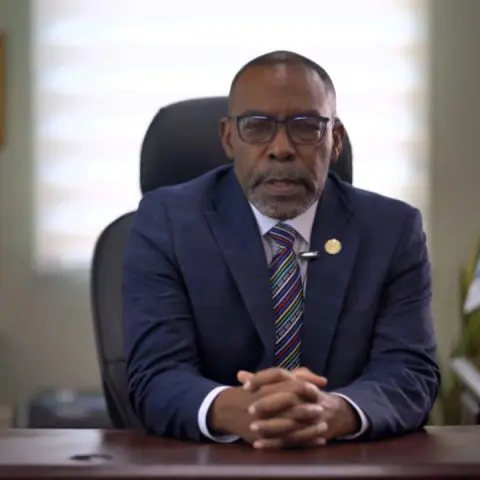
In a Facebook video on Sunday, ahead of yesterday’s 34th anniversary, Ali said safeguarding the right to freely choose a government remained an obligation to future generations.
“It is not enough to accumulate national wealth. We must convert that wealth into better lives, better opportunities, and a more secure future,” he said.
“The democratic dividend must become a national dividend.”
The President is presently being accused of holding up preparations for local government elections by not responding to correspondence from the Opposition Leader, Azruddin Mohamed on the nomination of commissioners to the Guyana Elections Commission.
Ali described the 1992 elections as the culmination of a prolonged struggle against electoral manipulation, authoritarianism and economic hardship. He credited the PPP/C, other political and civic organisations, religious bodies, trade unions and international supporters with contributing to the restoration of free and fair elections.
“The Guyanese people did not inherit democracy on October 5th, 1992. They fought for it, they suffered for it, they sacrificed for it, and ultimately they reclaimed it,” he said. Ali was 12 years old in 1992.
The 1992 elections brought then Opposition Leader Dr Cheddi Jagan and the PPP/C to office, ending the PNC’s uninterrupted period in government since 1964. That period had seen rigged elections in 1968, 1973, 1980 and 1985.
The 1992 elections followed electoral reforms and international observation, including a delegation headed by former United States President Jimmy Carter.
Ali recalled demands for ballots to be counted at polling places, a new voters’ list, a restructured Elections Commission and local and international observers.
He acknowledged the international community’s role but said democracy had not simply been handed to Guyana by outsiders.
Stabroek News’ reporting has documented the wider domestic campaign for electoral reform, including the Patriotic Coalition for Democracy, the Guyana Human Rights Association, GUARD, the independent media and religious, professional, business and labour representatives.
Ali devoted part of his address to the economic difficulties facing the country before 1992, pointing to heavy external debt, deteriorating infrastructure, weakened public services and migration.
He argued that restoring democratic legitimacy created the conditions for national reconstruction and subsequent development.
“Democracy is not an ornament to development. It is one of its foundations,” he said.
Economic reform, however, had begun before the change of government. In a December 2012 Stabroek News column, accountant Christopher Ram recalled that Hoyte and then Finance Minister Carl Greenidge had already embarked on a market-based Economic Recovery Programme supported by the International Monetary Fund and other international partners. Greenidge’s 1992 budget presentation reported real economic growth of 6.1% in the preceding year, following three years of contraction.
Closing the address, Ali pledged to devote the remaining years of his presidency to visiting villages and communities and seeking opportunities to bring the country together. He said citizens would ultimately judge how he had used his time in office.
“Let us build a Guyana in which democracy is secure, prosperity is shared, opportunity is accessible, and national unity is a lived reality,” he said.









Discussion