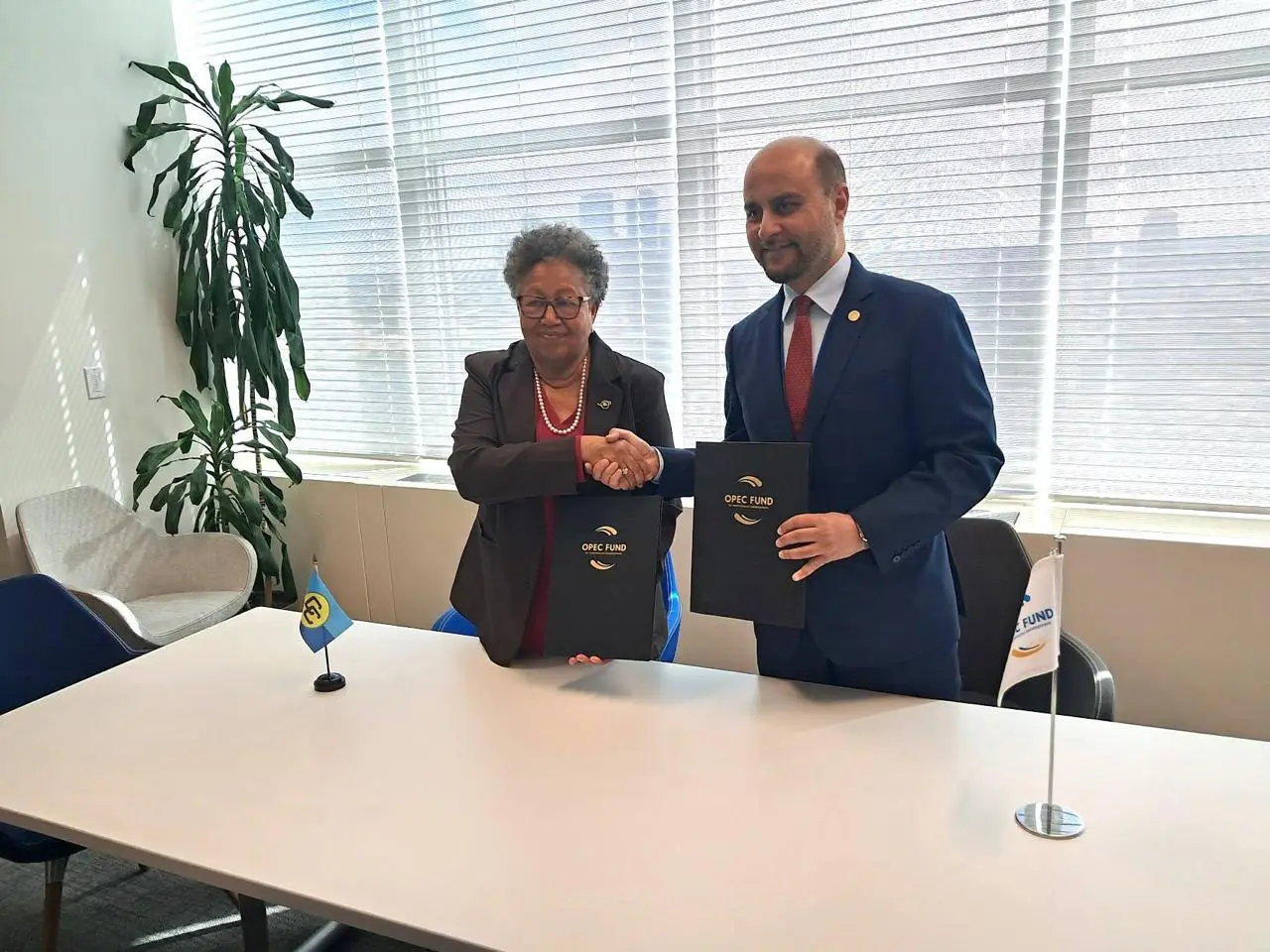
CARICOM and the OPEC Fund for International Development have signed an agreement aimed at improving member states’ access to climate financing and supporting projects to strengthen resilience to climate change.
CARICOM Secretary-General Dr Carla Barnett and OPEC Fund President Dr Abdulhamid Alkhalifa signed the Memorandum of Understanding on September 24, on the sidelines of the 81st United Nations General Assembly in New York.
According to CARICOM, the agreement establishes a framework for cooperation in climate resilience, sustainable development and climate finance. It provides for financing processes based on countries’ needs and assistance with developing climate adaptation and mitigation projects.
The partnership also covers policy assessments, reviews of national regulatory frameworks, research, vulnerability assessments and support for planning and implementing climate action.
CARICOM’s announcement did not specify a financing commitment, identify projects to be supported or give an implementation timetable.
The OPEC Fund said the cooperation falls under its Island Resilience Facility, which supports Small Island Developing States. Its published description of the facility’s second phase includes US$600,000 for regional entities, including CARICOM and the Indian Ocean Commission, through a needs-based financing model. That allocation covers the regional entities collectively and was not identified as a new commitment under the September agreement.
Access to affordable climate financing has been a longstanding concern for Caribbean governments.
At their February 2024 summit, CARICOM leaders warned that available international and private climate financing was limited, expensive and difficult to access. They also noted limited international support for financing allocations specifically for Small Island Developing States and called for a coordinated regional approach to securing assistance.
In its 2025 declaration marking the tenth anniversary of the Paris Agreement, CARICOM backed reform of the international financial system to take greater account of countries’ vulnerability, expand concessional financing and support debt sustainability.
The declaration also called for greater use of debt-for-climate swaps, insurance and risk-sharing mechanisms, and other financing tools suited to small states, while avoiding additional debt burdens.












Discussion