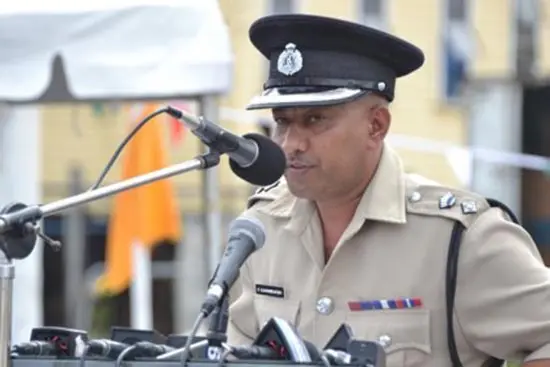
-Home Affairs Minister, police finally break silence
More than 10 days after she was made aware of a rape complaint against SOCU Head Fazil Karimbaksh, Minister of Home Affairs Oneidge Walrond finally broke her silence on the matter yesterday and this was later followed by a statement from the police which did not name the accused.
Walrond made the disclosure of the rape complaint in the Starting Point podcast during which she fumbled answers and appeared to suggest that there would be a confrontation – which is typically between the accused and the complainant – but which is frowned upon by the Sexual Offences Act.
Asked by interviewer Fareeza Haniff about the Karimbaksh matter, Walrond said “I can confirm that she (the complainant) has given a statement. I am informed from the Commissioner (of Police) that a team has been set up to deal with this investigation. The investigation would entail getting statements from the other persons in whom they think would be appropriate to get statements and statements from the accused who is the Deputy Commissioner Karimbaksh and to hold a formal confrontation”.
Asked by the interviewer if this is a process that happens for any rape allegation made against anyone, Walrond said “The fact is that Mr Karimbaksh is at the helm of the police force, he is a Deputy Commissioner and so there is a particular procedure that has to be followed and so … the confrontation that would be held from the team that would be assigned after that confrontation then the matter will be adjudicated whether its disciplinary action or criminal action that would be for the criminal investigation department to determine and this team who is doing the investigation”.
The subsequent police statement likewise did not disclose whether Karimbaksh had been placed on leave or suspended, identify the members of the investigative team, or give a timetable for its work.
“Following receipt of the report, Commissioner of Police, Dr. Clifton Hicken, established a team to conduct a thorough investigation into the allegations,” the force stated.
It assured the public that the allegations were being treated seriously and that the investigation would be conducted professionally, impartially and in accordance with established procedures. It also pledged due process for all parties and said further information would be provided as necessary.
In her later Facebook statement, Walrond said the matter would not be determined through public debate.
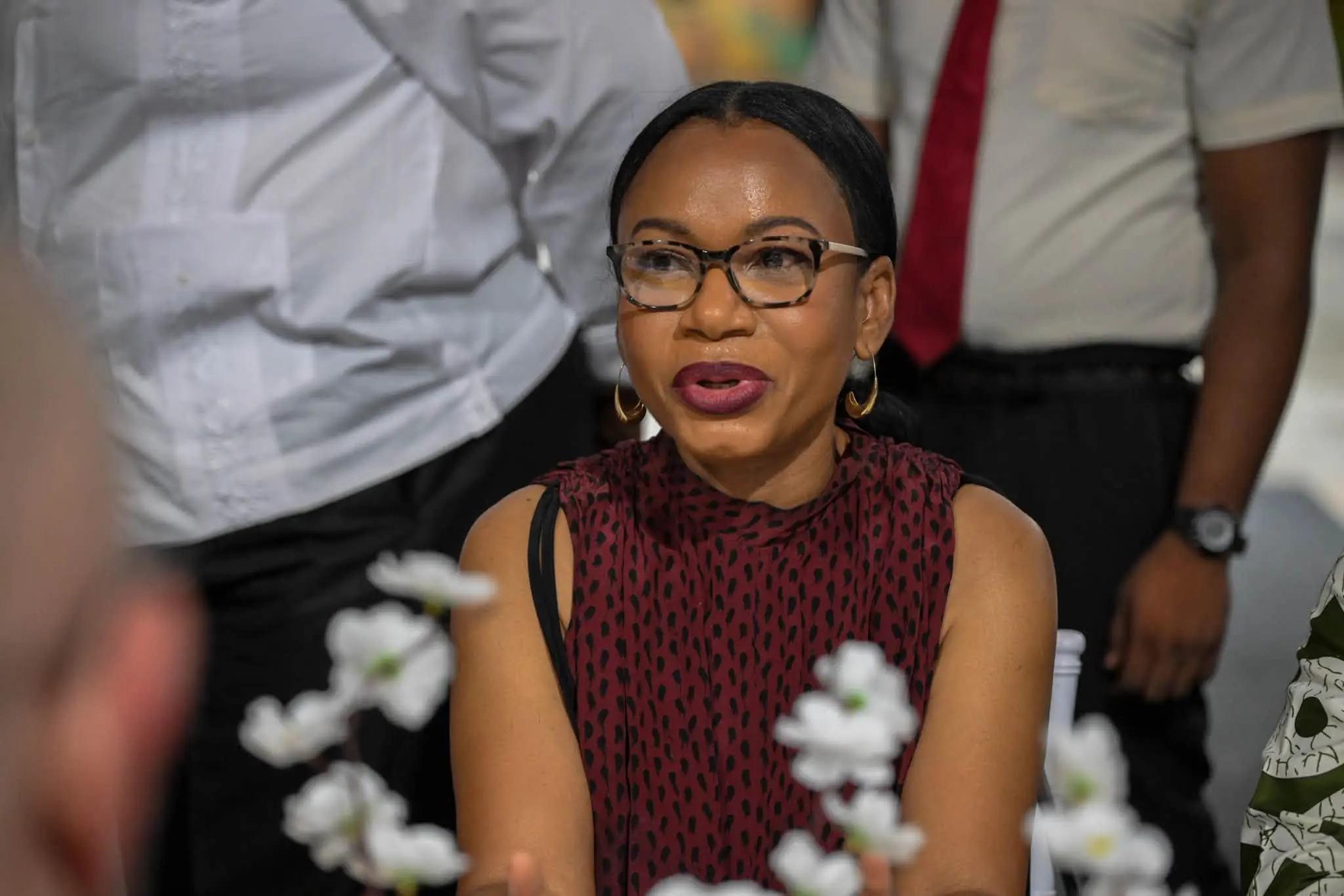
“This matter will not be investigated or tried in the court of public opinion,” she wrote.
“The allegations are serious and will be treated as such. The law will not be ignored, nor will due process be bypassed.”
She expressed confidence in the investigative team and said it should be allowed to work independently and thoroughly, without public interference or prejudgment.
“Let the evidence guide the process. Let the law take its course,” she added.
Walrond also told the Starting Point podcast that “It is my view and I hold this strong view that he (Karimbaksh) should be sent on administrative leave pending the investigation”.
She acknowledged that this should be in the purview of the Police Service Commission but that it was still to be constituted. She said she would assume that the matter would now have to be discussed between her and the Police Commissioner.
Confrontation
Walrond’s reference to a proposed confrontation must be considered alongside the protections in Section 42 of the Sexual Offences Act, Chapter 8:03.
Section 42(1) expressly provides that “at no point during the investigation shall the complainant be required to recount the complaint or any part of it, in the presence of the accused unless the complainant wants to do so”.
Subsection (2) further provides that the complainant cannot be required to view or be in the presence of the alleged perpetrator, except for an identification procedure conducted through an audiovisual link, a two-way mirror, or another arrangement sensitive to the complainant’s wellbeing.
The minister did not explain whether the complainant had requested a confrontation or how the proposed procedure would comply with those protections.
In 2021 Karimbaksh had acknowledged that the then Police Service Commission had moved to institute disciplinary action against him over accusations of sexual harassment, which he said were “trumped up.” That matter then became the subject of several legal actions.
Yesterday’s Kiskadee Watch editorial ended as follows: “This isn’t the first time that such allegations have been made against a senior policeman. Whatever the reason, the silence cannot continue. We call on Minister Walrond to state whether she had been advised of the complaint against this senior policeman and if so what she has or has not done about it. Her credibility and that of her government are on the line”.
Greene case
The present investigation against Karimbaksh recalls questions raised during the handling of a rape allegation against then Commissioner of Police Henry Greene in December 2011.
Stabroek News reported on December 16 that Crime Chief Seelall Persaud had confirmed an investigation and that the complainant had given police a statement. Then Home Affairs Minister Clement Rohee initially declined to comment. The reporting also recorded concerns about officers investigating their own commissioner and calls for outside supervision.
On December 17, the newspaper reported a government announcement that President Donald Ramotar had agreed to Greene’s request for leave. Assistant Commissioner Leroy Brummell would perform the commissioner’s duties in the interim, while external assistance was being sought for the investigation.
By January 10, 2012, Stabroek News reported that Jamaican investigators had arrived and obtained a statement from the complainant, accompanied by her attorney Nigel Hughes. Greene remained on leave.
Those arrangements provide two points of comparison: Greene stepped away from his duties during the investigation, and investigators from outside Guyana assisted.
The Greene case attracted sustained criticism of the government’s handling. He requested leave rather than being directed to stand down, and the government subsequently faced criticism over its failure to pursue disciplinary proceedings.
The DPP advised that Greene be charged with rape, but he challenged that advice. Chief Justice Ian Chang ultimately prohibited a charge based on it. Greene’s retirement was accepted in April 2012 amid continuing controversy over the court decision and the government’s response to his conduct.
In the current matter, opposition figures have called for an independent investigation and Karimbaksh’s removal from operational duties while it proceeds. Walrond’s stated preference for administrative leave addresses part of those concerns, but the statements released so far do not announce that step or explain the safeguards governing the proposed confrontation.








Discussion