-raise ferry before CoI moves ahead – urges father of missing sailor
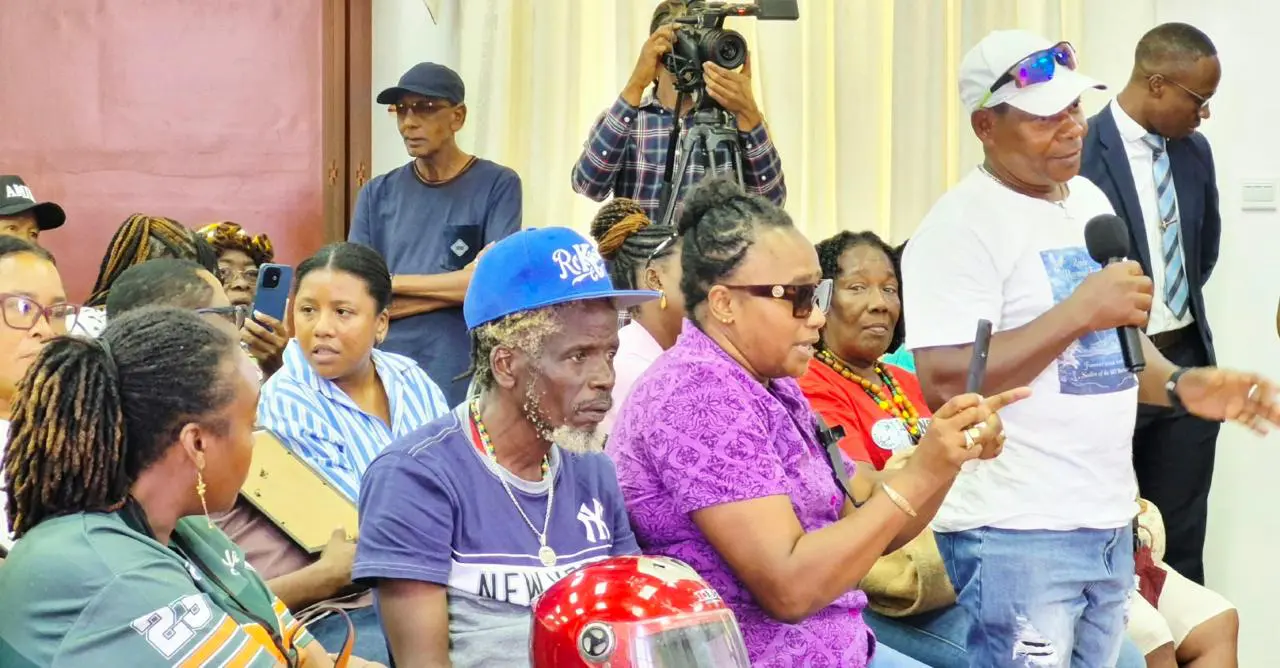
Emotions ran high yesterday as families of the MV Barima victims met Commissioners who will investigate the sinking of the ferry and a key demand was the raising of the vessel.
Royston Frank, whose son Rawle Frank died in the MV Barima disaster, yesterday told the Commission of Inquiry (CoI) that the investigation should not be rushed ahead without first raising the boat, noting that its recovery is critical to obtaining the “proper” evidence needed to determine what caused the tragedy.
Frank, who poignantly identified his son as a crew member and sailor who perished in the July 18 disaster, spoke to the commissioners during an interactive session with relatives of victims, expressing frustration over the more than two-month wait for the vessel to be salvaged.
Speaking at the Arthur Chung Conference Centre, Liliendaal, he said he appreciated the work the commissioners had begun but he wanted to know how a full inquiry could proceed without the MV Barima being brought up.
He said he was not calling for the inquiry to be rushed but wanted the process to be conducted properly and with all available evidence. “We don’t want to force a Commission of Inquiry. We don’t want to hurry a Commission of Inquiry. We just want everything to go in the right process, and in the right manner, so that we could get enough evidence,” he expressed.
Frank then questioned when the contract for the salvage had actually been awarded, who had won it and what experience the successful company had in raising vessels.
“We are just like sailors in this room here today. To be honest, we don’t know nothing that is going on,” Frank told the commissioners, referring to the families’ lack of information about the salvage process.
He said relatives had heard about a bidding process but were unaware of who had ultimately been selected, the contractor’s experience or how long it would take to raise the MV Barima.
Frank also questioned whether the contractor had the necessary expertise, pointing out that the vessel had been under water for more than two months.
His concerns came after the commissioners disclosed that BK International had been selected to undertake the salvage operation. This announcement was not made by the government.
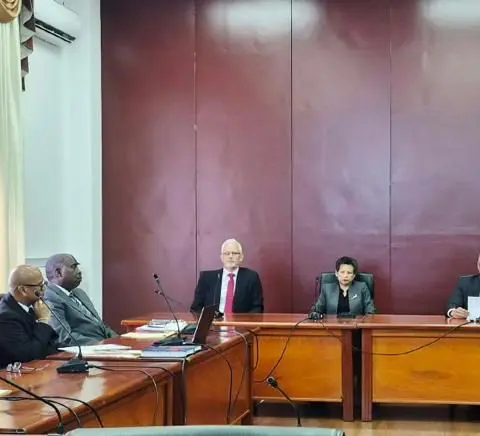
Commissioner Dr. Andrzej Jasionowski had earlier said the salvage preparations were under way and could take another week or two. He said careful planning was necessary to ensure that the vessel was raised without destroying or altering evidence.
Central
Frank, however, maintained that recovering the vessel must remain central to the inquiry.
The commissioners explained that they do not have the authority to award the salvage contract or determine the qualifications of the contractor, further noting that they could not suspend all other investigative work while waiting for the vessel to be raised.
They said significant background work was already in train, including the examination of documents from agencies responsible for maritime and ferry operations.
Frank acknowledged that work but maintained that the recovery of the vessel was essential to obtaining the evidence necessary for the inquiry.
Jasmin Cort did not go to yesterday’s meeting with the commissioners simply to listen. She turned up with a notebook of questions and a photograph of her dad and uncle – two of the persons still unaccounted for after the vessel sank. She passed the photograph to the commissioners so that they could see what her father and uncle looked like.
One after another, Cort pressed the commissioners on what the inquiry would examine, why the MV Barima had not yet been salvaged, whether the delay could have affected the recovery of the missing and the preservation of evidence, and whether the commission would look beyond the vessel itself to examine possible systemic failures in Guyana’s maritime and ferry operations.
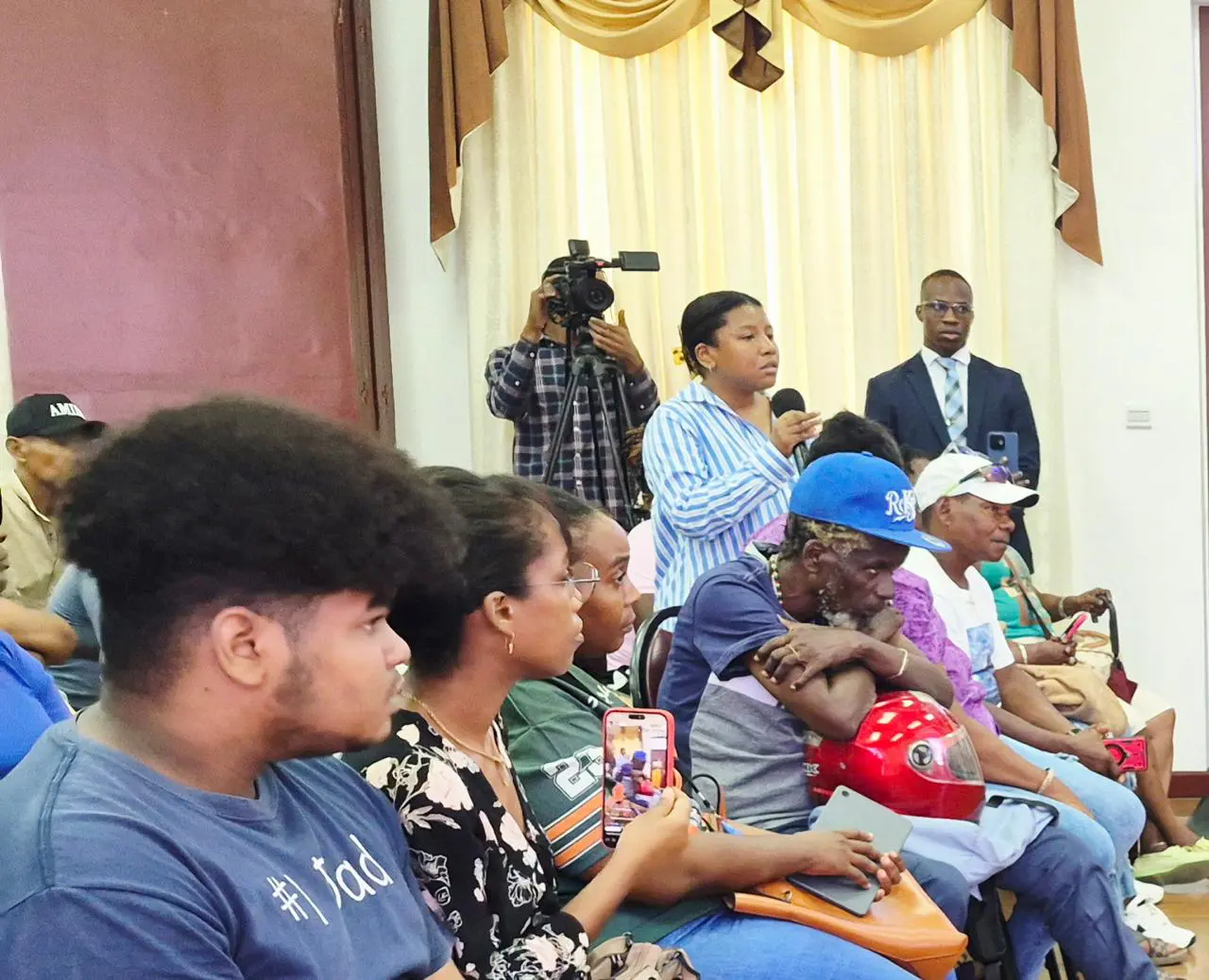
Cort first put the issue of the salvage directly to Chairman of the inquiry, Justice Godfrey Phillip Smith, referring to his earlier statement that the commission was prepared to examine “all the circumstances” surrounding the tragedy. She asked whether that would include the decision-making surrounding the continued delay in raising the MV Barima.
She also wanted to know whether the delay could have affected both the recovery of her missing relatives – her dad Neil Cort and uncle Kenrick Cort – and the preservation of evidence that could be critical to the inquiry.
Justice Smith explained that raising the vessel itself was not within the commission’s powers or terms of reference.
Commissioner Nyree Dawn Alfonso stepped in to explain that she had raised the importance of salvaging the vessel from the very day she was appointed to the commission. She said her nearly 30 years of experience in salvage operations could be useful in ensuring the vessel is recovered in a way that protects evidence.
She acknowledged that she was not a pathologist and therefore could not speak to whether the vessel’s recovery would assist in recovering human remains but said the condition of the MV Barima could provide important evidence about what happened.
At the same time, she cautioned against rushing the operation. Given the age of the vessel, Alfonso said, a poorly planned salvage could damage the MV Barima and destroy evidence that the commission may need.
Dr Jasionowski then provided Cort with an explanation of what exactly was happening with the salvage. He shared that the operation was going ahead and that he had personally met with the team involved in preparing the salvage plans.
The objective, he explained, was to ensure the vessel could be raised without destroying or altering potential evidence. Dr Jasionowski said the preparations could take another week or two and that the commission expected to receive daily reports from the team.
Cort then asked directly which company was chosen to do the salvaging and Dr Jasionowski identified BK International.
Cort pointed out the identity of the salvage operator had not previously been publicly disclosed despite the government’s earlier announcement that the vessel would be salvaged. She said it was the first time this information was being disclosed after families had been trying to find out for weeks.
There were voluble expressions of support for her from the audience.
Cort then asked whether the commission would examine the MV Barima’s history of mechanical failures, maintenance and repairs, inspection certifications, overcrowding and any warnings that may have been raised about its condition before its final voyage. The commissioners assured her that their examination would extend well beyond the final hours of the July 18 voyage.
Further, if the inquiry was examining whether there had been institutional or systemic failures, she asked if it would also examine other vessels operating in Guyana. Justice Smith said that where the same institutions were responsible for the vessels and domestic ferry services, the commission would examine those institutions to determine whether any problems were systemic.
He said the inquiry would look at the organisations responsible for providing the ferry services and how those services were managed.
Meanwhile, Dr Jasionowski went further, revealing that the commission had already begun requesting documents relating not only to the MV Barima but to vessels operating throughout Guyana. He said requests had been sent to institutions including the Demerara Harbour Bridge and the Maritime Administration Department (MARAD), with some documents already received and reviewed. And he disclosed the commission had only last week sent another comprehensive request for information covering “pretty much the entire fleet” operating in Guyana.
That an 87-year-old ferry was plying the Atlantic has been a major source of contention following the sinking.







Discussion