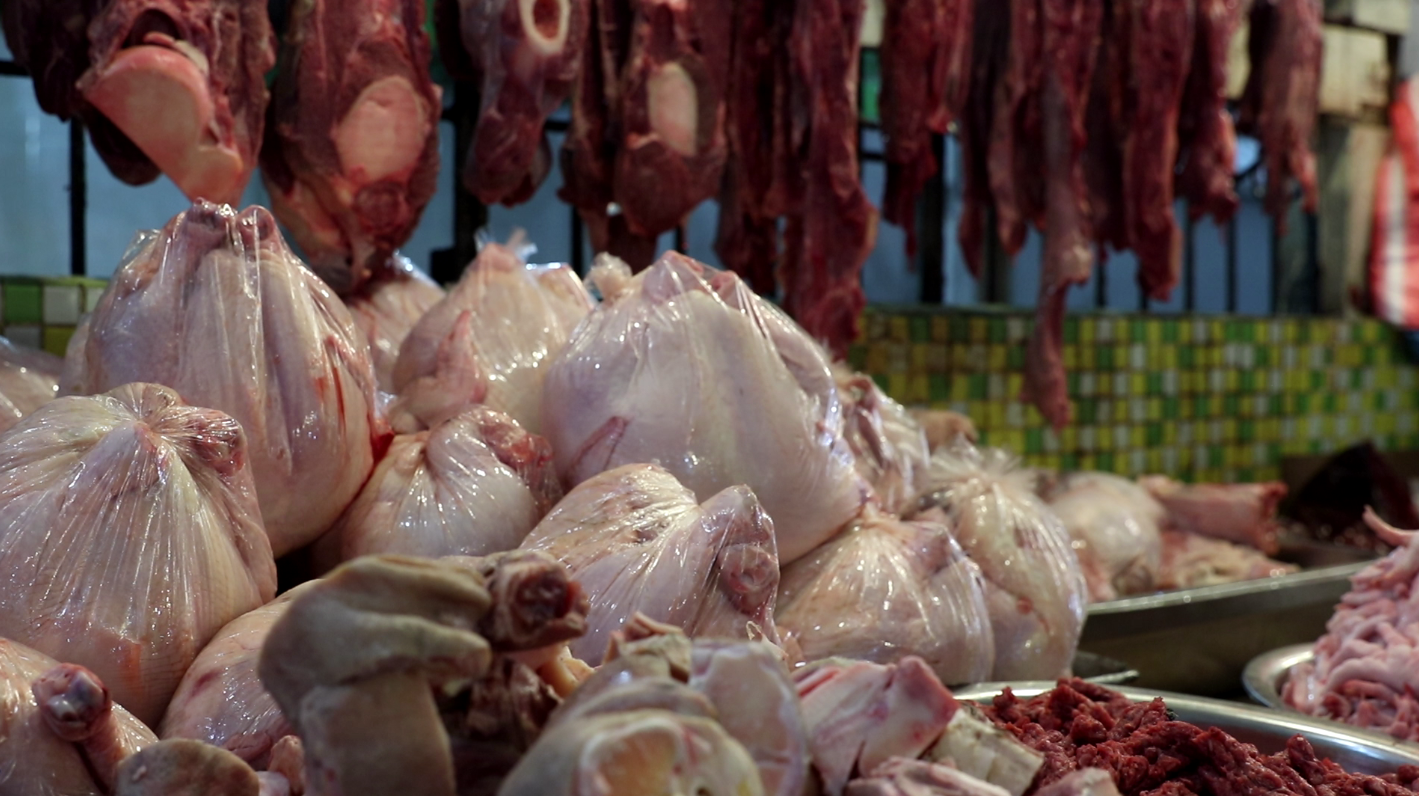
Agriculture Minister Zulfikar Mustapha has denied that Guyana is experiencing a chicken shortage, while acknowledging that available supplies are insufficient to meet all demand.
Speaking to Kiskadee Watch during a break at the Ministry of Agriculture’s Farmers Conference at the Arthur Chung Conference Centre, Liliendaal yesterday, Mustapha said production was expanding but consumption was also increasing.
“We don’t have a chicken shortage in the country. As the production increases the demand increases,” he said.
Mustapha said six tunnel-ventilated poultry pens were operating, each producing between 30,000 and 40,000 birds every six weeks. He also said chicken imports were being handled through the New Guyana Marketing Corporation (GMC), which distributes supplies to other parties. “We don’t have any private imports. All chickens come under GMC,” he stated.
His comments follow the government’s announcement in August that it had arranged for approximately 330,000 pounds of chicken to be imported weekly to address temporary gaps in local supply. The announcement did not identify the source countries, companies authorised to import or the expected duration of the arrangement.
The Guyana Poultry Producers Association had requested temporary imports during a July meeting with Mustapha, citing declining domestic production and increased demand. The association said imports would help meet demand and stabilise prices, and would no longer be needed once local output returned to normal.
David Fernandes, managing director of Bounty Farm Limited and president of the Caribbean Poultry Association, subsequently told Kiskadee Watch that reduced production and rising consumption had contributed to the shortage. He had expressed hope that consistent production would be restored by September.
Fernandes identified inadequate processing and cold-storage capacity as a weakness. During periods of oversupply, farmers unable to sell their birds cannot clear poultry houses for new chicks, leading hatcheries to reduce output. That cycle can leave the industry unable to respond quickly when demand increases, he explained. He also cited the effects of Inclusion Body Hepatitis, which had disrupted poultry operations and forced some farmers out of production.
Mustapha had told the National Assembly in June that Guyana was already self-sufficient in poultry production, with limited imports permitted to meet demand from the expanding tourism and hospitality sectors. His statement was made in a written response to a question from APNU parliamentarian Terrence Campbell.
The government has also invested in tunnel-ventilated poultry facilities to increase production. At the commissioning of the project at Mon Repos in July, the Agriculture Ministry said the initiative cost more than $1 billion and comprised five facilities at Mon Repos, Cornelia Ida and Onverwagt. Mustapha’s latest account puts the number operating at six.
Mustapha’s comments also follow an October 9 statement in which the Agriculture Ministry rejected claims attributed to Vigilant Political Action Committee co-founder Dorwain Bess that approximately one million pounds of potentially contaminated chicken could be on the local market. The ministry said there was no supporting evidence and maintained that poultry imported through the GMC must satisfy sanitary, veterinary and food-safety requirements, including certification in the country of origin and inspection upon arrival in Guyana.







Discussion