-grief, distrust and unanswered questions dominated MV Barima CoI meeting with families
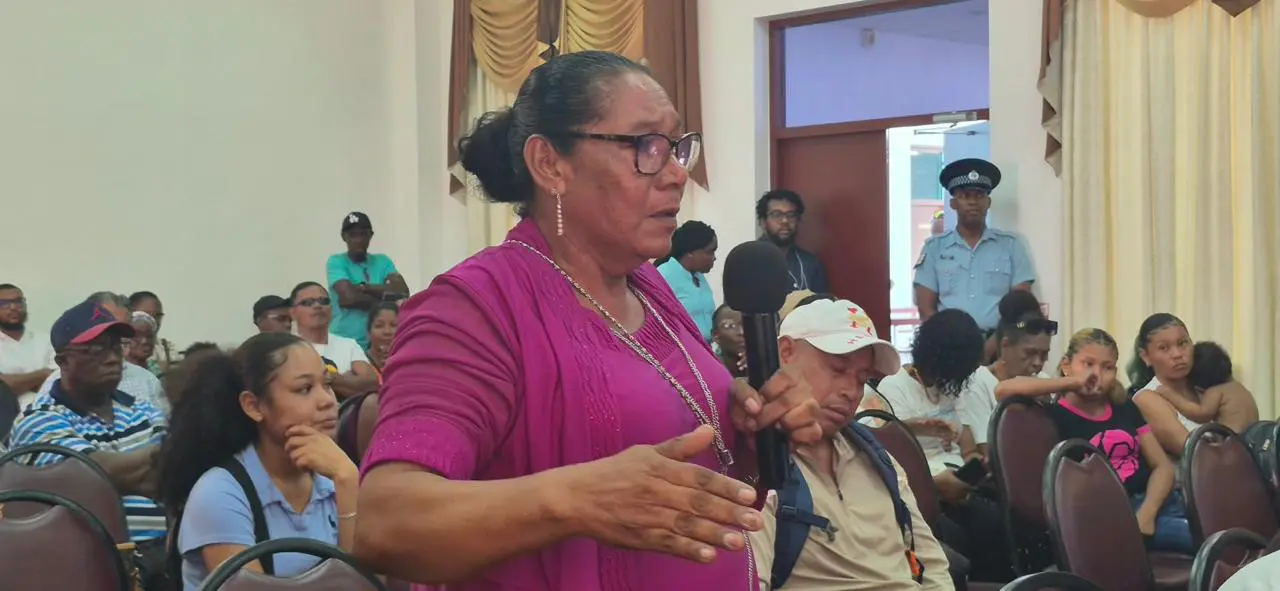
“I looked up for the life jackets. But them life jackets was under lock and key!” recalled MV Barima survivor Helena Moonsammy as she desperately tried to explain the final horrifying moments before the boat went down. Nothing could convince her in those moments that she and the eight family members travelling with her would survive.
“I look up; I see death; I see meh death,” Moonsammy mournfully told the five-member Commission of Inquiry (COI) investigating the July 18 disaster.
She had been travelling with eight grandchildren who lived with her and was showing those that were with her the coastline as they watched the lights shining from houses like “fairy lights.”
She was lying down at the back of the boat when things started to unfold. Four guys were drinking and one of them went down to the canteen for more beers. When he came back, he casually mentioned something about sinking, so Moonsammy said she decided to get up to check on the children. Within just a short time thereafter, the boat canted and went down.
She said the first thing she looked for was the life jackets, but unable to get to them, she recalled struggling in the water. Unable to swim, Moonsammy said she did her best to stay afloat, repeatedly calling out to God as she fought to reach the surface.
“I drink water, drink water, I talk to God,” she recalled, eventually managing to reach the surface and holding on to a box, which she said helped her survive. In the water, she spotted another woman struggling and pulled her onto the box.
Moonsammy said she was rescued at about 7:00 am the following morning – around nine hours later – and of the eight children she was travelling with, four survived and four perished.
Deeply emotional
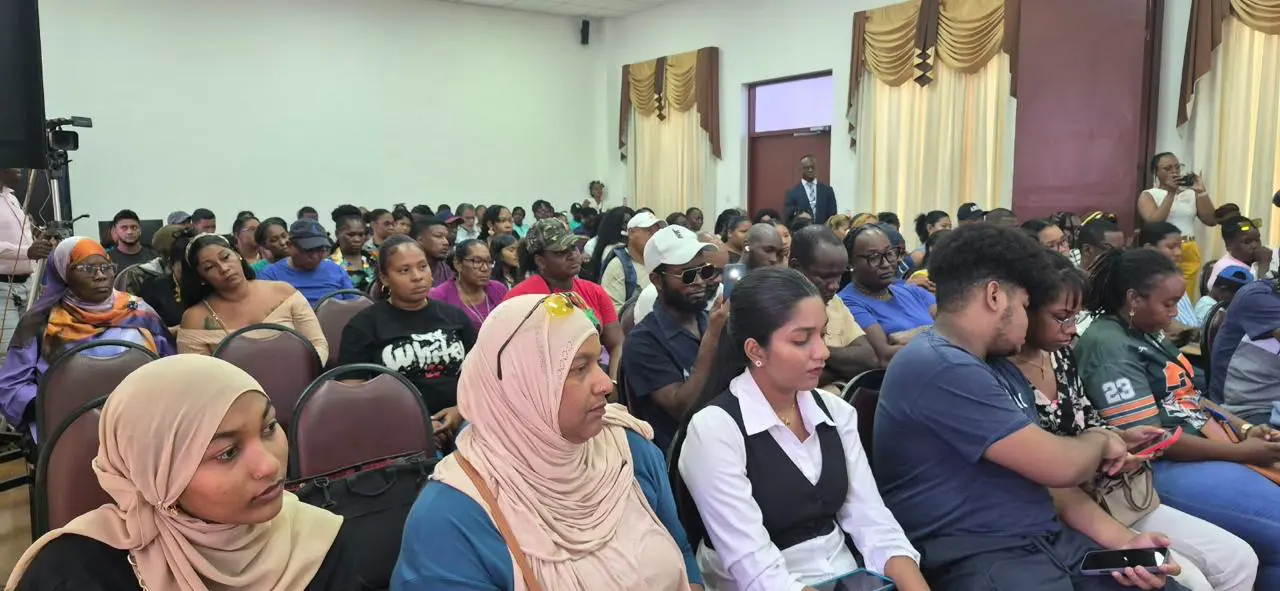
Her testimony was among the deeply emotional accounts shared by survivors and grieving relatives during an informal meeting with the commissioners at the Arthur Chung Conference Centre, Liliendaal, Greater Georgetown last Thursday.
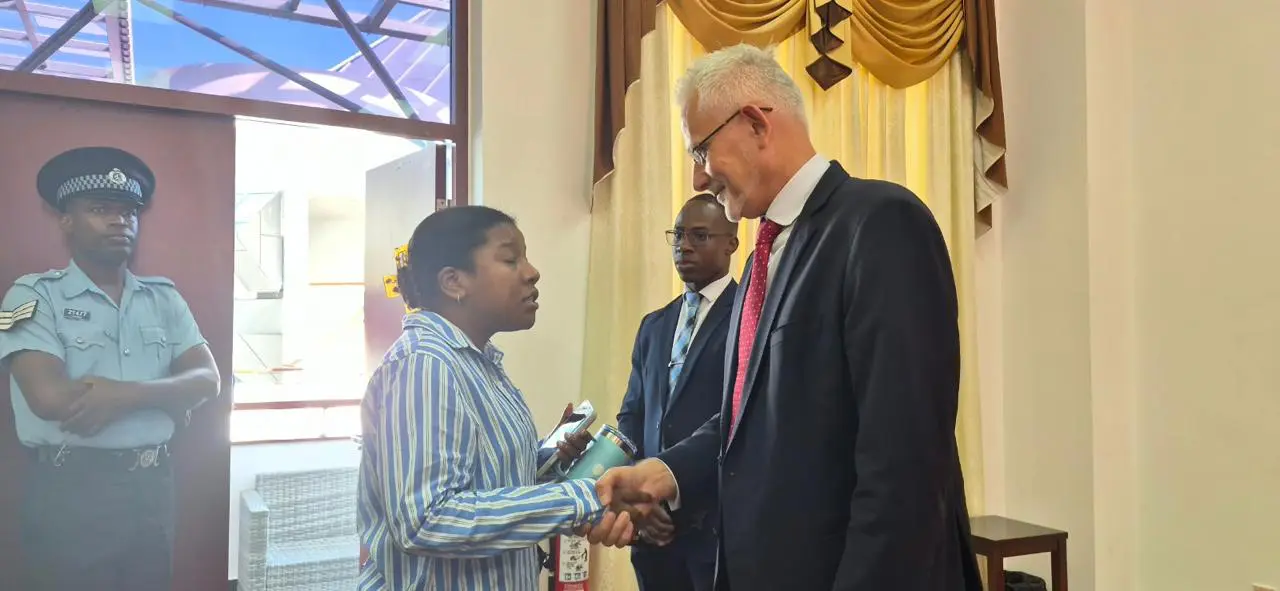
The gathering was intended to provide an opportunity for an open and frank exchange between the Commission and those affected by the disaster. It was not a formal evidence-gathering session, but attendees came determined to speak about their experiences, demand answers and express their fears that the inquiry might ultimately yield no meaningful results.
For many, the pain of losing loved ones was compounded by frustration over delayed action, broken promises and a lack of confidence in the institutions responsible for investigating the tragedy.
‘How can I live knowing my baby didn’t get a burial?’
Survivor Samantha Ramitt broke down as she spoke about losing her only daughter and the lasting trauma the disaster had inflicted on her family. She said her family is continuing to struggle to cope with the loss even as she, her mother, son and two nieces had survived.
Ramitt said she was left wondering how she could continue living with the knowledge that her daughter had died without receiving a burial. “How can I live knowing my baby didn’t get a burial? I have to live with that pain until I die,” she expressed.
She described the deceased as loved members of the family and said she continued to cry day and night in her room, to the extent that she is unable to work.
Ramitt expressed little confidence that the inquiry would produce accountability, pointing to the Mahdia dormitory fire as an example of a tragedy after which, in her view, meaningful justice had not been delivered. She urged the commissioners to ensure that the vessel was raised from the seabed so that evidence could be recovered.
‘He was the breadwinner’
As for Dolly Cox, the disaster not only took her father but also disrupted the financial stability of her family and threatened the education of the younger children he had supported.
In tears, Cox said she felt her father’s demise was her fault as he was travelling on the MV Barima for the purpose of helping her to start a business. She recalled that she was the last person he spoke to, a memory that has left her struggling with feelings of guilt.
Cox said her father had always ensured that she received an education, but his death left four children still attending school unable to do so. “He was the breadwinner. My mother had to start working even though she is sickly. He left four children in school. They can’t go,” she said.
She also accused the government of failing to fulfil promises to support her family, including commitments to assist her mother and help the family build. “Up to now, they did nothing for us. And I don’t think y’all will do anything either,” Cox told the commissioners.
She recalled her own experiences on the vessel when its engine cut off and it was left floating, along with another incident in which the boat caught fire.
‘Nothing will come out of this CoI’
A mother who lost her son in the disaster also challenged the authorities over the delay in raising the vessel, expressing doubt that the inquiry would provide answers.
The 64-year-old woman, who identified herself as a resident of the North West District and said she had travelled on the MV Barima for years, recalled using the vessel as recently as March.
She told the CoI team how assistance had been available to raise the boat immediately after the incident, but that the authorities seemed bent on wasting time. “The government cares nothing about raising that boat. They take too long,” she said.
The woman repeatedly expressed the view that the inquiry would achieve nothing, emphasising her point by spelling out the word “nothing” letter by letter, drawing loud applause from those in attendance. “The government is wasting our time, crawling like snails,” she said.
Primus warns commissioners against being used
We Invest in Nationhood (WIN) Member of Parliament Odessa Primus said the families were being subjected not only to suffering but also to disrespect, questioning whether the inquiry would deliver results and noting that previous commissions of inquiry had failed to produce any kind of results.
“We have had a series of inquiries in the past and nothing came out of them. I hope you won’t do the same to these families,” Primus said.
She said those with political responsibility for the lives lost must also be held accountable, insisting that the circumstances surrounding the disaster should not be reduced to political considerations.
Primus also referred to a 14-day period previously announced by the President in connection with the response to the disaster, questioning why the families were still waiting for meaningful action. “People are hurt. You feel the hurt every time you speak to them,” she said, adding, “If there is any dignity and humanity, do not allow this government to use you to further hurt these people.”
Responding to the concerns, Commission Chairman Belizean Justice of Appeal Godfrey Phillip Smith said the commissioners would not allow themselves to be directed by the government that appointed them. “Politicians appointed us but they can’t tell us what to do. We have to be neutral and we have to call it as we see it,” Smith said.
Ram questions scope of investigation
Attorney-at-law and commentator Christopher Ram also used the meeting to raise questions about the scope of the inquiry and whether it would examine the other operations of the Transport and Harbours Department’s ferry service.
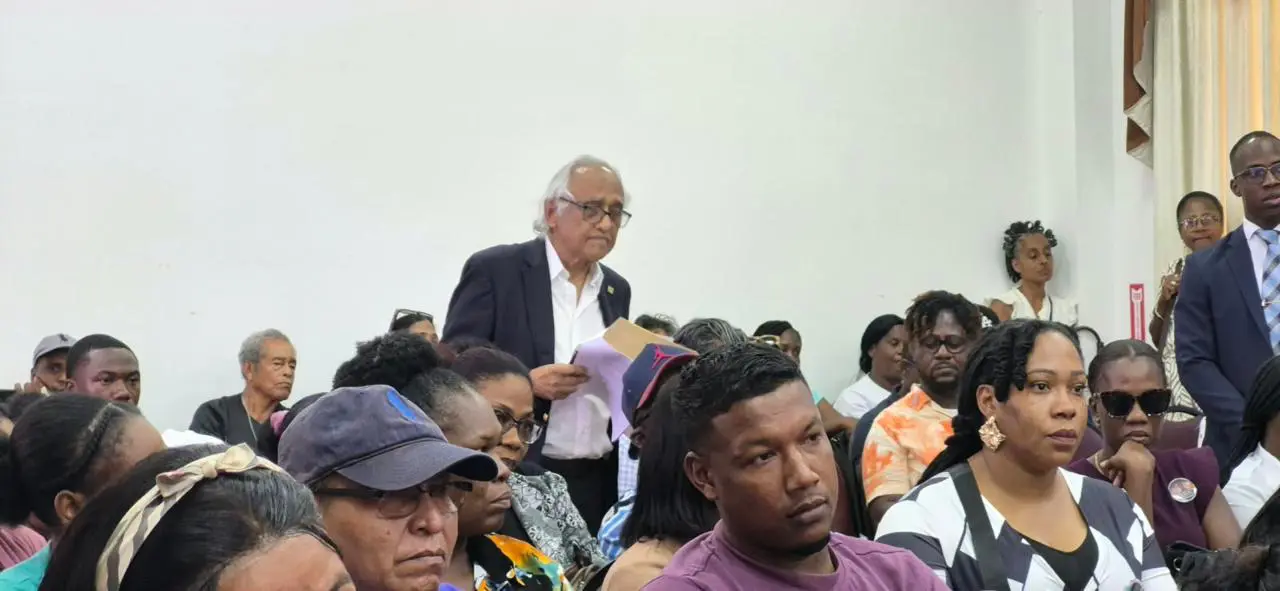
Ram noted that the government had not consulted the public on either the composition of the Commission or its terms of reference. While acknowledging that the same commissioners might have been selected even if consultations had taken place, he questioned whether the inquiry would go beyond the events of the night the MV Barima capsized.
He pointed to other vessels that he said had been ordered and were available, questioning why they had not been deployed.
Ram also asked whether the commissioners would engage specialists with expertise in ferry-service management, supervision, administration and operations.
In response, one of the commissioners said the matters requiring investigation fell within the Commission’s collective expertise, adding that additional specialists could be engaged if necessary.
He also said the commissioners had not been involved in the government’s selection process and had simply been invited to participate.
On the scope of the inquiry, the commissioner pointed to the terms of reference, including a provision covering matters associated with the disaster, and said relevant issues concerning both the MV Barima and the ferry-service system could be examined.
Commissioners urge confidence
Throughout the meeting, the commissioners listened as relatives and survivors expressed anger, grief and distrust, with some openly questioning whether the inquiry would achieve anything.
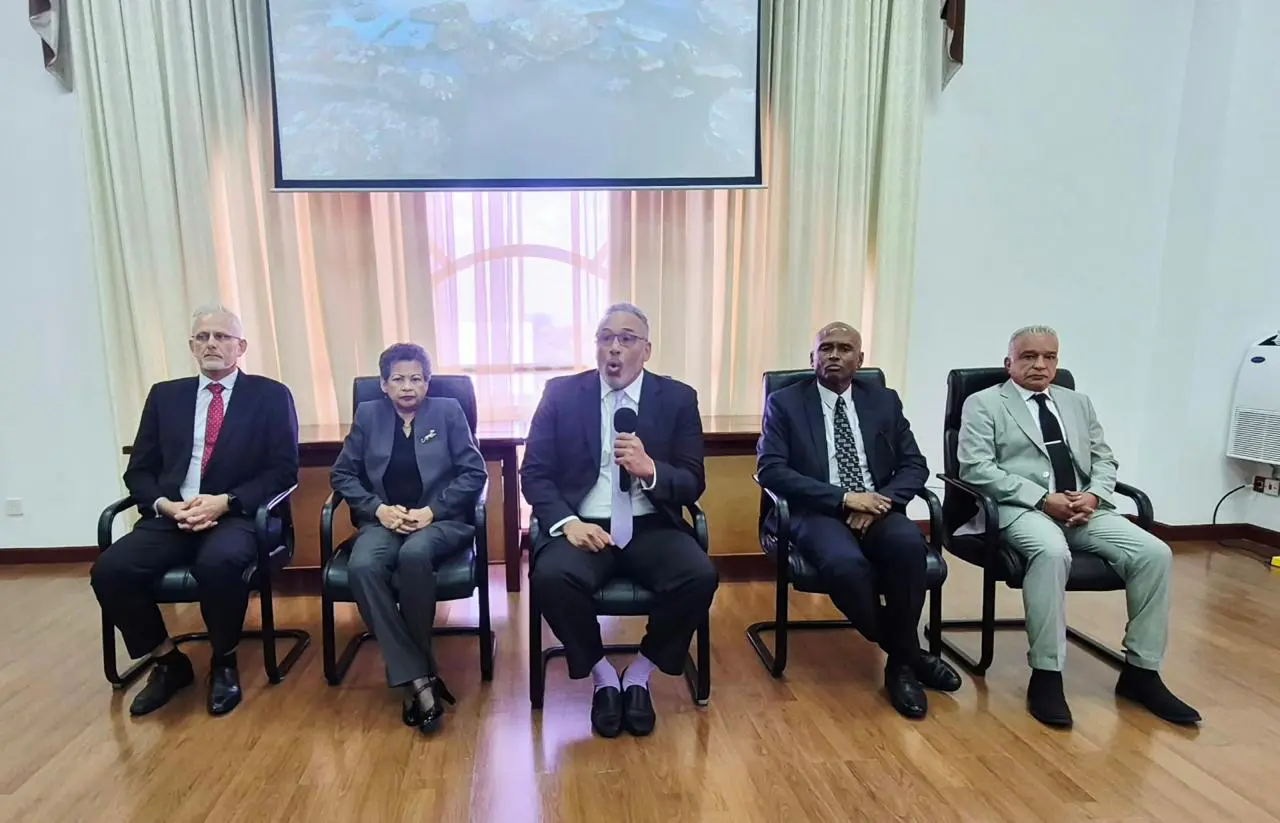
Smith and the other commissioners remained composed as the concerns were raised, responding to questions and reiterating that their work would be guided by the terms of reference and the evidence.
The panel includes Smith, Polish forensic naval architect and marine engineer Dr. Andrzej Jasionowski, Nyree Dawn Alfonso of Trinidad and Tobago, Captain Hamada Fouda of Jamaica and Rear Admiral (Ret’d) Hayden Pritchard of Trinidad and Tobago. The five were sworn in on July 30, 2026.
The commissioners said they would pursue the evidence and investigate matters falling within their mandate, while acknowledging the limits of their authority.
The meeting drew people from different sections of society, including representatives of the University of Guyana, the Amerindian Peoples Association, opposition parties, civil society organisations and activist groups.
Despite the commissioners’ assurances, the families’ accounts made clear that trust remains a major challenge for the inquiry.
As the Commission prepares to hear formal evidence, the families are demanding more than assurances; they want the vessel raised, the circumstances of the disaster fully investigated and answers that can withstand public scrutiny.







Discussion