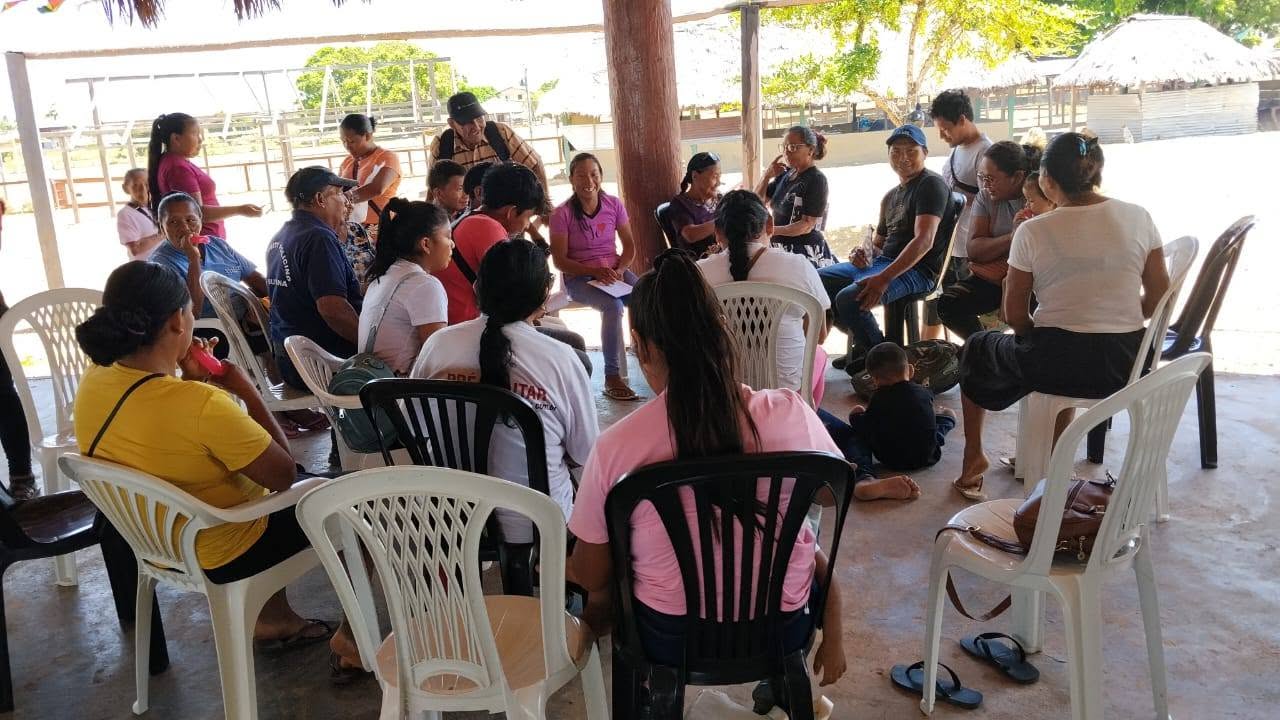
The South Rupununi District Council (SRDC) says it wants structured dialogue with the government to secure formal recognition of Wapichan customary lands while advancing community-led conservation.
In a Facebook post outlining consultations in Shea and Awarewaunau villages, Region Nine (Upper Takutu–Upper Essequibo), the council argued that recognising Indigenous land rights and protecting the environment could jointly support Guyana’s commitment to conserve 30 per cent of its lands and waters by 2030.
“Securing our land rights and protecting our environment are not competing goals. They can work hand in hand,” the council said.
The SRDC said its conservation team had visited Shea before continuing discussions in Awarewaunau on protecting the eastern side of Wapichan territory.
The consultations are examining how communities can communicate their priorities in ways that reflect local experiences, values and their dependence on the natural environment.
According to the council, the health of forests, rivers, headwaters, wildlife and soils directly affects food security, livelihoods, traditional knowledge, cultural practices and the welfare of future generations.
“Our environment is not separate from us; it is part of who we are and how we survive,” it said.
The council described customary lands as central to Wapichan heritage, identity and survival, and called for their ownership to be formally recognised and secured.
It said it wanted to negotiate a pathway with the government that respects Indigenous rights and traditional ownership while supporting conservation directed by communities.
“With our territory recognized and our conservation efforts supported, the Wapichan people can contribute meaningfully to Guyana’s 30×30 commitment while safeguarding our ancestral lands,” the council stated.
The discussions, it added, are intended to ensure that communities understand the issues and that their voices and priorities guide decisions about the territory’s future.








Discussion