
A Partnership for National Unity (APNU) has called on the Guyana Water Incorporated (GWI) to publish operational, financial and water-quality records for coastal treatment facilities after raising concerns about installations at Perseverance and Calcutta.
In a statement issued on Friday, the opposition coalition questioned whether the facilities were delivering the promised improvements and called for a site-by-site account of the coastal inline water-treatment programme.
“The public deserves a clear account of what has been built, what is functioning and whether these investments are delivering the improved water service promised to communities,” APNU stated.
The two communities were among those identified for small treatment plants under a $1.3 billion programme announced in 2024. Stabroek News reported on August 4 that year that GWI had signed approximately $250 million in contracts for ancillary infrastructure at 15 small plants in regions Four, Five and Six, intended to benefit more than 63,000 residents.
At the time, GWI said all the smaller plants were expected to be completed by the end of the first quarter of 2025. The programme formed part of a wider investment aimed at achieving 90 per cent treated-water coverage by 2025.
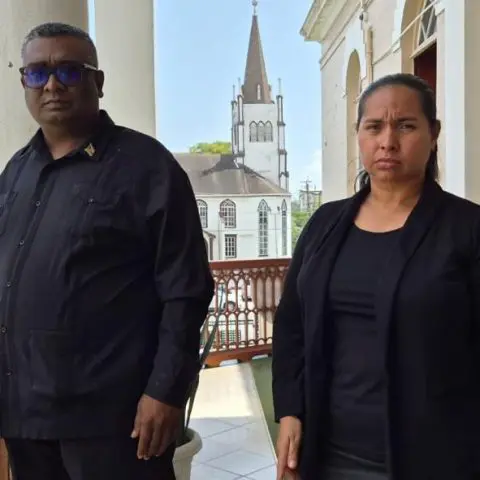
APNU said a visit to Perseverance involving MP Sherod Duncan had raised questions about whether the filtration equipment was functioning as intended, its maintenance and the quality of service being delivered.
It called for GWI to disclose the facility’s operational status, maintenance history and recent water-quality results, including tests conducted before and after treatment.
“Residents should not have to rely on competing assurances when the evidence can be made public,” the coalition stated.
At Calcutta, APNU said its representatives observed what appeared to be unfinished connections, damaged fittings and missing equipment at the treatment installation opposite the well station.
APNU called on GWI to address the concerns through project documentation and stressed that the status of the treatment installation should be explained separately from that of the well.
“The existence of a functioning well would not, by itself, account for the investment in treatment,” it stated.
The coalition requested disclosure of contractors, contract values, payments, completion dates, testing results and the current operational status of facilities throughout the coastal inline treatment programme.
Where works were incomplete or defective, APNU said the public should be told who was responsible, what corrective action was required, whether contractual remedies would be pursued and when the intended service would be delivered.
GWI’s broader Coastal Water Treatment Infrastructure Programme included seven new large treatment plants, 15 small plants, upgrades to 12 existing facilities and 200 kilometres of transmission mains, according to an October 2024 announcement reported by Stabroek News. Its stated objectives included improving water quality and the continuity and level of service across regions Two to Six.
APNU also questioned the government’s priorities as GWI proceeds with plans to produce bottled water, arguing that functioning community treatment systems and reliable household supplies should take precedence.
Kiskadee Watch recently reported that GWI Chief Executive Officer Shaik Baksh expected production at a proposed bottling plant in Parfait Harmonie, Region Three, to begin in the first quarter of 2027. The National Assembly approved $496.3 million for the project in July.
Public Utilities and Aviation Minister Deodat Indar has defended local bottled-water production as a means of reducing dependence on imports and lowering costs associated with freight, insurance and importation.
APNU maintained that completing community treatment works, maintaining equipment and publishing evidence of water quality should command urgent attention.








Discussion