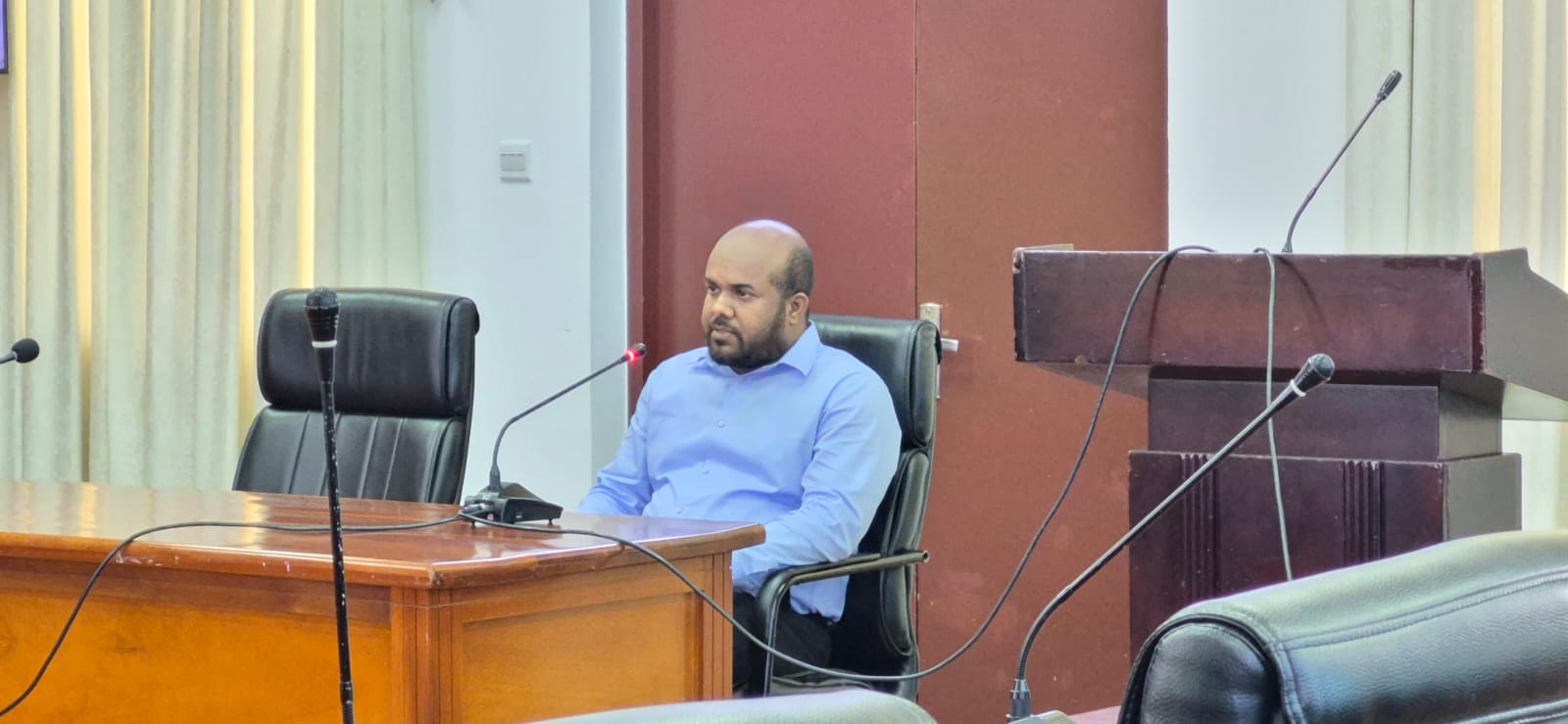
MARAD vessels searching for survivors of the MV Barima disaster decided where to search without coordinating coverage with other vessels, the Commission of Inquiry heard yesterday.
Acting Harbour Master Captain Romain Seurattan testified that crews searched around an initial set of coordinates before moving northwest after finding empty life rafts. The search continued on the vessels’ own initiative until fuel limitations forced them to return.
His evidence came as other Maritime Administration Department (MARAD) personnel disclosed gaps in emergency procedures, training and communication records, including deleted WhatsApp messages containing coordinates.
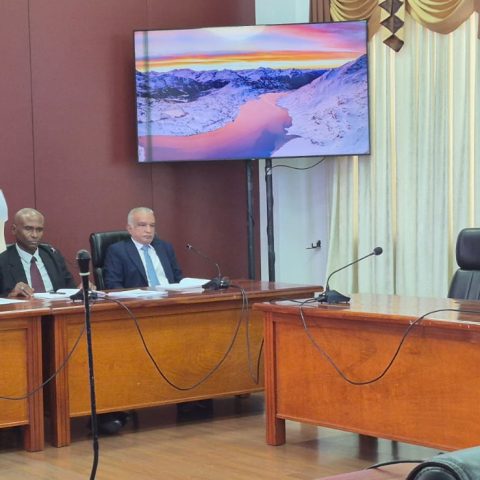
The inquiry, chaired by Justice Godfrey Phillip Smith, is continuing at the Arthur Chung Conference Centre, Liliendaal.
Seurattan said he joined a West Side Marine vessel after learning that it would assist in the search. A Coast Guard officer was aboard, and the operator told him the Coast Guard had supplied the coordinates entered into the vessel’s GPS.
They reached the designated position at about 3.45 am on July 19 but initially found neither a vessel nor people in the water. After searching within a radius of one to two miles, they moved northwest and found three empty, inflated life rafts with flashing lights.
A fourth raft was found after they saw a hand flare. Three persons were aboard, including the Barima’s chief mate, Rondell Roberts.
Seurattan said none of the three was wearing a life jacket while on the raft. They were brought aboard, given life jackets and drinking water, and later transferred to a MARAD pilot boat.
Commissioner Dr Andrzej Jasionowski questioned Seurattan about who determined the search areas and whether coverage was coordinated with other vessels.
Seurattan said the MARAD vessels decided for themselves where to search and had not communicated with other vessels to coordinate those areas. Crews searched around the initial GPS position before following the direction in which the rafts were found.
He said the original coordinates remained unchanged during the initial journey, but he could not recall the exact positions of the rafts or their distances from the first search location.
Radio transmissions were breaking up, making communication difficult, he added. He recalled hearing that another vessel had survivors aboard but did not obtain its location or further details.
Although the crew contacted other vessels after finding the rafts and communicated the survivors’ location, Seurattan said the search areas themselves had not been coordinated.
Questioned by Commissioner Rear Admiral (Ret’d) Hayden Pritchard about operational readiness, Seurattan said two MARAD pilot boats were available at the time, while the West Side Marine vessel also assisted.
Pritchard also asked why crews had left without food supplies. Seurattan said they had been working since about 8 pm the previous evening and departed without provisions.
He later bought bread, cheese, sausages, water and other supplies at Charity, which were taken back to the search area. The vessels continued searching until about 3 pm on July 19.
Training and emergency procedures
MARAD’s acting shore captain, Anthony Benjamin, told Commissioner Captain Hamada Fouda that he had not conducted search-and-rescue training or exercises within the fleet.
He said monthly safety training included man-overboard and fire drills, records of which could be obtained from the boathouse.
Questioned by Commissioner Nyree Dawn Alfonso, Benjamin said he had not received a document setting out specific procedures for activating the pilot launches in different emergencies.
He said the vessels had assisted the Coast Guard, fishermen and others in emergencies, drawing on his previous experience as a pilot-boat captain.
Benjamin also told the commission that WhatsApp messages containing coordinates and other communications had been deleted from his telephone.
He could not recall the exact coordinates and said a paper chart on which he and a tug captain had plotted them was not in his office. He agreed to check whether it remained aboard the tug.
Asked by Pritchard about the transition from search-and-rescue to recovery operations, Benjamin said he became aware of the change on July 21, when Civil Defence Commission personnel brought body bags, gloves and masks to his office.
He could not recall who had confirmed the change.
Unanswered calls
Lighthouse attendant David Chisholm testified that he repeatedly attempted to contact the Barima by VHF radio after the harbour master asked him to establish communication, but received no response.
Chisholm said he received the initial distress alert through WhatsApp at 11.01 pm on July 18 from the Timehri tower, which the draft identified as the Automatic Identification System (AIS) tower. He forwarded it to his superior, Captain John Flores of the Maritime Rescue Coordination Centre (MRCC).
Asked by Jasionowski why the alerts were routed through the Lighthouse Department rather than sent directly to the MRCC, Chisholm said he did not know.
He said he forwarded subsequent alerts but had brought only screenshots of the initial messages to the inquiry. He agreed to check whether the remaining messages were still on the department’s telephone.
Chisholm said he had no sailing experience before joining MARAD in March 2025 and had received on-the-job training.
The Lighthouse Department had a VHF radio, computers, a telephone and a handheld radio, but no radar, he confirmed.
Boathouse attendant Ahnola Francis told the commission that Seurattan telephoned her around midnight and instructed her to have crews prepare and fuel vessels for the rescue operation.
She said she received no coordinates and no direct information about the emergency from the Lighthouse Department that night.
Francis also told Pritchard that she had not completed Global Maritime Distress and Safety System or radio-operator training while working at the lighthouse, as she had been transferred to the boathouse before undertaking that training.








Discussion