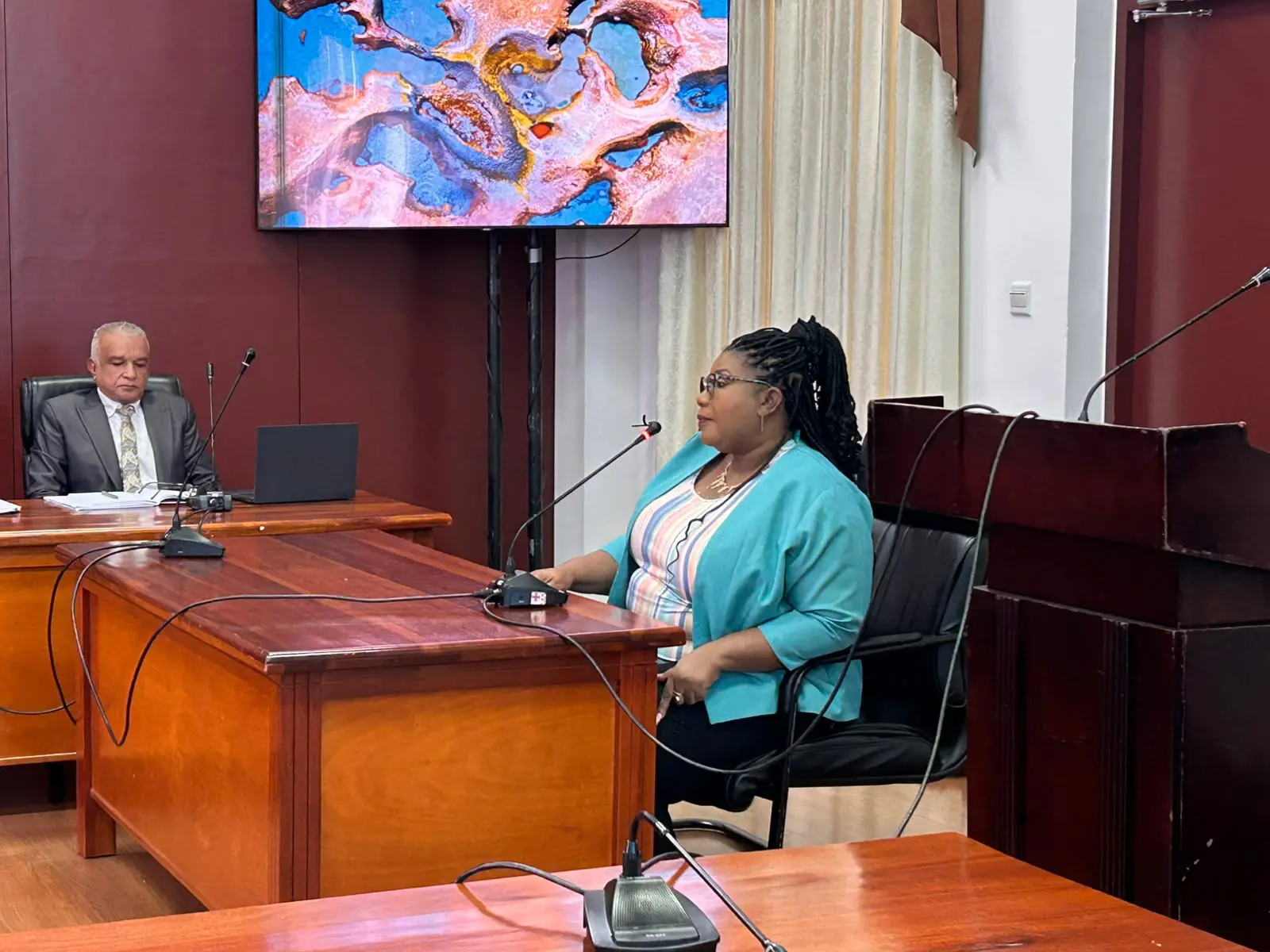
Transport and Harbours Department Assistant Traffic Superintendent Michelle Reid told the MV Barima Commission of Inquiry today that she questioned Captain Kevin Price about bags she saw on the upper deck before the ferry’s final voyage on July 18 when it sank with the loss of 100 lives.
Reid said the bags were in an area meant for passengers and that Price told her he needed weight at the back of the vessel.
Reid, who said she had worked with the department for 33 years, read from a report she prepared on July 28, ten days after the ferry sank. She told the inquiry that the cargo hatch was already closed when she arrived at the wharf on July 18, but items were still being taken aboard. She said she saw the captain directing where they should be placed.
A lowered tarpaulin covered the back and side of the vessel, limiting what she could see. Reid said Price identified the bags as fertiliser. She also recalled being told that potatoes had been placed there, but said she could not see how much cargo was in the area.
Commissioner Hayden Pritchard pressed Reid on what she did after seeing cargo handled in ways she considered unusual. Reid said she took no further action after speaking with Price because she understood that the captain was responsible for loading and assumed he was doing what was necessary. She said she also told Goods Superintendent Delon Granderson that he was needed outside to monitor what was happening on the wharf.
Reid said she had stopped cargo from being loaded when she served as goods superintendent, even if more freight was waiting. She explained that she used the load line marking on the side of the vessel as a guide and consulted the captain or mate. On July 18, however, she said she did not specifically look for the mark and believed the low tide would have prevented her from seeing it from where she stood.
Pritchard also asked Reid to explain why the ferry appeared normal to her when passengers and others had described it to the inquiry as heavily overloaded. Reid said she could speak only to what she saw: she was able to walk through the part of the vessel she visited without squeezing past people or boxes. She said she did not know what was happening at the back or whether conditions changed after she left.
Reid described the boarding procedure she had used as goods superintendent: once freight was loaded, staff would clear the vessel of everyone except crew, then check tickets as passengers boarded. She could not say whether that procedure was followed on July 18. She also said staff relied on ticket sales for the passenger count, with no separate tally of people as they came aboard.
The inquiry heard that Reid saw only two traffic inspectors that day, compared with the four she said were normally assigned. She testified that the traffic manager had advised that two were enough. Pritchard questioned why fewer inspectors were assigned on a day when, based on other accounts heard by the Commission, passenger and cargo traffic was unusually heavy.
Chairman Godfrey Smith returned to Reid’s observations about the placement of goods and the lowered tarpaulin, asking whether anything else had concerned her before departure. Reid spoke instead about what she and her colleagues had been asking themselves since the sinking: what more they could have done. She recalled a colleague she regarded as a little brother whose body, she said, had still not been found.
“We are still mourning,” Reid told the Commission. “We are still grieving.”










Discussion