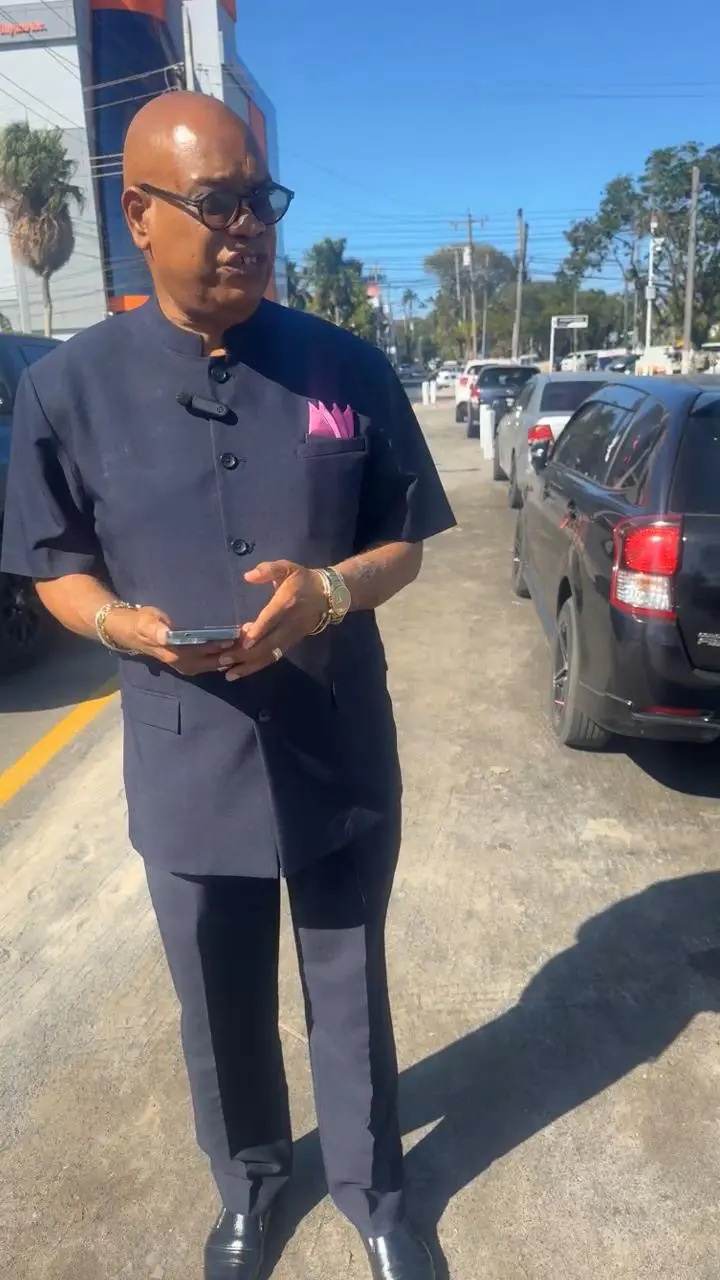
Amid rising opposition from city residents, Public Works Minister Juan Edghill yesterday said he regretted that his ministry had done too little to explain Georgetown’s hard-shoulder parapets programme before work began.
Speaking during an 18-minute Facebook broadcast from outside The Bishops’ High School on Carmichael Street, Edghill said it was “regretted that we did not do ahead of time more public education” on the programme. He appealed for patience, pledged closer supervision of contractors and said he expected most of the heavy work to be done by Christmas.
Edghill pointed to the finished shoulder outside the school as an example of what residents could expect. He recalled taking his son to the school and finding the entrance flooded on rainy mornings, when parking was “almost impossible.” Parents had to stop on the road to drop off or collect their children, he said.
The shoulder there extends from the edge of the road to an earthen drain. Edghill said reclaiming parapets occupied by derelict vehicles, large garbage bins and containers would give motorists room to pull off the road and children space to walk clear of traffic. He said derelict vehicles had already been removed in North Georgetown and that the additional parking would also serve businesses and households with several vehicles.
Edghill said crews were excavating soft earth and replacing it with compacted layers of sand, crusher run and siftings. He said water would still penetrate the fill and reach tree roots, and that grass would grow back once the rains returned. The aim, he said, was to retain greenery on a surface that could take vehicles in wet weather without becoming muddy.
“All trees will remain,” Edghill said. He pointed to a longstanding tree on Carmichael Street where barriers had been put in place to protect it from vehicles. He said more trees and ornamental plants would be planted after the current phase.
The minister said the design would vary from street to street. On wide verges, the ministry would set aside room for parking and landscape other sections, with benches and space for families to use. He said the works would leave the grassed areas along the avenues in place. He also pointed to shoulders already completed on both sides of the road near the Police Commissioner’s office.
Where a hard shoulder ends short of a roadside drain, Edghill said it would be shaped to direct runoff towards the drain. He also referred to work on alleyways and to the pumps operating across the city. He told residents to judge how the finished shoulders performed when the rains returned.
Contractors told to keep roads clear
Edghill said the ministry had intervened after contractors dumped sand and crusher run in the middle of roads or used excavators to dig up long stretches before they were ready to backfill them. He said those practices had been stopped and that he had met with supervising engineers on Thursday morning. The ministry would step up its own oversight, he said.
He also said the finished shoulders would require maintenance. Crews would return where needed to top up the fill, roll it and compact it.
Edghill said household access bridges would be left in place during this phase. Some bridges impede the flow of water in roadside drains, he said, and the ministry would speak with individual households after the shoulders were in place about any changes needed. In some cases, he said, removing a raised lip might be enough to let water pass.
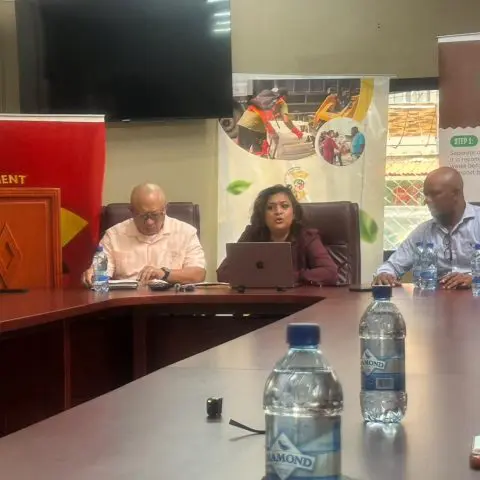
Meantime, asked by Kiskadee Watch at a press conference yesterday whether the parapet works could conflict with her ministry’s activities, Minister of Local Government and Regional Development Priya Manickchand said drainage was a matter for Public Works. She said Edghill had identified quicker runoff as a benefit and pointed out that Georgetown was below sea level.
“It wouldn’t affect our garbage collection, parapet or otherwise,” Manickchand said.
Petitioned
Lamaha Gardens residents petitioned Edghill on October 18 to suspend the works on Duncan Street between the Eastern Highway and Bel Air Road pending consultation and an independent technical review. The work had stopped and residents were still awaiting a consultation date. Resident Michelle Rockcliffe said piles of sand remained along David and Duncan streets and that sections of the gutters were caving in.
Georgetown Mayor Alfred Mentore told a November 10 meeting at Herdmanston Lodge in Queenstown that he had sent City Constabulary ranks to stop the contractors in Lamaha Gardens. He said he might do the same in Queenstown if work continued there. Queenstown residents have petitioned for a suspension and a technical review, citing concerns about flooding, pedestrian safety, underground utilities and the loss of shade. Resident Khadidja Bâ told the meeting that trees had been dug up despite an assurance they would be left alone. A ministry engineer said contractors had been instructed to keep excavation 15 feet from trees.
In a letter accompanying the Queenstown petition, Sandra Singh asked on behalf of residents, property owners and other stakeholders for a review of the effects on drainage, road edges, underground utilities and pedestrian safety. The petitioners said replacing grass with compacted stone could increase runoff and worsen local flooding. They also asked the ministry to identify the streets covered by the project, explain how the verges would be finished and maintained, and say what provision would be made for pedestrians.








Discussion