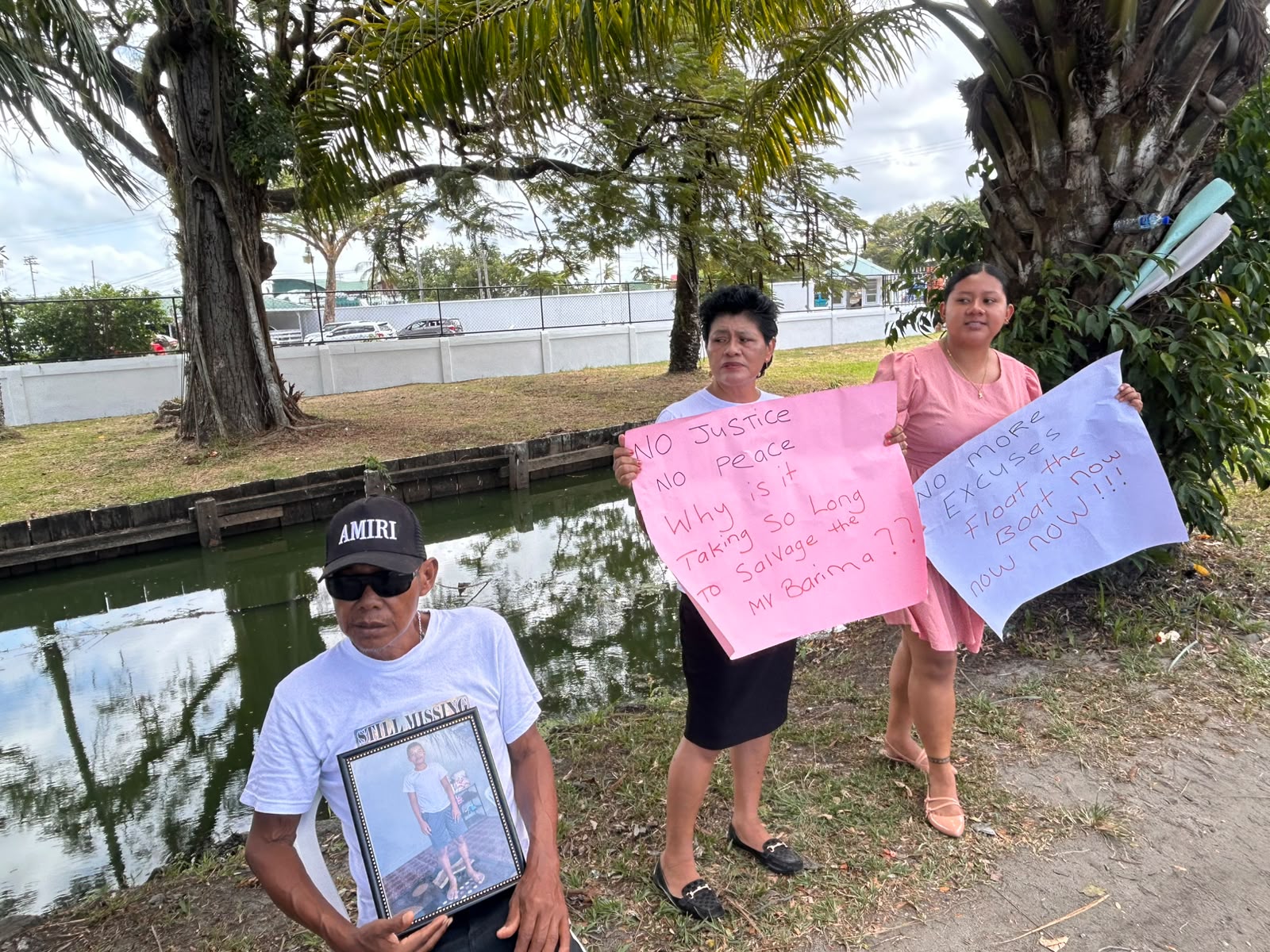
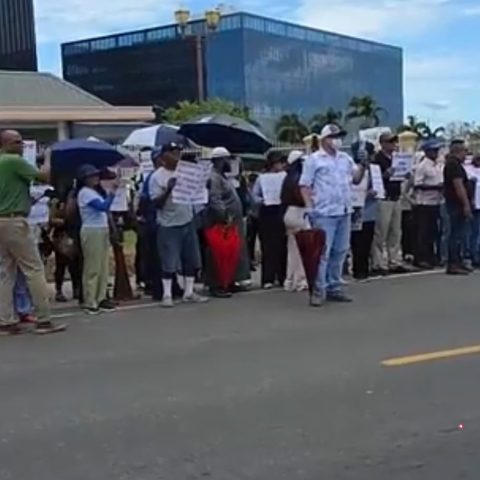
More than three months after the MV Barima sank, relatives of victims returned to the Office of the President on Tuesday, demanding a timetable for raising the vessel and better communication about efforts to recover those still missing.
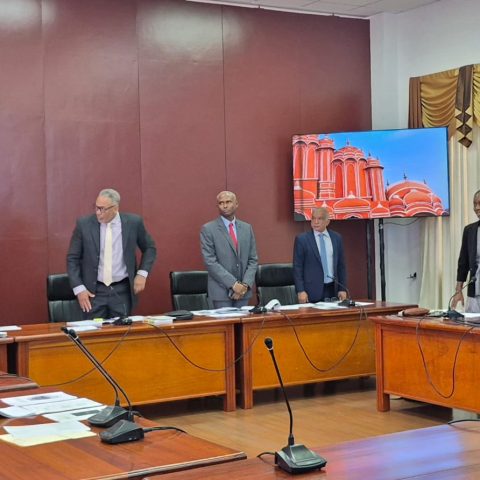
The seventh weekly protest brought together families who said the continuing uncertainty over the salvage operation was compounding their grief, even as the Commission of Inquiry (COI) heard evidence about the disaster.
“Every day is July 18th for my family. It hurts and it’s painful,” said Jasmine Cort, whose father and uncle died in the sinking.
Cort said she had never expected to have to protest for the vessel’s recovery or demand justice for her relatives, but considered it the least she could do for them.
“We are out here to insist that justice is served for what happened on July 18. We are out here to be the voices of the voiceless, our relatives who went out with the MV Barima and never came home,” she said.
She accused the government of failing to adequately inform bereaved families about the salvage operation and the inquiry, saying they were being treated as second-class citizens.
Cort also questioned why officials whose actions had come under scrutiny remained in office while three men faced 72 counts of murder. Acknowledging that she was not a legal expert, she questioned the basis of those charges and said testimony before the commission was exposing serious shortcomings in the emergency response.
She criticised the absence of live coverage of the inquiry, arguing that the public should be able to hear the evidence as it emerged. Media houses are permitted to record and broadcast the public proceedings, subject to restrictions imposed by the commission, but streams must run on a two-hour delay.
For relatives, Cort said, hearing accounts of the disaster was also reopening the trauma of their losses.
For the Thomas family, that anguish is heightened by the continued search for Brian Thomas. His brother Kyle’s body was recovered, but Brian remains missing.
Their father, Brian Thomas Snr, attended the protest with relatives. He said he struggled with the belief that his son remained beneath the sea and questioned why the vessel had not yet been raised.
Brian’s sister, Gailann Thomas, said the family was still waiting for a clear indication of when the salvage operation would take place.
“Up to now, the government hasn’t said when they will salvage this boat, and time is going,” she said.
Thomas criticised the inquiry’s six-month timeframe and argued that recovering the vessel should be a priority in establishing what happened.
“What they need to do is salvage the boat, and then they will get the evidence,” she said.
The uncertainty was particularly difficult for their mother, who continued to hope that Brian would return home, she added.
Rolston Frank, whose son Rawle worked as a deckhand aboard the Barima, also accused the government of failing bereaved families. He said steps should have been taken from the outset to raise the vessel and recover anyone who might remain inside.
Frank alleged that his son had complained about overcrowding and the quantity of cargo aboard the ferry before it sank.
According to him, Rawle sent a voicemail to his girlfriend describing the vessel as overpacked with cargo, including near the cabin where crew members slept.
Frank also questioned conflicting public accounts of how many passengers and crew were aboard, saying the lack of a definitive figure had undermined his confidence in the authorities and the inquiry.
He further alleged that the vessel had been operating with one engine and questioned why it had not been replaced before the disaster. These claims remain matters for investigation and determination by the inquiry.
Frank said the loss of Rawle, his youngest son, had affected his ability to work and meet financial commitments as he struggled to adjust to daily life without him.
“Justice have to prevail for my son. Something have to take place,” he said.
The relatives said they would continue protesting for the vessel to be raised, the circumstances of the sinking to be established and those responsible to be held accountable.
For families still awaiting the recovery of loved ones, they said, the inquiry had not resolved the most immediate question: when the Barima would be brought to the surface.







Discussion