
—regular pumping system was down; witness recounts rapidly rising water and shifting cargo
Maritime inspectors had raised concern about the MV Barima’s regular engine-room pump before its final voyage, but the system remained out of operation and a replacement submersible pump was being used when the vessel sank on July 18, a survivor has told the Commission of Inquiry.
In testimony heard privately on November 16 and subsequently authorised for release to the press, the witness also said two generators below deck were not working and described water rapidly accumulating on deck before unsecured cargo shifted as the ferry listed.
The witness could not explain the initial list or where the water came from, and said both propulsion engines and a generator were working when the vessel capsized.
The Commission has directed that the survivor’s identity remain confidential.
Questioned about an earlier maritime inspection, the witness recalled inspectors highlighting concern about the regular engine-room pump. The survivor could not give a firm date for the inspection or say whether a report had been provided to the vessel.
Asked whether inspectors had expressed particular concern about the pump, the witness answered: “Yes, Sir.”
The testimony described a submersible pump being brought aboard because the regular system was down.
According to the survivor, the bilge had been pumped dry at approximately 10.30 pm on the night of the July 18 disaster.
“At 10:30 when I turn it off, it was dry,” the witness said.
The survivor placed the capsizing at minutes before 11 pm and described a sudden build-up of water on the starboard, or right-hand, side.
“This water move from six inches to like three feet within 15 seconds,” the witness told the Commission.
Although water normally washed onto the deck and drained away while the ferry was at sea, the survivor said the accumulation that night was unlike anything previously observed aboard the vessel.
“The water just keep coming all de time.”
The witness described successive, worsening lists over a short period before the vessel turned onto its side amid passengers’ screams. The transcript records repeated instances of distress as the survivor recounted the disaster.
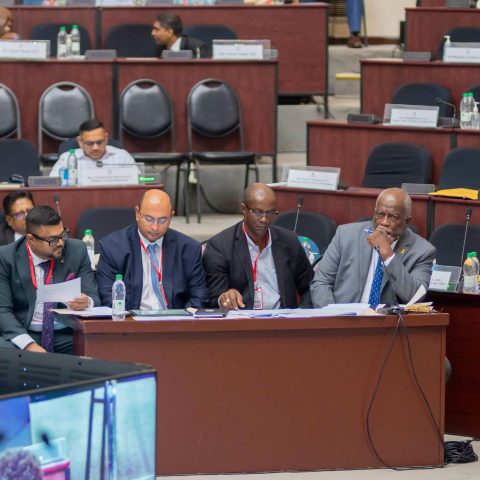
Asked by Commissioner Captain Hamada Fouda what caused the initial list, the witness said that could not be determined from what had been observed.
However, the survivor described cargo moving once the ferry began leaning.
“The only thing that I observed when the boat, when the vessel made the first list the cargo that wasn’t strapped down and everything start moving to the starboard side,” the witness said.
Later questioning elicited that boxes were among the items that shifted. The account places that movement after the initial list, without establishing what caused the vessel to lean.
The evidence also covered defective generators and equipment placed on the main deck.
According to the survivor, the Barima carried four generators, but the two in the engine room were out of operation. Two generators on the main deck were being used instead.
One had been brought aboard shortly before the final voyage following an overheating problem that required a generator overhaul. The witness said that problem had contributed to the ferry remaining in Georgetown for approximately three weeks.
Asked whether the newly placed generator had been strapped down to prevent movement, the survivor answered no.
The witness also recalled an alternator problem being addressed on the morning before departure.
At approximately 6.30 pm during the voyage, engine overheating prompted the cleaning of mud from the cooling-water strainers. The engines were stopped in turn while the work was done, after which the journey continued, according to the testimony.
The survivor said the vessel had been sitting on mud alongside the Georgetown wharf and required a tug to pull it away. Mud collected while alongside was identified by the witness as the explanation for the later overheating.
However, the survivor reported no further engine failure between approximately 8 pm and 10.30 pm. When specifically asked whether both engines and a generator were working when the vessel sank, the witness said they were.
The testimony also described cargo and passengers sharing areas of the ferry.
Gas cylinders were stored on the main deck near a generator and the aft hatch. The available passage was between the cylinders and the generator, while other goods were stored towards the rear, the witness said.
Other gas cylinders were near the washroom leading into the passenger saloon. Eggs, paint and bags were among the goods the survivor recalled in the saloon on the final voyage.
Some passengers had hung hammocks on the main deck around the engine-room area. The witness could not estimate their number and said the side curtains on the passenger deck were raised at the time of the capsizing.
On emergency warnings, the survivor said the vessel had a loud horn that could be heard from the passenger deck, but it was not heard during the incident.
Passenger lifejackets were stored above the passenger area and were not locked away, according to the witness. Nevertheless, the speed of the capsizing left the passengers unable to put on a lifejacket before entering the water.
The survivor described holding onto floating objects through the night before being rescued by the Coast Guard at approximately 5.30 am and taken for medical attention.
The evidence comes against earlier testimony about inspection deficiencies and the absence of verification that repairs had been completed before the ferry returned to service.
It was reported on November 13 that MARAD Director of Maritime Safety Captain Courtney McDonald told the inquiry the agency had not verified whether the Transport and Harbours Department corrected defects recorded during an inspection.
Those findings included an inoperable engine and the absence of radar, an emergency generator and serviceable life rafts at the time of inspection. McDonald said no follow-up was directed, while maintaining that the inspection report contained no express instruction prohibiting the ferry from sailing.
Maintenance records documenting generator, cooling-system, exhaust and electrical problems before the disaster, with several matters marked urgent.
Public Works Minister Juan Edghill had defended the vessel’s seaworthiness after the tragedy, saying it had been maintained and that proposed works formed part of its scheduled dry-docking programme.








Discussion