—calls for investment in education, jobs and climate resilience
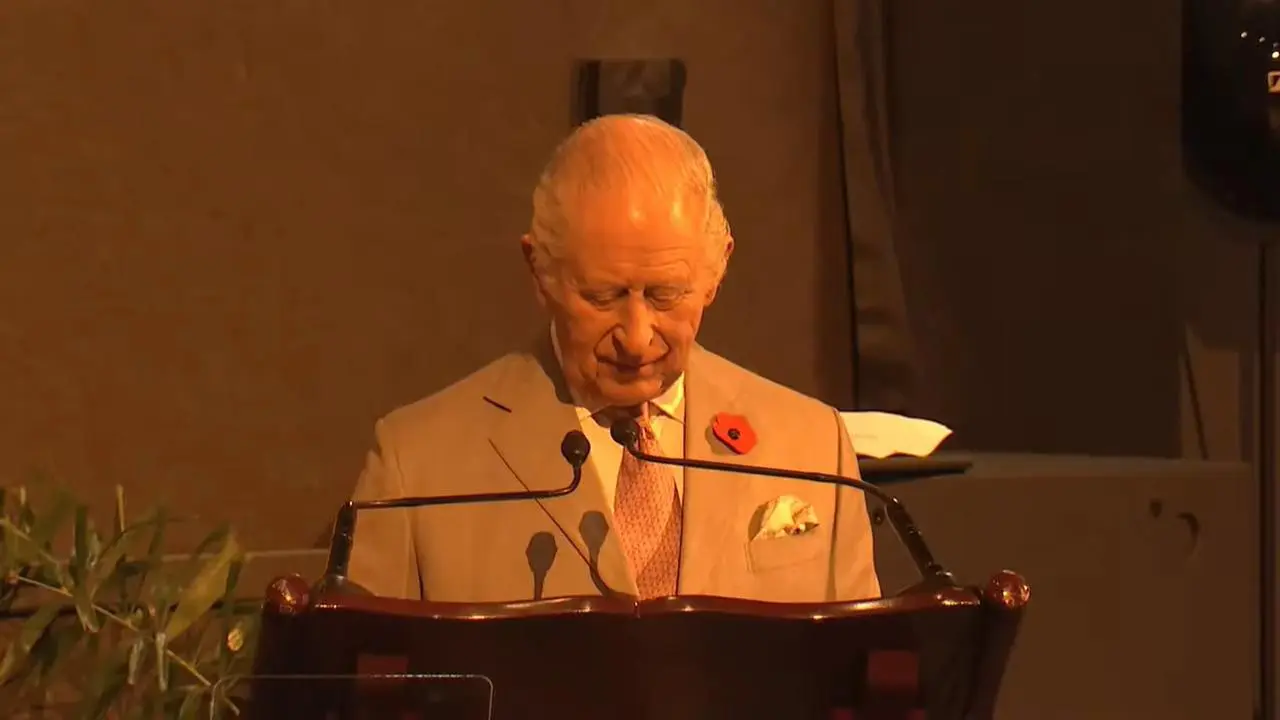
King Charles III has called for action to address the wrongs of the past through education, employment, trade and climate resilience, telling Commonwealth leaders that the transatlantic slave trade continues to cast a shadow over the Caribbean and other member countries.
Addressing the opening of the 28th Commonwealth Heads of Government Meeting in St John’s, Antigua and Barbuda, the King said that while history could not be changed, its consequences remained powerful.
“The transatlantic trade in enslaved persons still casts a shadow over these islands and other members of our Commonwealth,” he said.
“As I have said before, that shameful chapter of history is one that fills my heart with horror and my soul with the most profound sorrow.”
The King did not offer a formal apology or explicitly address reparations in the speech. He instead outlined areas in which he believed cooperation could help address historical disadvantage.
He said listening and learning had strengthened his commitment to finding ways to address past wrongs through present-day action, including improving access to education, investing in jobs and opportunities, encouraging trade between Commonwealth countries and supporting climate resilience.
“Our inheritance includes both their achievements and their failures, the good they did, as well as the wrong,” he said of earlier generations.
The King also pointed to efforts to end the international trade in enslaved people, highlighting the Royal Navy’s role. History, he said, demonstrated that courage and determination could overcome injustice.
“For, as any sailor navigating the seas knows, we cannot command the winds, least of all where the winds of yesterday have delivered us. But we can choose how we set our sails.”
Turning to the Commonwealth’s contemporary role, Charles said the organisation offered an opportunity for countries to work together at a time when international trust was under strain, conflicts were destroying lives and technological change was transforming societies with uncertain consequences.
He described climate change, damage to nature and the inability of many people to fulfil their potential as interconnected challenges.
“Together they comprise the crisis of our time,” he said.
The Commonwealth could not provide every solution, he acknowledged, but its businesses, institutions, communities and governments could draw on the ingenuity of a third of humanity.
He urged leaders to uphold democracy, the rule of law, human rights, equal dignity, sustainable development, peace and security, saying those values were being contested on many fronts.
Speaking to the summit’s theme, “Accelerating Partnerships and Investment for a Prosperous Commonwealth”, the King called for investment in renewable energy, resilient infrastructure, sustainable agriculture, agroforestry and the protection of oceans and forests.
He said the Caribbean was already experiencing the consequences of climate change, despite its limited contribution to the problem.
“As we know, large ocean states have contributed little to the causes of climate change, and yet they are among those bearing the greatest cost,” he said.
Mobilising private finance alongside public-sector support could help direct investment towards resilience, he argued.
“To restore nature is therefore not to choose our environment over our economy. It is to invest in the very foundation of our economy, not to mention our security.”
The King welcomed proposals announced by Commonwealth Secretary-General Shirley Botchwey for leaders’ consideration. These included funding to restore habitats, a proposed Commonwealth-backed mutual insurance mechanism to provide rapid payments following disasters, and a proposed net-zero fund to improve access to credit for renewable energy.
He said governments, businesses and civil society should work together to develop such initiatives, particularly for countries most vulnerable to climate change.
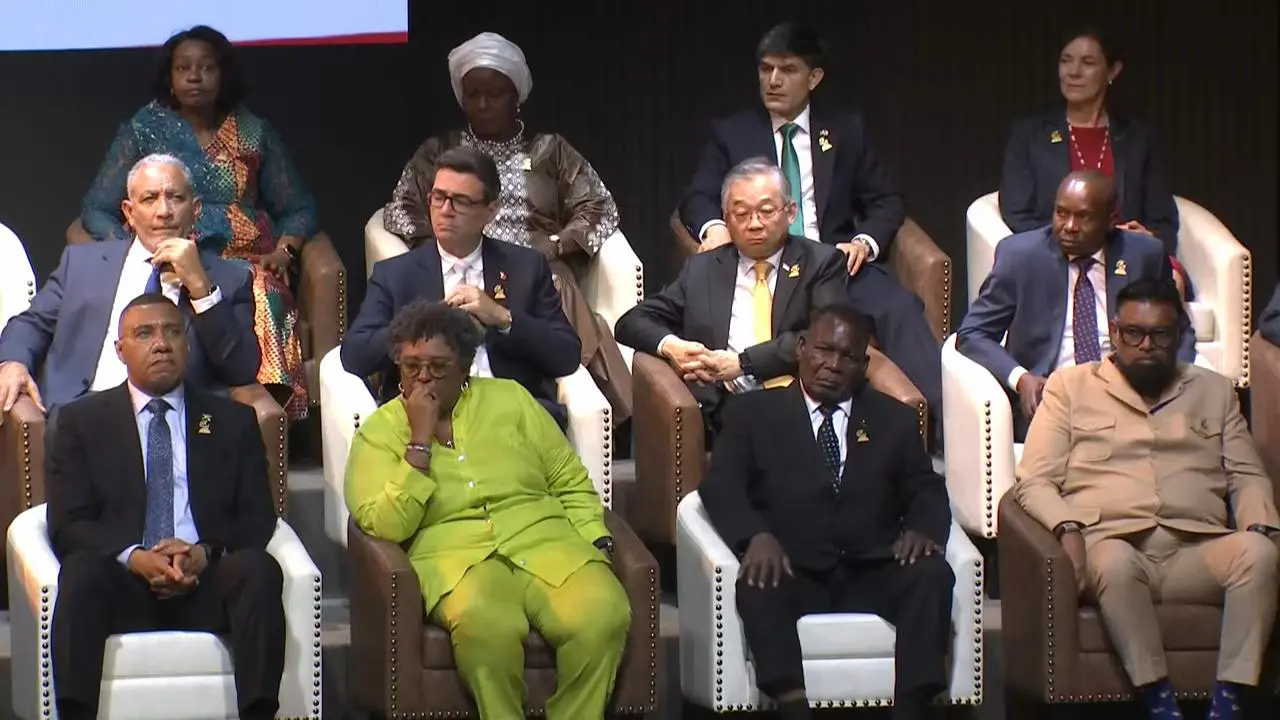
The King also called for greater trade between Commonwealth countries, pointing to shared legal traditions, institutions, business networks and the English language.
Citing the Commonwealth Enterprise and Investment Council, he said doing business across the Commonwealth was 21 per cent cheaper.
He urged countries to make greater use of that advantage by reducing trade barriers, improving digital connections, helping small and medium-sized businesses reach new markets and encouraging investment across borders.
Opportunities extended beyond traditional goods to digital services, sustainable tourism, clean energy, creative industries, the blue economy and emerging technologies, he said.
The King, who attended with Queen Camilla, thanked Antigua and Barbuda for its hospitality and acknowledged the country’s 45th independence anniversary.
He closed by urging leaders to make commitments that would improve lives, particularly in countries facing the greatest economic and environmental needs.
“I pray that over these coming days you will embrace this opportunity and commit yourselves to action,” he said.








Discussion